Free play can help you understand how a pokie works on screen. You can see where the controls are, how a feature is triggered and what symbols or messages appear, without treating a short session as a forecast of what will happen later. That distinction matters: a demonstration can show the game’s presentation, but it cannot tell you whether a future spin will win.
The reason is the way spins are determined. A Random Number Generator (RNG) selects the result of each spin independently. A previous result does not make a particular result more or less likely on the next spin. A run of wins does not mean another win is due, and a run without wins does not mean the game is about to compensate. The sequence you see in free play is a sequence of separate random outcomes, not a pattern that provides a reliable clue to the next one.
That makes free Aussie pokies useful for learning the basic layout, not for measuring what you might receive in a later session. You can note how to start a spin or how a displayed feature behaves. But a handful of outcomes cannot establish a dependable expectation about future results. The same applies if you repeat a demo session: adding more observations does not turn them into a promise about a particular spin.
Список казино
If you’re looking for online pokies options in Australia in 2026, use this list as a starting point and check each operator’s current terms before you sign up. The details below highlight the specific information available for each option.
1
JeetCity Casino
License
Curacao eGaming (Dama N.V.)
JeetCity Casino is listed with a Curacao eGaming licence held by Dama N.V.
2
LuckyVibe
License
Curacao Gaming Control Board OGL/2023/176/0095 (Hollycorn N.V.)
LuckyVibe is listed with a Curacao Gaming Control Board licence, OGL/2023/176/0095, held by Hollycorn N.V.
3
Kingmaker
Payout speed
crypto ~90 minutes, fiat 1-5 days
Min. deposit
A$30
Kingmaker lists a minimum deposit of A$30. Its stated payout times are around 90 minutes for crypto and 1–5 days for fiat.
4
Roby Casino
License
Curacao eGaming (Roby Games Ltd)
Roby Casino is listed with a Curacao eGaming licence held by Roby Games Ltd.
5
Playfina Casino
License
Curacao eGaming (Hollycorn N.V., since 2017)
Min. deposit
A$20-30 (depends on the offer)
Playfina Casino is listed with a Curacao eGaming licence held by Hollycorn N.V., in place since 2017. The minimum deposit is A$20–30, depending on the offer.
6
Vegaz Casino
License
Curacao OGL/2024/1335/0780
Min. deposit
EUR 20
Vegaz Casino is listed with licence OGL/2024/1335/0780. Its stated minimum deposit is EUR 20.
7
JustCasino
License
Curacao Gaming Control Board
JustCasino is listed with a Curacao Gaming Control Board licence.
8
House of Pokies
License
international iGaming licence – jurisdiction not named in the source
Payout speed
PayID 1-24 hours
Min. deposit
A$30 (PayID from A$10)
House of Pokies lists an international iGaming licence, but the source does not name the jurisdiction. Its stated PayID payout time is 1–24 hours; the minimum deposit is A$30, or A$10 via PayID.
9
Ricky Casino
Payout speed
crypto under 1 hour, PayID 1-3 business days
Min. deposit
A$20 (A$30 to qualify for the bonus)
Ricky Casino lists a minimum deposit of A$20, with A$30 required to qualify for the bonus. Its stated payout times are under an hour for crypto and 1–3 business days for PayID.
10
Lucky Dreams
License
Curacao
Min. deposit
A$20 (POLi)
Lucky Dreams is listed with a Curacao licence. Its stated minimum deposit is A$20 via POLi.
What a free session can show
A free-play session may give you a chance to become familiar with the game’s visual flow. You can observe the symbols, animations, controls and the way the game presents a result. If the rules or feature descriptions are available on screen, you can read them at your own pace rather than trying to take everything in during an unfamiliar session.
This kind of familiarity can be valuable in a narrow sense. You may learn where to find information or understand what a game means when it displays a feature. You can also decide whether the pace and presentation are comfortable for you. Those are observations about your experience of the interface, not evidence of what a future real-money outcome will be.
Keep that boundary clear when you play Aussie pokies for free. A demo can make the rules easier to follow, but it cannot tell you how a later sequence will unfold. A feature appearing during free play does not mean it is likely to appear again soon. Nor does a long stretch without that feature establish that it is “due”. Each spin begins with a new random result.
Why a short run can mislead
People naturally look for patterns. If several similar results appear close together, it can feel as though the game has settled into a rhythm. If nothing notable happens for a while, it can feel as though a change must be coming. Those impressions are understandable, but they do not alter how the next spin is generated.
Regional Pokies: Casinos and Pokies by Location
This is why a vivid free session can leave a stronger impression than it deserves. A memorable win, a sequence of near misses or a feature that appears quickly may be easy to recall. None of those experiences tells you what will happen in another session. Free play gives you examples of possible outcomes, not a schedule of outcomes.
The reverse is also true: a quiet or disappointing demo does not prove that a later session would behave the same way. A small set of spins is only the set you happened to see. It cannot show what the next spin will produce, and it cannot guarantee that the same sequence will recur.
Use the demo for understanding, not prediction
If you try aussie pokies free play, focus on questions the session can actually answer: Can you follow the controls? Are the rules clear? Do you understand what the displayed features mean? If you cannot find an explanation, that is useful to notice before drawing any conclusions from the results.
Avoid using a demo as a test of whether a game is “ready” to pay out, or as proof that a particular result is likely. The RNG does not keep a memory of your free spins that makes a later outcome predictable. A series of results may look meaningful after it happens, but it does not provide a reliable signal beforehand.
Do
Use free play to learn the basic layout
Note how to start a spin
Observe how displayed features behave
Use the session to read rules at your own pace
Don't
Treat a demo session as a forecast of future wins
Assume a run of wins means another is due
Use free play to measure expected real-money results
Use a demo to test if a game is "ready" to pay out
Free play, then, is best treated as a way to become familiar with a game’s presentation and basic operation. It can answer practical questions about what you see on screen. It cannot forecast the next result, turn past spins into a pattern you can act on, or establish what a later session will deliver.
The Legal Position on Real-Money Online Pokies
The legal distinction is between the company providing an online casino service and the person who visits it. Under the Interactive Gambling Act 2001, a company cannot lawfully offer real-money online pokies to people in Australia without a domestic licence. No domestic licences for online casinos have been issued, so there is no Australian-licensed online casino for you to use.
That restriction does not make an individual player the target of the same prohibition. The law is directed at operators, not at Australians who play on offshore sites that accept them. In other words, a person’s position and a provider’s position are not identical: an offshore casino may take Australian customers, but accepting them does not make its service domestically licensed or lawful for the operator to provide.
This distinction matters when you see a site described as available to Australians. Availability is not the same as approval under Australian law. Nor does a foreign licence amount to a domestic one. It may tell you that the operator is subject to rules somewhere else, but it does not change the fact that Australia has issued no licences for online casinos. The phrase “real-money pokies” describes the activity; it does not establish that the provider has permission to offer it here.
Big Red Pokies Online Australia: Free Play Guide
Free sessions offer a way to learn a game's rhythm and features, but practice outcomes…
For you as a player, the absence of personal liability should not be mistaken for a guarantee of protection. If you use an offshore site, you are dealing with a provider outside Australia’s domestic online casino licensing system. If that operator disputes your account or refuses to pay winnings, Australian players have no legal recourse in Australia to compel payment. That is a practical limit with real consequences: the fact that you are not the party targeted by the operator prohibition does not give you an Australian body or licence framework through which to resolve a payment dispute.
It is also important not to collapse two different questions into one. “Can an Australian player be penalised simply for playing?” is not the same as “Is the casino permitted to provide the service?” The law’s focus on operators answers the first concern differently from the second. Australians can legally play at offshore sites that accept them, but the provider still has no Australian online casino licence. Neither point removes the risk that the operator may not honour a claim.
A site’s own wording cannot settle that legal position. Claims such as “Australian friendly” or “available in Australia” describe the provider’s intended audience or access, not a domestic authorisation. Likewise, a company’s offshore status does not create an Australian channel for complaints or enforcement on your behalf. If a dispute arises, the absence of Australian legal recourse is the key limitation to understand before treating an offshore operator’s promises as enforceable here.
The consequences are not symmetrical. The operator faces the legal restriction on offering the service to people in Australia; the player is not subject to that same operator-facing prohibition. Yet the player may still bear the practical cost of dealing with a business beyond the reach of Australian online casino licensing. This is why “not illegal for the player” should not be read as “protected as a customer.” Legal exposure and consumer protection are separate matters.
If you are weighing up real-money Aussie pokies online, keep those boundaries clear. There is no Australian-licensed online casino, and an offshore site that accepts Australian customers does not become locally authorised by doing so. At the same time, the law’s restriction on operators does not turn the individual player into the party it targets. The most important player-side consequence is not a stated criminal penalty; it is that, if an offshore casino withholds winnings, you have no legal recourse in Australia to recover them.
What to Check Before You Consider an Online Pokie
A familiar game name can make an online pokie seem easy to assess. It is not enough to tell you what return percentage applies to the version offered by a particular casino. Some game providers allow casinos to choose between different RTP settings for the same pokie, so the same title may be configured with different return percentages in different places. A specialist review has reported this variation; it should not be treated as a fixed setting shared by every casino offering that game.
Online Keno Casinos in Australia: Rules and Risks
An overview of Australian rules, game verification, real-money risks and why keno is not interchangeable…
RTP, or return to player, describes a theoretical proportion of stakes returned over a very large number of plays. It is not a forecast of what you will win in a session, nor does it tell you how a particular run of play will go. For comparing versions of a game, though, the configured RTP matters: the name and artwork alone cannot confirm which setting is in use.
If you are weighing up online pokies, treat the game title as a starting point for checking details, not as proof of them. Look for an RTP figure tied to the exact version being offered and to the casino where it is available. If the information gives only a range, or describes a game generally without specifying the casino’s setting, you cannot tell from that information which return percentage applies. Avoid filling that gap with a figure found elsewhere for the same title.
What the game name can and cannot establish
A title can identify a particular game, but it does not establish its RTP configuration at every casino. Nor does a headline figure attached to the title necessarily describe the version you would encounter. A listing may refer to another setting or to the game in general. Without a clear connection between the stated percentage, the specific version and the casino offering it, the figure is not a reliable basis for comparing that option with another.
This distinction matters when you see claims about the “best” Aussie pokies online. “Best” can mean different things to different people, and a game’s name does not settle even the narrower question of its return percentage. If return is one of the details you care about, focus on whether the setting is identified, rather than assuming that popularity, familiar branding or a confident description tells you what it is.
You can also separate what is stated from what is implied. A page may name a pokie and mention an RTP figure nearby, but proximity is not the same as confirmation that the figure applies to the version at that casino. Look for wording that makes the connection explicit. If it is unclear, the responsible conclusion is that the setting has not been established—not that the most favourable number you have seen must apply.
A practical pause before relying on a claim
Before you place weight on an RTP claim, check whether it names the game version and identifies the setting used by the casino. Consider whether the information is presented as a specific configuration or as a general description of the game. If the claim does not make that distinction clear, ask for clarification or leave the figure out of your comparison. A precise-looking percentage without a clear connection to the offered version can create confidence without answering the question you need answered.
It is reasonable to compare the information available for different options, but the comparison is only meaningful when it is like for like. One casino’s stated setting cannot automatically be carried over to another casino, even if both display the same game title. Likewise, a description of a game’s possible RTP settings does not reveal which one has been selected for a particular offering. Those are separate pieces of information.
This is a useful decision point: if the return setting is important to you and you cannot confirm the setting for the version in front of you, you do not have enough information to compare it on that basis. You can stop there rather than infer an answer from the game’s reputation or from a number that may refer to a different configuration. No title, label or promotional wording can substitute for a clear statement of the setting.
Live Casino in Australia: Legal and Safety Checks
Australian law, provider information and payment considerations shape what can be verified about offshore live-casino…
A careful check will not predict a result or remove uncertainty from play. It can prevent one specific misunderstanding: treating the same game name as if it guaranteed the same RTP everywhere. Keep the question narrow—what setting is attached to this version at this casino?—and do not let a general figure stand in for an answer. If that detail is not clear, consider the return percentage unknown.
PayID and Other Deposit Considerations
PayID is not a separate bank account or a standalone wallet. It is an alias linked to an account through Australia’s New Payments Platform (NPP), allowing a transfer to be addressed to an email address, mobile number or Australian Business Number instead of relying on account details. To use PayID for a real-money deposit, you need to link an eligible PayID to a bank account first. The transfer is then made through your bank, using the PayID details supplied for the payment.
That distinction matters: PayID changes how a recipient is identified, but it does not remove the bank from the transaction. The NPP is supported by all major Australian banks and uses end-to-end encryption, but neither feature guarantees that a particular payment will be accepted. Support for PayID also says nothing by itself about a site’s licensing, fairness or the return settings of its games. Treat it as a payment route, not as evidence that an operator has been checked or approved.
Check bank restrictions before sending money
A specialist gambling-payment review reports that some Australian banks, including banks among the Big Four, have at times blocked PayID transfers to merchants they identify as gambling-related. These restrictions can change, and a payment that works at one point may not work later. If a transfer is declined, do not assume that repeated attempts will resolve the issue; check with your bank about its rules and the reason for the decline.
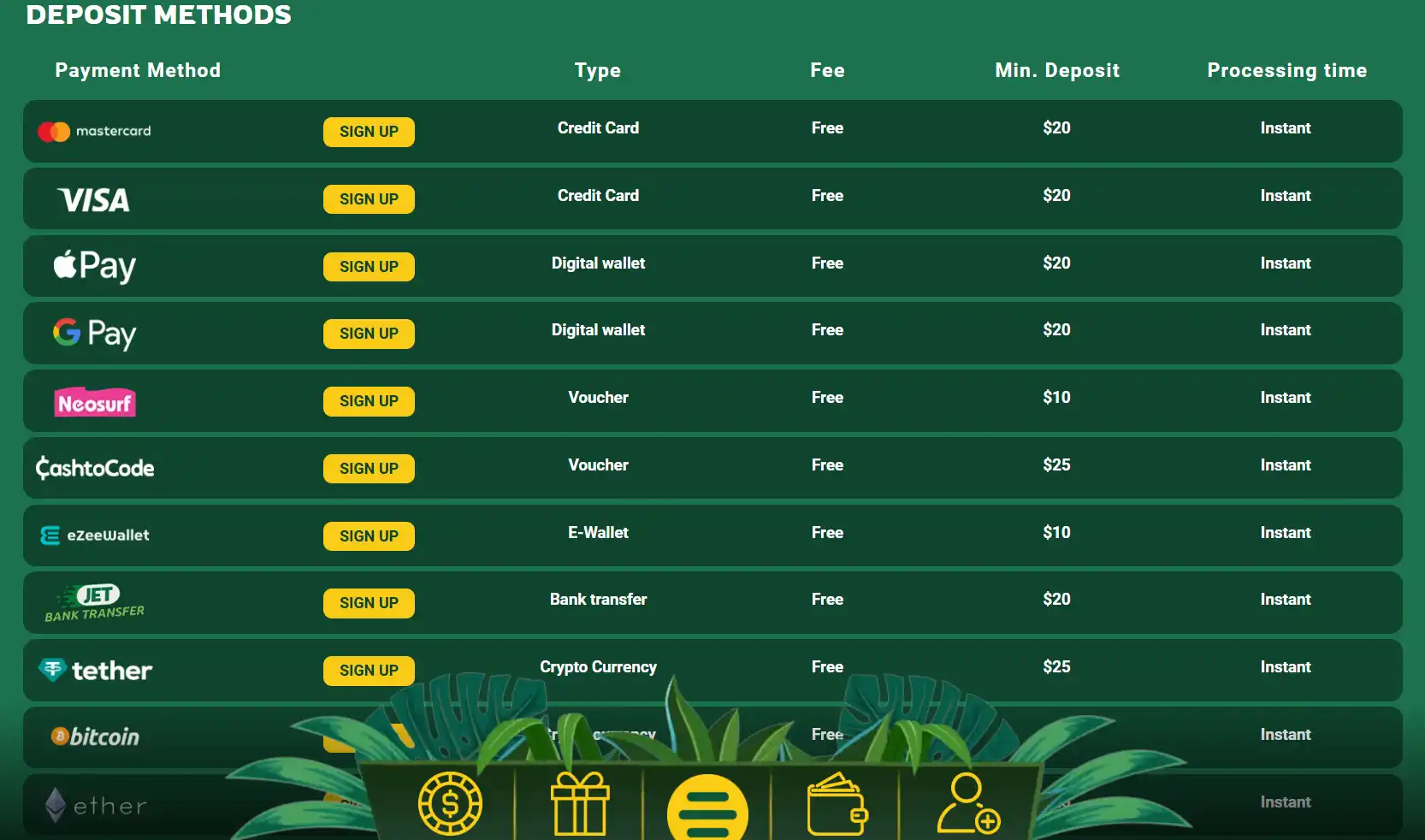
The same review reports that minimum deposit requirements differ between operators. It describes minimums in the AU$10–AU$20 range at many sites and notes that some set a lower minimum of AU$5. These are reported examples, not a current standard, and a site’s own payment screen may show different conditions. Check the amount before authorising a transfer so you know what will leave your account.
Banks may also block or decline other transactions they recognise as gambling-related. A card payment can carry a separate cost: a specialist payment review warns that a bank or card issuer may classify a gambling deposit as a cash advance. In that case, the fee may be 3–5%, and interest may begin immediately rather than after a usual interest-free period. The treatment depends on the institution and card terms, so check with the issuer before making a payment. A transaction that appears to be a routine card purchase may therefore cost more than the amount shown at checkout.
Consider the total cost, not just the transfer method
Before making any deposit, confirm the payment method, the amount that will be charged and any fees your bank or card issuer may apply. For PayID, make sure the identifier matches the payment instructions exactly and that the PayID is linked to the account you intend to use. For a card, ask the issuer specifically whether gambling transactions are treated as cash advances and whether interest starts straight away.
If a payment method is unavailable or a transfer is blocked, that is a reason to pause and review your options, not to bypass a bank restriction. Payment access can change without notice, and a site’s statement that it accepts a method does not mean your bank will process the transaction. Keeping your bank’s terms in view helps you understand the cost and outcome before money leaves your account.
Live Dealer Casinos Online in Australia: Legal Checks
The guide separates operator legality from player exposure and outlines checks on bonuses, game claims,…
Social Casino Searches: What the Available Facts Do Not Establish
The phrase “social casino” does not, by itself, describe what a service offers. It does not tell you whether play is available in Melbourne, what games or features might be included, or what conditions apply. The same caution applies to an “Aussie pokies” label: a familiar name is not a substitute for clear information about the service behind it.
If you encounter a social-casino description, treat its wording as a label rather than a full explanation. The term alone does not tell you whether an account is needed, how play works, or what rules govern access. Those details should be stated by the service itself, not inferred from its name or from the fact that it refers to a particular city.
Nor should “social” be taken as proof that a service is a suitable substitute for real-money play. The label does not establish the nature of the activity, and it says nothing on its own about whether any particular service is available to you. Avoid filling those gaps with assumptions based on a logo, a short description, or a mention of Melbourne.
This distinction matters because a search result can make a service sound more definite than the information attached to it. Before relying on a description, look for direct, specific explanations of what the service is and what its terms mean. If those explanations are unclear, the name alone cannot resolve the uncertainty.
So this is not a recommendation or a guide to choosing one. It is simply a reason to avoid treating a label as confirmation of what you would be accessing.
New Web Games and the Limits of Return-Rate Claims
A new online pokie may look like a fresh release, but its name or web-based format does not tell you what return-to-player (RTP) setting is in use. RTP is a stated theoretical return over a large number of plays, not a promise about what you will receive from a short session. More importantly, a game’s published name does not necessarily identify one return percentage that applies everywhere.
Best Pokies in Perth: Venues, RTP and Access
A practical look at Perth venue access, machine reporting and what RTP can—and cannot—tell you…
A specialist review reports that some game providers let casinos select from several RTP settings for the same pokie. If that arrangement applies, two casinos offering the identical title could be using different settings. The game’s artwork, features and title might appear the same while the underlying return percentage differs. You cannot establish the setting simply by recognising a familiar game or seeing it described as new.
This matters when you encounter claims about newly released or web-based pokies. “New” describes when a game is presented or released; it does not establish a particular RTP. “Web-based” describes a way of accessing a game, not its return setting. Neither label is evidence that the game has one universal rate across casinos.
If a casino displays an RTP figure, check whether the figure is attached to the precise version or setting it offers, rather than assuming it applies to every version of that game. The game title alone may not settle the question. If the setting is not clearly identified, the advertised name gives you no sound basis for comparing return rates between offers. Treat an unqualified figure carefully: it may not describe the configuration available to you.
This is a narrow but useful distinction. A provider’s ability to make different settings available does not mean every casino changes them, nor does it tell you which setting a particular casino uses. It means you should not infer sameness from the title. A new pokie can have familiar mechanics and still require separate confirmation of its return setting; a familiar pokie can also be presented with a different setting elsewhere.
The practical point is not to judge a game by novelty, design or how entertaining it looks. Those features do not reveal its RTP. When the setting cannot be confirmed for the version being offered, the return-rate claim remains uncertain. Treating that uncertainty plainly is more reliable than assuming every version of a popular or newly introduced pokie has the same theoretical return.
Australian Rules and Player Protections to Keep in View
You must be at least 18 to gamble in Australia, including on online pokies. That age threshold applies regardless of whether you are considering play at a venue or online; a site’s own sign-up process does not change it.
The Australian Communications and Media Authority (ACMA) enforces the Interactive Gambling Act 2001. Its role includes blocking access to illegal offshore gambling sites. Internet service providers are required to follow ACMA’s blocklist, so a site that is accessible today may not remain accessible. A block is an enforcement measure, not an assurance that an offshore service is safe or that you will have a way to resolve a dispute with it.
BetStop has a narrower reach than its name might suggest. It applies to Australian-licensed operators and does not bind offshore sites. If you have self-excluded through BetStop, do not assume that the exclusion will prevent you from opening or using an account with an offshore operator. Treat the distinction as important: a protection that applies within the local licensing system cannot be relied on to control services outside it.
These measures should not be confused with the separate legal position of an individual who accesses an offshore site, or with the practical difficulty of seeking help if an offshore operator causes a problem. ACMA’s enforcement and site blocking address the availability of prohibited services; they do not provide a personal account safeguard or guarantee access to funds. The relevant protections therefore have limits, even when they are working as intended.
Before making any decision, keep the scope of each measure clear: the age requirement applies to gambling generally, ACMA enforces the law and blocks listed sites, and BetStop does not extend to offshore operators. None of these should be read as an endorsement of offshore pokies or as a substitute for understanding the risks of dealing with a service beyond Australia’s licensing framework.
Bonus Terms That Can Change the Cost of Play
A bonus figure can look more substantial than its usable value. Before treating bonus credit as money you can withdraw, read the offer’s wagering requirement: this is the amount that must be bet before the bonus-related balance or winnings become eligible for withdrawal. The multiplier may apply to the bonus alone or to the combined deposit and bonus, so the same headline offer can create very different turnover obligations.
A specialist review uses a $500 bonus with a 40x requirement to illustrate the effect: the required turnover would be $20,000. If the 35x multiplier applies to a $500 deposit plus a $500 bonus, the calculation becomes $35,000 in bets. These are examples of how the terms work, not a promise that any particular offer is available or that completing the turnover will leave you with winnings.
The same kind of specialist review suggests looking for requirements of 35x or less and describes anything above 40x as punishing. Treat that as an assessment, not a universal standard. What matters for your decision is the exact wording: whether the multiplier applies to the bonus or the combined amount, which games count, and whether a time condition or other restriction affects completion. A large credit can still require extensive betting before withdrawal is permitted.
Bonus Turnover Calculation
1
Identify the bonus and requirement
Take a $500 bonus with a 40x wagering requirement.
2
Calculate based on bonus alone
If the requirement applies only to the bonus, the total turnover needed is $20,000 ($500 × 40).
3
Calculate based on combined balance
If a 35x multiplier applies to both a $500 deposit and a $500 bonus, the total turnover needed is $35,000 ($1,000 × 35).
Free spins have separate conditions. A specialist review notes that an offer may cap the winnings that can be cashed out from spins. That means the amount shown during play may not be the amount you can withdraw, even if the spins produce a larger balance. Check the cap, how winnings are credited, and whether they carry their own wagering requirement before accepting the offer.
If the terms are unclear, do not assume the most favourable interpretation. Compare the turnover calculation with the amount you would be willing to bet without the offer, and consider whether the restrictions make the bonus credit irrelevant to your decision. A promotion is optional; declining it avoids taking on its attached conditions.
Payout Limits and Verification Before Withdrawal
A balance shown on screen is not necessarily money you can access at once. A specialist review reports that some casinos set weekly or monthly withdrawal caps in the range of $5,000 to $10,000. Under those terms, a $50,000 win could be paid in instalments over a long period rather than transferred in one go. The actual limit and the way it applies depend on the operator’s rules, so read the withdrawal terms before depositing and check whether a cap applies per request or across a stated period.
Fast Payout Online Casinos in Australia: What to Check
A withdrawal can involve separate casino checks, payment processing and account delivery, so a speed…
Verification can also affect when a withdrawal is processed. A specialist review reports that casinos commonly ask for identity checks before a first withdrawal. You may need to provide a photo of your identification and proof of your residential address; some operators may also request a selfie with your ID. Check the accepted document types and submission instructions in advance. If details on your account do not match your documents, or an image is unclear, you may have to resolve that before the request can proceed.
Treat these requirements as practical conditions, not fine print to leave until the moment you want to withdraw. Keep copies of what you submit and use the operator’s stated process for sending documents. Do not assume that a displayed balance, a submitted request or a successful identity check means the full amount will arrive immediately: a withdrawal cap can restrict the amount released, while verification can hold up processing. If the terms are unclear, ask the operator to explain them in writing before you play.
Downloads, Browser Access and What You Can Verify
A request for downloadable Aussie pokies may lead you to expect a dedicated app, a mobile-friendly website or games that run directly in a browser. Those are different ways of accessing software, and one should not be assumed to come with another. Without clear, current details for a particular service, you cannot tell from a page title or promotional image whether an app exists, whether it is compatible with your device, or whether play is browser-based.
Treat claims about downloads as claims to verify, not proof that a service is available or suitable. Check whether the information refers to an official app or simply a website shortcut, and whether it identifies the software publisher and the devices supported. A download button by itself does not establish what will be installed or what permissions it requests. Avoid installing a file when its origin and purpose are unclear.
The same caution applies to browser access. A site that opens on a phone is not necessarily offering a distinct mobile version of a pokie, and a game shown in a browser is not evidence that the same game will work on every device. Look for specific, consistent details rather than relying on broad promises of mobile access.
If those details are not available, the practical answer is that you cannot confirm the download, app or browser option before proceeding. Do not infer availability from the word “online,” from a brand image, or from another user’s account of their setup. Keep your device and personal information secure, and do not install software merely to find out whether a service works.
Are online pokies legal for Australian players?
Yes, Australians can legally play on offshore sites that accept them. However, operators cannot lawfully offer real-money online pokies to Australians without a domestic licence, and none have been issued.
Can I play pokies for free?
Yes, free-play demos let you try a game’s controls, features and presentation without wagering real money. Demo results cannot predict what a later spin will do.
Can casinos change the RTP of their games?
Yes, some game providers let casinos choose between different RTP settings for the same pokie, so its return percentage may vary between casinos.
How do I know if an online casino is safe to play at?
There is no Australian-licensed online casino, and Australian players have no legal recourse in Australia if an offshore casino refuses to pay winnings. A foreign licence does not make the casino Australian-licensed.
What is the legal age for online gambling in Australia?
You must be at least 18 years old to gamble online in Australia.

 Fair Go Casino Bonus Australia: Welcome Offer and Terms GuideFair Go Casino Bonuses and Welcome Offer for Australia The headline value is ...
 Is Fair Go Casino Legit? Trust, Reputation and Licence ChecksIs Fair Go Casino Legit? Trust, Reputation and Licence Checks A trust assessm...