The Australian legal position comes before any live-casino comparison
Before weighing any live-casino claim, it helps to understand what Australian law permits. The Interactive Gambling Act 2001 prohibits companies from providing real-money online casino services to people in Australia without a domestic licence. No Australian online casino licences have been issued, so there is no locally licensed online casino for you to use. This applies to casino-style services offered over the internet, rather than only to a particular format or way of presenting a game.
The legal responsibility described by the Act falls on operators, not individual players. Australians are not subject to a player penalty simply for playing at an offshore site that accepts them. That distinction matters, but it should not be mistaken for a sign that an offshore service is approved, supervised or protected under Australian law. The provider’s willingness to accept a customer from Australia does not make its service locally licensed.
The practical position is therefore less reassuring than the absence of player liability might suggest. If an offshore casino refuses to pay winnings, an Australian player has no legal recourse in Australia. A dispute may be difficult to resolve from here, particularly when the operator is outside Australian oversight. Before treating any advertised service as an option, consider what protection you would actually have if the account were closed, a withdrawal were disputed or the operator stopped responding. The key point is not whether a site looks familiar, but whether Australian law can give you a remedy against it.
The Australian Communications and Media Authority, or ACMA, is the main domestic regulator responsible for enforcing the Interactive Gambling Act. It blocks access to offshore gambling sites that breach the law, and internet service providers must comply with ACMA’s blocklist. As a result, an offshore casino may be unavailable through an Australian internet connection. A block does not mean that every offshore site has been assessed in the same way, nor does it turn a site that remains accessible into a lawful or locally protected service.
Instant Payout Casinos in Australia: What to Check
A payout label may describe only how quickly a request is handled, while approval and…
This is important when you encounter claims about a live casino in Australia or see an offshore service described as the best option for Australian players. Those descriptions are not evidence of an Australian licence. Nor does a website being reachable at a particular time establish that its operator is permitted to provide real-money casino services to people in Australia. Access and legal status are separate questions, and neither one guarantees that a player can recover money if a dispute arises.
The age requirement is straightforward: you must be at least 18 to take part in gambling in Australia. Meeting that age threshold does not change the position for online casino operators. It does not create a domestic licence, provide Australian legal protection for an offshore account or remove the risks of dealing with a business beyond local oversight.
It is also worth separating the rules for operators from what a player may see on a screen. A site may present itself as intended for Australians, use Australian currency or describe its service as available locally. Those details do not alter the Act’s approach to companies supplying real-money online casino services to people physically in Australia. An offshore operator’s own terms cannot create an Australian licence where none exists. Likewise, a service appearing in a list or comparison is not, by itself, confirmation that it is lawful or safe for an Australian resident.
Regional Pokies: Casinos and Pokies by Location
So the phrase “live casino Australia” can describe what a person is looking for, but it should not be read as a category of locally licensed services. There is no Australian-licensed online casino. Any comparison involving offshore sites needs to be understood against that fact, and not as an endorsement or assurance that a particular service is available under Australian law. If you are considering an offshore service, keep the limits clear: the law’s enforcement is directed at operators, ACMA blocks access to illegal offshore gambling sites, and Australian players have no local legal recourse if an offshore casino withholds winnings.
That is the context to carry into any further assessment. Attractive presentation or claims of convenience do not resolve the legal and recovery risks. The relevant questions begin with who is providing the service, whether Australian law permits that company to offer it here, and what protection you would have if something went wrong. In this market, those questions come before any judgment about which online live-casino experience appears preferable.
What software claims can—and cannot—tell you
The phrase “live casino software” can refer to several layers of technology: the system an operator uses to present a service, the tools that manage accounts and transactions, and the software involved in delivering a live video stream. Those layers do not tell you, by themselves, who is behind the service or whether it is suitable, lawful or trustworthy. A polished interface is a presentation choice, not proof of how a platform is operated.
The same caution applies when a site describes itself as using a particular live-casino software provider. A provider label, even when clearly displayed, is not a substitute for evidence about the operator, the terms governing an account or the handling of customer funds. Nor does a familiar-sounding technical claim establish that the system has been independently assessed. You need to know what the claim actually covers and who has checked it before treating it as meaningful.
What software can indicate
Software may shape what a user sees and how information is organised. It can affect page layout, navigation, account controls and how a video feed is delivered. These are practical aspects of a digital service, but they are not the same as evidence about fairness or transparency. A smooth experience does not establish that outcomes are fair, and a slow or awkward interface does not, by itself, prove that they are not.
The phrase “best live casino software” also has no useful meaning without a defined standard. Best for what: clarity of information, accessibility, privacy, reliability, or some other measure? A comparison that does not explain its criteria can turn a subjective impression into a technical-sounding verdict. If a claim uses words such as “leading”, “secure” or “trusted”, look for specific, independently checkable information behind those words rather than treating them as findings.
Trusted Online Casinos in Australia: What Trust Means
The guide distinguishes operator claims from Australian oversight and examines payment methods, bonus conditions, identity…
A claim about software quality should be kept separate from a claim about the operator. Even a well-designed platform cannot establish that an operator complies with Australian law, honours its terms or will resolve a dispute fairly. Those are separate questions, and technology language does not answer them.
What a label cannot establish
A name or logo on a page is not, on its own, proof that a provider supplies the service being described. It does not show which parts of the platform the provider supports, what checks have been performed, or whether those checks apply to the service you are viewing. If a site makes a technical assurance, the useful details are its scope, the party responsible for verifying it and where the result can be reviewed.
Fairness also needs more than a software description. A statement that a platform is “fair” is not a method of testing, and a general reference to security does not explain whether game outcomes have been assessed or how an operator handles concerns. A technical claim may be relevant, but it should not be stretched into a promise about every part of the service.
Transparency is similarly specific. It means being able to understand the terms that affect you, identify who is responsible for the service and see how important processes work. A clear design can make information easier to find, but it cannot make undisclosed terms clear or confirm that a promise will be honoured. Treat a feature you can see as a feature—not as proof of matters you cannot verify from the feature itself.
Do
Look for specific, independently checkable information behind claims
Separate software quality from operator legality
Treat a visual feature as a feature, not proof of fairness
Don't
Treat a polished interface as proof of trustworthiness
Assume a provider label is a substitute for operator evidence
Mistake a "fair" statement for a method of testing
Free access is not a safety test
A free demonstration or preview, if offered, would not establish that real-money access is lawful or that the same conditions apply when money is involved. “Free” describes a payment condition, not a certification of software quality or operator conduct. It also cannot show what happens when a customer seeks a withdrawal or disputes an account decision.
This distinction matters when a service presents a free mode as a way to assess its platform. You may be able to observe design or navigation, but that observation cannot verify the underlying operation of the system. Do not let a trial or attractive presentation stand in for checks on the service itself. In Australia, the Interactive Gambling Act 2001 prohibits operators from providing real-money online casino services to people located in the country. A technical product description does not change that position.
Searches or pages aimed at another market, including Singapore, do not establish that a service is available lawfully or appropriately for someone in Australia. The same is true of a global claim about a live-casino solution: a product may be described broadly, while the legal and operational circumstances of a particular customer depend on where they are located and who is providing the service.
For you, the practical limit is straightforward: software wording can describe an interface or make a technical claim, but it cannot certify the operator, prove fairness, or establish Australian legality. Read each claim narrowly, and do not turn a provider name or a polished screen into evidence for conclusions it does not support.
Online Keno Casinos in Australia: Rules and Risks
An overview of Australian rules, game verification, real-money risks and why keno is not interchangeable…
Live casino poker and the limits of provider information
Poker can appear alongside casino games in searches for live play, but its presence in a menu or promotional description does not make an online service lawful to provide in Australia. The Interactive Gambling Act 2001 treats online poker offered to people physically in Australia as a prohibited interactive gambling service. The law is directed at operators rather than individual players; that distinction does not turn an offshore service into an Australian-licensed one.
A provider label tells you little about the position of a particular poker service. It may refer to a company supplying software, a platform, or a connection between systems. Those roles are not proof that an operator may lawfully offer real-money poker to Australians, nor do they establish who is responsible if a dispute arises. A provider’s name, even when displayed prominently, should not be read as an Australian approval or endorsement.
The same caution applies to technical language. An API is a way for software systems to communicate; an integration describes how components are connected. Those terms alone do not show what games are offered, where the operator is authorised to serve customers, or what protections apply to a player. A polished platform, working login page, or mobile-friendly interface is evidence of access, not evidence of lawful availability.
Poker-specific reviews can also blur important distinctions. A review may describe a site’s features or explain how an account works, but favourable language does not create a domestic licence or guarantee a way to resolve a payment dispute. Australia has no licensed online casino, and a player has no legal recourse in Australia if an offshore casino refuses to pay winnings. Treat review claims as claims, not as a substitute for understanding those risks.
If you encounter a service presenting live poker to Australian residents, do not infer that it is permitted simply because the game is offered in real time or because a provider appears to support it. ACMA enforces the Interactive Gambling Act and blocks access to illegal offshore gambling sites; internet service providers must comply with its blocklist. A site remaining reachable, or a login being available, does not establish that the service is lawful or safe.
This is also why provider-related wording should not be mistaken for a recommendation. Searching for a poker platform or an integration can lead to material aimed at operators, developers, or audiences in other markets. Its terminology may describe a business arrangement rather than a service available to Australian players. The relevant question is not how the technology is labelled, but whether real-money poker is being offered to people in Australia in a way the law permits.
Before relying on any claim about live poker, separate the technical description from the legal one. A provider’s involvement does not establish regulatory approval, and a site’s functionality does not establish local protections. For Australian residents, the key point remains that operators cannot lawfully provide real-money online poker to people in Australia under the Interactive Gambling Act 2001.
Live casino games: what can be verified here
“Live casino” is a broad label, not a reliable description of a particular game or its rules. It may be used to make an online offering sound like a familiar casino experience, but the label alone does not tell you what is available, how a game works, or whether an operator can lawfully provide it to someone in Australia. A catalogue should not be treated as established simply because a page promises one.
Best Online Pokies in Australia: What to Check
A practical guide to Australian rules and the terms, payment options and limits that can…
That distinction matters because real-money online casino games are prohibited services when offered to people physically in Australia. The Interactive Gambling Act 2001 applies to operators providing those services; there is no Australian-licensed online casino. A polished game page or a claim that you can play online does not change that position. Nor should a list of titles be taken as an endorsement or assurance that access is lawful.
Descriptions of live casino games can also blur different things together. A page might use “live” to refer to a streamed presentation, a game format, or an entire collection of casino-style entertainment. Those words do not, by themselves, establish whether a particular game is offered for real money, whether it is available to Australian users, or what conditions apply. You need to separate what a description actually says from what its wording invites you to assume.
The same care applies to game shows and other formats presented as entertainment. A name or promotional category is not enough to establish the rules, the role of chance, or the terms under which any real-money version is provided. Without clear, reliable details, it would be misleading to promise a catalogue or recommend a supposed “best” live casino game. A list can look useful while leaving the most important questions unanswered.
“Free” also needs careful reading. It may describe a demonstration or another form of access, but the label does not establish whether the experience is genuinely free of deposits, whether it can lead into real-money play, or what rules govern that transition. Do not assume that a free version proves anything about the legality or terms of a separate real-money service. Check what the wording means before engaging with it, and leave it alone if the distinction is unclear.
Searches for live casino slot games deserve the same caution. The phrase may combine “live casino” branding with a type of online game, but it does not establish that a live-streamed version exists or that a named title is available. A live presentation and a game’s underlying format are different claims. Treat them as separate, rather than assuming one proves the other.
For you, the practical point is simple: a general promise of choice is not evidence of a specific, suitable game. Avoid relying on promotional descriptions to fill gaps about availability, rules, or real-money terms. In Australia, no catalogue can make a prohibited real-money online casino service lawful.
Roulette searches do not establish a safe or lawful option
A roulette table presented as live and online may look like a straightforward entertainment choice. For someone in Australia, however, the format does not change the legal position. The Interactive Gambling Act 2001 prohibits operators from providing real-money online casino games, including roulette, to people located in Australia. There is no Australian-licensed online casino.
That distinction matters when a site describes itself as an online casino or promotes live roulette to Australian customers. A polished page, a familiar-looking table or a claim about an offshore licence does not create Australian authorisation. Nor does the word “live” make the service a different kind of gambling for the purposes of the law. The relevant issue is that an operator is offering real-money online casino play to someone in Australia.
Aussie Online Pokies: Free Play, Rules and Checks
A practical guide to reading free-play demos and checking legal, payment, bonus and withdrawal conditions…
A “best” label is not a substitute for that legal context. Rankings and promotional language can draw attention to a site’s presentation, but they cannot guarantee that an operator will honour a withdrawal or resolve a dispute fairly. If an offshore casino refuses to pay winnings, Australian players have no legal recourse in Australia. That is a practical risk to weigh before trusting any claims about a roulette table or its operator.
Bonuses do not change the position either. A welcome offer or other promotion may make a site appear more attractive, but it does not make online roulette lawful for an operator to provide in Australia, and it does not give you a local remedy if a payment dispute arises. Treat promotional terms as separate from the more fundamental question of whether the service may be offered to people here.
The same caution applies to claims that a particular table is fair, secure or suitable for Australian players. A description of the game is not proof of those qualities, and a site’s own assurances cannot remove the legal and recovery risks. Avoid reading the presence of roulette content as evidence that the service has been approved in Australia.
Search results may use different phrases for the same kind of product: roulette streamed from a casino-style setting, a live table accessed through a browser, or an online casino promoting roulette alongside other games. The wording can vary; the Australian legal context does not. A foreign licence, if claimed, is not an Australian casino licence.
If you are assessing what a page is offering, keep the distinction clear: the operator’s claims describe its service, not the protections available to you in Australia. No ranking can turn an offshore service into a locally licensed casino, and no roulette promotion removes the possibility of being left without winnings or an effective local route to recover them.
Live dealers: what the available evidence leaves unanswered
A live-dealer format generally means a human dealer is shown through a video stream while a game is presented online. That description explains the format in broad terms; it does not establish who the dealers are, where a studio operates, how a table is managed or what a particular service offers. Those details matter if you are trying to judge what you would actually be using, rather than relying on the label “live”.
For Australian readers, the legal position comes first. Under the Interactive Gambling Act 2001, operators cannot lawfully provide real-money online casino games to people in Australia. Casino-style games delivered online fall within that restriction, whether the presentation involves a dealer on camera or not. The law targets providers rather than individual players, but that does not make an offshore service a protected or dependable option. If an offshore casino refuses to pay, you have no legal recourse in Australia.
A camera feed alone would not answer practical questions about a dealer-led service. You would still need clear, reliable information about the people and setting shown, the rules applied at the table, how interruptions are handled and how complaints are dealt with. A polished stream or a visible dealer cannot, by itself, establish that the operator is lawful, that the game is fair or that winnings will be paid.
Fast Payout Online Casinos in Australia: What to Check
A withdrawal can involve separate casino checks, payment processing and account delivery, so a speed…
The same care applies to phrases suggesting a particular table or game format. A description may sound specific without telling you enough to assess the service behind it. Do not treat a dealer’s presence as proof of independent oversight, clear terms or a route to resolve a dispute. Nor does a real-time presentation change the Australian legal status of real-money online casino services.
If you encounter an offshore site promoting dealers to Australian customers, keep the distinction clear: an accessible webpage is not an Australian licence, and a live broadcast is not a safeguard. The Australian Communications and Media Authority enforces the Interactive Gambling Act and blocks access to illegal offshore gambling sites; internet providers must comply with its blocklist. Access can therefore be interrupted, and the operator may remain beyond practical Australian remedies.
The useful question is not simply whether a dealer appears on screen. It is whether the service can be lawfully provided to you and whether you would have meaningful protection if something went wrong. In Australia, a human presenter does not change the rules governing real-money online casino games.
Why US live-casino results do not answer an Australian query
Список казино
Choosing a live casino online in Australia for 2026 means checking the details that are actually available before you decide where to play. Use these short profiles as a starting point and verify the terms that matter to you.
1
JeetCity Casino
License
Curacao eGaming (Dama N.V.)
The listed licensing detail for JeetCity Casino is Curacao eGaming, under Dama N.V. You can use that as a starting point when checking its operator information.
2
LuckyVibe
License
Curacao Gaming Control Board OGL/2023/176/0095 (Hollycorn N.V.)
LuckyVibe is listed with Curacao Gaming Control Board licence OGL/2023/176/0095, held by Hollycorn N.V. Check the licence details as part of your research.
3
Kingmaker
Payout speed
crypto ~90 minutes, fiat 1-5 days
Min. deposit
A$30
Kingmaker lists a minimum deposit of A$30. Its stated payout times are around 90 minutes for crypto and 1–5 days for fiat.
4
Roby Casino
License
Curacao eGaming (Roby Games Ltd)
Roby Casino is listed with a Curacao eGaming licence under Roby Games Ltd. That licensing information is the key detail available here for your review.
5
Playfina Casino
License
Curacao eGaming (Hollycorn N.V., since 2017)
Min. deposit
A$20-30 (depends on the offer)
Playfina Casino is listed with a Curacao eGaming licence under Hollycorn N.V., dating from 2017. Its minimum deposit is A$20–30, depending on the offer.
6
Vegaz Casino
License
Curacao OGL/2024/1335/0780
Min. deposit
EUR 20
Vegaz Casino lists Curacao licence OGL/2024/1335/0780 and a minimum deposit of EUR 20. These are useful details to check against your own preferences.
7
JustCasino
License
Curacao Gaming Control Board
JustCasino is listed with a Curacao Gaming Control Board licence. You can check that licensing detail as part of your initial assessment.
8
House of Pokies
License
international iGaming licence – jurisdiction not named in the source
Payout speed
PayID 1-24 hours
Min. deposit
A$30 (PayID from A$10)
House of Pokies lists PayID payouts in 1–24 hours and a minimum deposit of A$30, or A$10 when using PayID. Its source describes the licence as international but does not name the jurisdiction.
9
Ricky Casino
Payout speed
crypto under 1 hour, PayID 1-3 business days
Min. deposit
A$20 (A$30 to qualify for the bonus)
Ricky Casino lists a minimum deposit of A$20, rising to A$30 to qualify for the bonus. Stated payout times are under an hour for crypto and 1–3 business days for PayID.
10
Lucky Dreams
License
Curacao
Min. deposit
A$20 (POLi)
Lucky Dreams is listed with a Curacao licence and a minimum POLi deposit of A$20. Those are the available details to consider when reviewing the casino.
A page describing live casino access in the United States is not evidence that the same service is lawful or suitable for someone in Australia. It may be written for people in a different legal market, and its statements about availability, promotions or access cannot simply be carried across borders.
For people physically in Australia, the relevant framework is the Interactive Gambling Act 2001. It prohibits operators from providing real-money online casino games to customers here, and there is no Australian-licensed online casino. The key distinction is where the customer is located, not where a website is written, which currency it displays or which country its promotional material names.
The Australian Communications and Media Authority (ACMA) enforces the Act. It blocks access to illegal offshore gambling sites, and internet service providers must comply with its blocklist. A page loading, appearing in a results list or being discussed in US-focused material does not establish that an operator may lawfully serve Australian customers. Nor does an overseas description of a live online casino settle what protections or remedies would apply to you here.
Why US results are irrelevant
Legal frameworks are tied to where the customer is located. A US-facing page may be accurate for its own audience but does not establish legality or availability for someone physically in Australia under the Interactive Gambling Act 2001.
Treat a live-casino bonus advertised for a US audience with the same caution. Its presence says nothing by itself about whether the offer applies in Australia, whether the service may provide casino gambling to people here, or whether you would have effective recourse if a dispute arose. Promotional wording is not a substitute for checking the Australian legal context.
This matters because the phrase “live casino” can refer to services presented differently across markets, while the legal question remains tied to the person using the service and the rules that apply in Australia. A US-facing page may be accurate about its own intended audience and still be irrelevant to your position.
When assessing Australian live-casino claims, do not use overseas availability as a shortcut for legality. Keep the distinction between an international website and an Australian-licensed service clear: no such domestic casino licence exists. If access is blocked, that is not a reason to seek a different route around the block. It is a signal to pause and consider what the restrictions mean, rather than treating a foreign result as local guidance.
Before you play: payment and withdrawal risks to check
A payment option appearing on a site does not mean a transfer will go through, or that a withdrawal will arrive without difficulty. A specialist review reports that some Australian banks, including major banks, sometimes block PayID transfers to known gambling merchants. The same type of review describes banks and card companies as increasingly blocking transactions to known gambling sites. These reports can change over time, so check directly with your bank rather than relying on a site’s payment page.
Best Pokies in Perth: Venues, RTP and Access
A practical look at Perth venue access, machine reporting and what RTP can—and cannot—tell you…
PayID is a transfer alias linked to the New Payments Platform; it can use an email address, mobile number or ABN. It must be linked to a bank account before it can be used for a real-money casino deposit. That says nothing about whether an offshore service is lawful, fair or transparent. Australia has no licensed online casino, and a player has no legal recourse in Australia if an offshore casino withholds winnings.
Before using a card, ask the issuer how it classifies gambling transactions. A specialist review warns that a credit or debit card deposit may be treated as a cash advance, with a fee of 3–5% and interest starting immediately. The treatment depends on the issuer, so do not assume a card payment will cost the same as an ordinary purchase.
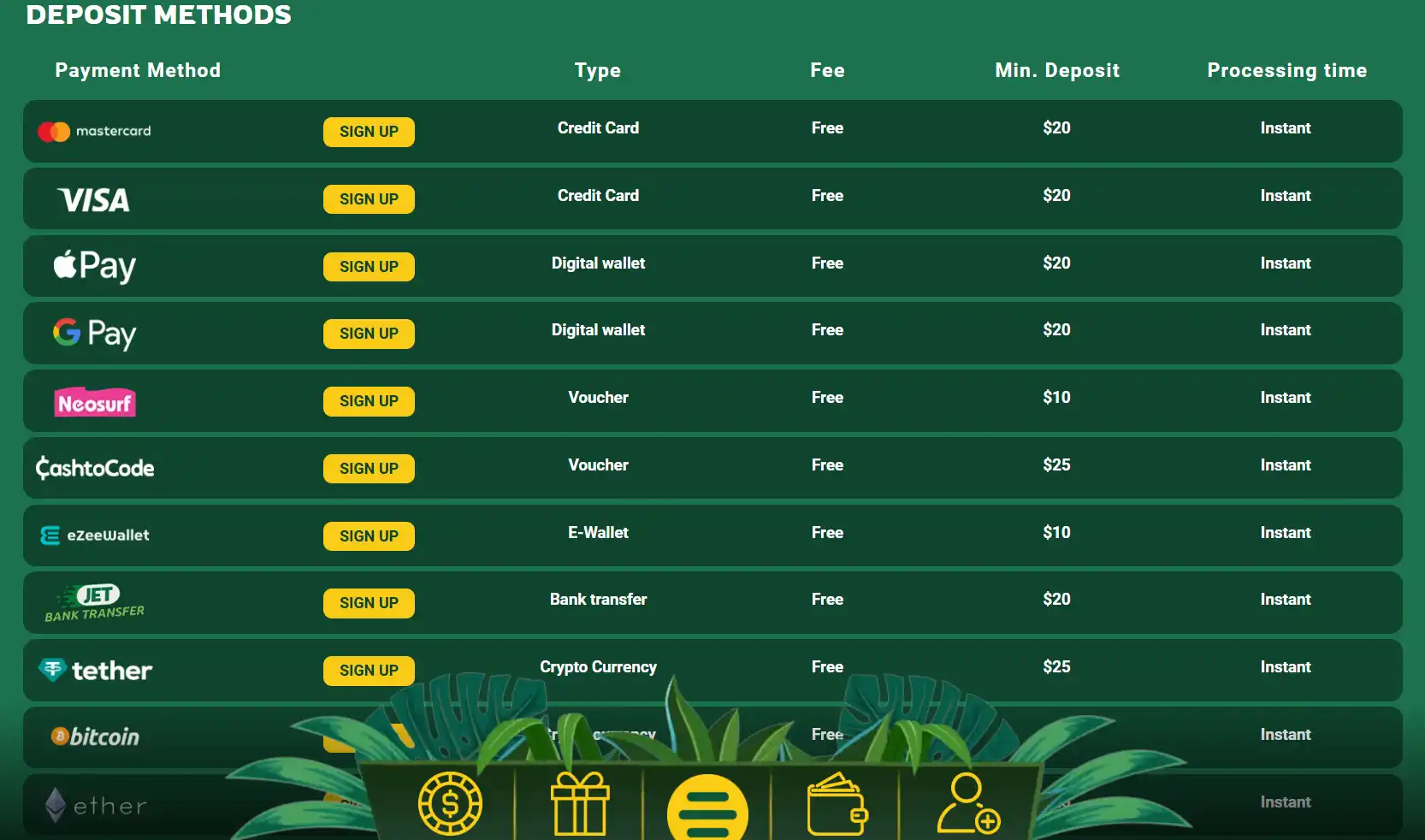
A specialist review gives AU$10–AU$20 as a common minimum-deposit range among operators it examined, with some accepting AU$5. Treat those figures as reported examples, not a promise about any particular service. Check the minimum and any other payment conditions before sending money, and do not deposit more than you can afford to lose.
Read withdrawal terms as carefully as deposit terms. A specialist review reports that some casinos set weekly or monthly withdrawal caps of $5,000–$10,000; a large win could therefore be paid in instalments over a long period. Check the cap, the documents required and the process for requesting a cash-out before depositing. A specialist review also reports that identity checks before a first withdrawal can require identity and address proof, and sometimes a selfie holding identification. Have those documents ready and make sure the details on your account match. If a service will not explain its payment and withdrawal conditions clearly, do not treat access to a deposit method as reassurance.
Payment Safety Checks
Check with your bank if they block transfers to gambling merchants
Verify if card deposits are treated as cash advances by your issuer
Confirm the minimum deposit requirement for the service
Review weekly or monthly withdrawal caps
Prepare identity and address proof for withdrawal verification
Mobile access does not remove the checks you need to make
A page that opens on your phone can feel more immediate than one viewed on a computer, but access is not evidence that a service is lawful for people in Australia. There is no Australian-licensed online casino. A polished mobile site, an app listing or a prompt to install an app does not change that position.
Be cautious with download instructions, too. Before installing anything, consider what permissions it requests and whether you can identify who operates it and how it handles your information. Do not assume an app is safer simply because it is available through a familiar download route. Nor should a working app or browser page be treated as proof of an Australian licence or local consumer protection.
The same care applies to technical claims. An application programming interface, or API, is a way for software systems to communicate; mentioning one does not establish that a casino is licensed, that its games are fair, or that a mobile service has been independently checked. Technical language can describe how a product is built, but it cannot settle the legal question for you.
BetStop is another point that needs a clear boundary. It applies to Australian-licensed operators and does not bind offshore sites. Since no online casino holds an Australian licence, do not assume that registering with BetStop will block access to offshore casino services or prevent those operators from contacting you. If you use BetStop to manage gambling with Australian-licensed operators, that protection should not be mistaken for a safeguard across every site reachable from a phone.
If you are weighing up a mobile service, pause before creating an account or sending personal or payment details. Check whether the operator is actually authorised to provide the service to people in Australia; a foreign licence, an app-store presence or easy access does not establish Australian authorisation. Also consider whether you can stop using the service and get help if gambling begins to affect you. A small screen may make access easier, but it does not reduce the legal or financial risks of an offshore casino.
Australian and UK searches point to different markets
A live-casino service presented for UK customers belongs to a different regulatory context from one sought by someone in Australia. A British label, currency or set of terms does not establish that the service may lawfully offer real-money casino games to people in Australia. Nor does material written for UK customers explain the rules that apply where you are physically located.
For Australians, the relevant starting point is the Interactive Gambling Act 2001. It makes it illegal for companies to provide real-money online casino games to people in Australia without a domestic licence, and no Australian online-casino licences have been issued. That applies regardless of whether a site describes itself as international or focuses its presentation on another country. Australian residents should not mistake overseas branding for local authorisation.
The same distinction matters when considering live-casino information. A page describing an online live casino for UK customers cannot, by itself, establish that its games or service are lawful for Australians. The market label is not a substitute for understanding the Australian position, and the existence of material aimed at another country does not change that position.
Age is another Australian-specific point: the legal gambling age in Australia, including for online pokies, is 18. Meeting that age requirement does not make an online casino service locally licensed or alter the restrictions on companies providing it.
If you are in Australia, keep the Australian rules in view rather than relying on descriptions written for a UK audience. The two markets should not be treated as interchangeable, and a service’s presentation for one does not settle its status in the other.
How do I know if an online casino is safe to play at?
You cannot rely on an Australian licence as a safety check: no Australian-licensed online casinos exist. Offshore sites are not protected by Australian oversight, and you have no legal recourse in Australia if one withholds your winnings; a site being accessible or looking familiar does not establish that it is safe.
Are online pokies legal for Australian players?
Australian law targets operators that offer real-money online pokies without a domestic licence, and no domestic online casino licences have been issued. The law does not impose a player penalty simply for playing at an offshore site that accepts you, but that does not make the service locally licensed or give you Australian legal recourse if a dispute arises.
What is the cost-benefit calculation of casino promotions?
Compare the wagering requirement with the bonus and any withdrawal limits: a $500 bonus at 40x requires $20,000 in bets before you can withdraw winnings. If the 35x requirement applies to a $500 deposit plus a $500 bonus, it requires $35,000 in bets; free-spin winnings may also be subject to a cash-out cap.

 Fair Go Casino Bonus Australia: Welcome Offer and Terms GuideFair Go Casino Bonuses and Welcome Offer for Australia The headline value is ...
 Is Fair Go Casino Legit? Trust, Reputation and Licence ChecksIs Fair Go Casino Legit? Trust, Reputation and Licence Checks A trust assessm...