What Australian Players Should Know About Offshore Casinos
Australia’s rules draw an important distinction between the businesses that supply online casino games and the people who access them. Under the Interactive Gambling Act 2001, a company operating from within Australia cannot provide real-money interactive casino games to people in the country. The restriction covers casino-style services such as online pokies and other real-money casino games. It is directed at the provider, not framed as an offence committed by an individual simply for playing at a foreign-licensed site.
That distinction matters if you are trying to understand what “legal” means in this market. Australian law does not provide a domestic licensing route for real-money online casinos, and there are no locally licensed real-money casino sites available to Aussie gamblers. A foreign licence does not turn an offshore operator into an Australian-licensed business; it indicates that the operator is authorised under the rules of the jurisdiction that issued it. Those are separate questions, and treating them as interchangeable can give you a misleading picture of your position.
Список казино
Choosing a real-money casino in Australia means weighing practical details alongside the information available about each operator. Use these notes to see what is specifically known before deciding what to explore further.
1
JeetCity Casino
License
Curacao eGaming (Dama N.V.)
JeetCity Casino is listed with a Curacao eGaming licence held by Dama N.V. This gives you a specific licensing detail to consider.
2
LuckyVibe
License
Curacao Gaming Control Board OGL/2023/176/0095 (Hollycorn N.V.)
LuckyVibe is listed with a Curacao Gaming Control Board licence, OGL/2023/176/0095, held by Hollycorn N.V. You can use these details when reviewing its licensing information.
3
Kingmaker
Payout speed
crypto ~90 minutes, fiat 1-5 days
Min. deposit
A$30
Kingmaker lists crypto payouts at around 90 minutes and fiat payouts at 1–5 days. Its minimum deposit is A$30.
4
Roby Casino
License
Curacao eGaming (Roby Games Ltd)
Roby Casino is listed with a Curacao eGaming licence held by Roby Games Ltd. That licensing information is the specific detail available here.
5
Playfina Casino
License
Curacao eGaming (Hollycorn N.V., since 2017)
Min. deposit
A$20-30 (depends on the offer)
Playfina Casino is listed with a Curacao eGaming licence held by Hollycorn N.V. since 2017. Its minimum deposit is A$20–30, depending on the offer.
6
Vegaz Casino
License
Curacao OGL/2024/1335/0780
Min. deposit
EUR 20
Vegaz Casino is listed with a Curacao OGL/2024/1335/0780 licence. Its minimum deposit is EUR 20.
7
JustCasino
License
Curacao Gaming Control Board
JustCasino is listed with a Curacao Gaming Control Board licence. This is the specific operator detail available to consider.
8
House of Pokies
License
international iGaming licence – jurisdiction not named in the source
Payout speed
PayID 1-24 hours
Min. deposit
A$30 (PayID from A$10)
House of Pokies lists PayID payouts at 1–24 hours. Its minimum deposit is A$30, or A$10 when using PayID; the source describes its licence as international but does not name the jurisdiction.
9
Ricky Casino
Payout speed
crypto under 1 hour, PayID 1-3 business days
Min. deposit
A$20 (A$30 to qualify for the bonus)
Ricky Casino lists crypto payouts in under an hour and PayID payouts in 1–3 business days. Its minimum deposit is A$20, rising to A$30 to qualify for the bonus.
10
Lucky Dreams
License
Curacao
Min. deposit
A$20 (POLi)
Lucky Dreams is listed with a Curacao licence and a minimum POLi deposit of A$20. These are the specific details available here.
The Interactive Gambling Act 2001 does not criminalise an Australian individual for playing on a foreign-licensed casino. In particular, Australian residents are not committing an offence simply by playing at an offshore casino licensed in Curaçao, Malta or Anjouan. This is a statement about the player’s liability under that law. It does not mean the operator is licensed in Australia, that the service is supervised by an Australian regulator, or that local consumer protections follow you onto the site.
It is also worth separating a foreign licence from a guarantee about how a dispute will be handled. A licence is issued by an authority outside Australia, and the rules and complaint channels attached to it are not the same as those available under domestic oversight. If you use an offshore platform, Australian regulatory protections—including those associated with the Australian Communications and Media Authority, or ACMA—do not apply to that platform in the way they would to a service regulated locally. You should not assume that an Australian regulator can resolve a payment disagreement, enforce an operator’s terms or secure a particular outcome for you.
Australian Online Casinos: Bonus Wagering Explained
Game eligibility and contribution rates can change how casino play counts towards a bonus wagering…
This leaves a practical gap between the player’s legal position and the player’s protection. You may not be committing an offence by using a foreign-licensed site, while still having fewer local avenues for help if something goes wrong. The absence of a domestic licence is not a technical detail to overlook when weighing up a real-money online casino. It changes which authority, if any, oversees the business and which complaint process might be available.
A foreign licence should therefore be understood narrowly: it is evidence of oversight in the licensing jurisdiction, not proof of Australian approval. The protections and remedies available depend on the operator’s licence and the relevant rules beyond Australia. Even where a site displays licence information, that does not make it subject to ACMA’s domestic protections. A player deciding whether to use an offshore casino needs to keep those boundaries clear rather than reading “licensed” as a universal assurance.
Relax Gaming Slots at Australian Online Casinos
Game eligibility and contribution rates can vary by title and promotion, so the provider label…
For anyone comparing online casinos that accept Australian customers, this context is more useful than treating the market as if it were a normal local retail choice. A site may be accessible and may accept Australian residents, but accessibility does not establish that it has Australian authorisation. Likewise, the fact that the law does not criminalise an individual player does not mean every consequence of using an offshore service is covered by Australian consumer or gambling protections. The legal position of the operator and the legal position of the customer are distinct.
Before risking money, take a moment to identify which jurisdiction is responsible for the operator’s licence and what that means for oversight. Do not infer local approval from Australian currency, Australian-facing wording or the fact that a site accepts customers from Australia. Those features do not alter the distinction created by the Act. The relevant question is not simply whether you can open an account or place a bet; it is what regulator stands behind the service and whether domestic protections apply. For offshore platforms, Australian regulator protections do not.
This does not require alarm, but it does call for clear expectations. The law’s treatment of an individual player is not the same as an endorsement of offshore gambling, and a foreign licence is not a substitute for domestic supervision. Keep those points separate when considering real-money play: the provider may be prohibited from supplying the service from within Australia, the individual player is not criminalised merely for using a foreign-licensed site, and ACMA’s domestic protections do not extend to that offshore platform.
Before You Play: Verification and Account Requirements
Before putting money into an online casino account, check what identity information the operator requires and whether you can provide it. Verification is not just a registration formality: an account that has not been checked may prevent your first withdrawal from being processed. Having the relevant documents ready before you request a cash-out can reduce the risk of being caught unprepared.
Start with the account details you enter. Use accurate personal information and check it carefully before submitting the form. If details on your account do not match the identity documents you later provide, you may need to resolve the difference before the operator can complete its checks. Avoid using another person’s details or opening an account with information you cannot verify.
Prepare documents before you need them
The core documents to have available are a government-issued identity document and proof of your address. An operator may request these as part of its customer checks, including before it processes a first withdrawal. The exact instructions can vary, so read the account verification requirements rather than assuming every casino handles the process in the same way.
A specialist review reports that casinos may require identity documents when withdrawals pass specified thresholds. That is not a reason to wait until you reach a threshold: verification is required before a first withdrawal can be processed. Check the operator’s requirements early, and complete the requested steps before you are relying on the money being available.
Ka Gaming Online Casinos in Australia: Bonus Rules
Eligible slots may count fully toward wagering, but exclusions and maximum-bet conditions can still limit…
Make sure the documents are current and readable, and follow the operator’s instructions for submitting them. If a document is difficult to read or does not show the information requested, it may not be sufficient for the check. Keep your original documents accessible so you can respond if the operator asks you to provide them again or clarify a detail.
Check the account before depositing
Before using an online casino for real money, look for the verification area in the account settings or the operator’s stated account requirements. Confirm what information is requested, how documents are submitted, and whether the account shows any outstanding checks. If the instructions are unclear, ask the operator for clarification before depositing rather than waiting until you want to withdraw.
Read the terms that apply to the account and keep a copy or record of the relevant requirements. This gives you something to refer to if you later need to understand what the operator requested. Do not assume that being able to register, deposit or play casino games online for real money means your identity has already been verified. Those actions do not replace the checks needed before a withdrawal.
When submitting documents, use only the method provided through the operator’s account or its stated verification process. Do not send identity documents to an address or contact that you cannot confirm belongs to the operator. These papers contain sensitive personal information, so pause if a request seems inconsistent with the instructions you have already seen. Ask for confirmation through the operator’s official support channel.
Do
Use accurate personal information during registration
Prepare identity and address documents in advance
Verify account requirements before depositing
Use official support channels for verification queries
Don't
Use another person's details for your account
Wait until the first cash-out to start verification
Send sensitive documents to unconfirmed addresses
Try to resolve data mismatches by altering information
Keep your information consistent
Use the same accurate personal details throughout the account process. If you notice an error after registration, contact support and ask how to correct it; do not try to work around a mismatch by submitting altered information. Keep a record of what you submitted and any response confirming that the documents were received or that further information is needed.
Also check that you can access the email address and phone number associated with the account. Operators may use account contact details when communicating about verification, so an outdated address or inaccessible number can make it harder to respond promptly. Update those details through the account process if they change.
If you share a device or email account with someone else, take care not to confuse your account messages or documents with theirs. Verification relates to the person named on the casino account. Keep your login credentials private and do not ask another person to complete checks on your behalf.
Do not leave verification until cash-out
A common source of avoidable stress is discovering that documents are needed only after a withdrawal has been requested. Treat verification as an early account task, not as something to deal with once you have already started playing. Complete the required checks before you deposit where possible, and make sure you understand whether the account still shows anything outstanding.
This preparation cannot guarantee that an operator will approve a withdrawal, but it helps you avoid preventable gaps in your account paperwork. If you plan to play casino games for real money, first confirm that the account details are accurate, that you have the requested identity and address documents, and that the operator has completed its verification checks.
BGaming Casinos in Australia: What to Check
The guide separates BGaming’s role as a game provider from the casino operator and explains…
Slots and Bonus Wagering: Read the Conditions First
A bonus attached to online pokies can look larger than the amount you deposit, but the advertised figure is not necessarily money you can withdraw. Wagering requirements set how much qualifying play is needed before bonus-related winnings become eligible for cash-out. The calculation depends on what the multiplier applies to: the bonus alone, or your deposit and the bonus together.
That distinction can change the amount of wagering required substantially. A multiplier applied only to the bonus uses the bonus value as its base. If the terms apply it to the combined deposit and bonus, both amounts count, so the required wagering can be much higher. Check the wording carefully rather than assuming the multiplier refers to the bonus alone.
A specialist review describes pokies bonuses with requirements of 30x–45x the bonus amount. Treat that range as an example of terms reported in a review, not a promise about what any particular casino offers. The key detail is the calculation base: the same multiplier can produce different requirements depending on whether it applies to the bonus or the combined deposit and bonus.
A separate specialist review describes a 60x requirement applied to the deposit plus bonus as capable of locking up funds. That is a warning about how demanding the calculation can be, not a standard that applies to every offer. Before accepting a promotion, work out what the terms require you to wager and consider whether you are comfortable having the bonus and associated winnings tied to that condition.
Check what counts as wagering
Slots generally contribute fully toward wagering requirements. That can make them a straightforward way to build bonus progress, but “fully” does not mean every spin is guaranteed to count in every promotion. The offer’s terms may exclude particular games or impose other conditions, so check the eligible-games list before playing. A game that appears to be a slot may still be excluded under a specific offer.
Also look for the maximum bet permitted while the bonus is active. If you exceed that limit, or play an excluded game, the operator may void bonus winnings. Keep your bets within the stated maximum and use only games the promotion identifies as eligible. Do not rely on a general assumption about slots when the written conditions for your offer set different rules.
The progress display in your account can help you see how much wagering remains, but it does not replace the terms. Confirm whether the counter tracks the bonus amount or the combined deposit and bonus, and check whether the offer has other restrictions. If the calculation is unclear, ask the operator to explain it before you start wagering rather than trying to interpret it after play.
Decide before activating an offer
An active promotion can restrict access to a withdrawal until its wagering requirement is fully cleared. If you request a withdrawal before completing the required play, it may be declined, or you may lose the bonus and winnings linked to it. That makes the decision to accept a bonus important even if the offer is described as an extra on your account.
Playson Online Casinos in Australia: What to Check
A practical look at what provider labels can establish, why game rules and paytables matter,…
Read the full terms before opting in, including the wagering base, eligible slots, maximum bet and what happens if you withdraw early. Make sure you understand how the requirement is calculated and whether you can complete it without changing how you intended to play. If the conditions do not suit you, declining the promotion avoids tying your play and potential winnings to rules you did not mean to accept.
For real-money slot play, the useful comparison is not just the size of the advertised bonus. It is the amount of wagering required, the games that qualify and the restrictions that remain in force while the promotion is active. Those details determine whether the offer is workable for you.
How Different Casino Games Count Toward Wagering
A bonus wagering requirement does not necessarily advance at the same rate across every game. The amount you stake is not always the amount credited toward clearing the requirement: the game’s contribution rate can reduce it, or a game may be excluded altogether. That difference matters if you switch from one type of casino game to another while a promotion is active.
Slots are the reference point for comparison: they generally contribute fully. Table games contribute less. Their stated contribution is typically 10–20%, so only a fraction of the amount wagered is credited toward the bonus requirement. If you move from slots to a table game, your progress may therefore slow even when you keep placing bets.
Check how the operator classifies each game before playing. A category label can be broad, while the promotion terms may assign different contributions to particular games or exclude some from wagering. Do not assume that every game shown in a casino lobby counts equally. The terms attached to the offer are what determine whether your play advances the requirement and by how much.
Why switching games changes progress
Imagine you have been playing online slot games with a bonus and then choose a table game. The balance shown for wagering progress may increase more slowly because the table game contributes only part of each stake. The same amount wagered can produce different progress depending on the game type.
Live-table play also contributes less toward wagering requirements than slots. That is a useful distinction when comparing casino games for real money: a game may be available to play, but availability does not mean it is an efficient way to clear a promotion. If bonus progress matters to you, look at the contribution rate before changing formats rather than relying on the amount you have staked.
Instant-win formats need particular care. Some may not count toward wagering requirements at all. If an excluded game is played while you expect it to advance a bonus, the result can be wasted play and an unfinished requirement. Check the listed exclusions first, especially when a game’s format does not fit neatly into a familiar category.
Read the contribution rules, not just the game name
Before you start, find the promotion’s full terms and identify the rules for the games you intend to play. Look for the contribution assigned to table games, any distinctions between table formats, and whether instant-win games are excluded. If the terms are unclear, do not assume that a game counts; get clarification before staking money under the promotion.
This is particularly important if you plan to move between different real-money casino games during the same bonus period. A change of game can alter how quickly the wagering requirement advances, even though the promotion itself has not changed. You may prefer a game for its format, but the bonus calculation follows its stated weighting, not your preference or the amount of time spent playing.
Microgaming Casinos in Australia: Rules and Checks
A practical guide to Australian rules, game features, wagering terms, payment checks and what casino…
Treat game weighting as part of the offer’s cost in time and play. Compare the contribution rules with your intended choices before accepting or using a bonus, and keep within any stated maximum bet while wagering. That way, you can decide whether the promotion fits the games you actually want to play, rather than discovering after switching that your progress is slower than expected.
Withdrawals: Timing, Holds and Common Delays
A cash-out request is not the same as money arriving in your account. The operator may review the request first, then send it through the selected payment channel; the bank or payment network has its own processing stage. Keep those steps separate when judging a delay, and check the status shown in your account before assuming a transfer has failed.
Some specialist reviews describe casinos applying a pending hold of 0–24 hours. During that period, a player may be able to cancel the withdrawal and return the funds to play. If you have requested a payout, avoid cancelling it unless you have deliberately changed your mind: putting the money back into play can turn a completed win into a new risk.
The time after approval depends on the method. In one specialist review’s testing, bank transfers averaged 3.2 business days. That is a test result, not a promise for every casino or bank, and business days do not include weekends or public holidays. A specialist comparison also describes crypto as the fastest option at casinos offering instant withdrawals, but timing still depends on the operator releasing the payment and the network confirming it. Treat these as reported comparisons, not guaranteed arrival times.
Withdrawal Preparation
Complete all identity and address verification checks
Confirm that all bonus wagering requirements are cleared
Verify the status of the payout in the account settings
Check the processing time for the selected payment method
Check verification and bonus status first
Account verification is identified in specialist reviews as the most common cause of withdrawal delays. Have your identity documents and proof of address ready, and complete verification before requesting your first withdrawal. If the casino asks for further information, respond through its account process and check that each requested item has been accepted; a submitted document is not necessarily a completed review.
An active promotion can also prevent a cash-out. Wagering conditions must be cleared before a withdrawal request can be accepted, and a request made while wagering is incomplete may be declined or cause the bonus and related winnings to be forfeited. Check your promotion status and terms before submitting the request rather than relying on the balance displayed as withdrawable.
If a payout appears stalled, confirm whether it is pending with the casino or already sent, then check the relevant bank or payment account. Ask the operator for the status and any outstanding action, keeping the request and reply for your records. Avoid submitting repeated requests while one is under review; first establish whether the original payment is still being processed.
For anyone hoping to win real money at an online casino, the practical point is to plan around the full route from request to receipt, not just the operator’s approval. Don’t treat a fast method reported in a review as a fixed deadline for your own payout.
What to Check When Comparing Casino Operators
A licence check can tell you whether an offshore operator claims oversight from a recognised authority and whether that status is active. It is a useful compliance check, but it is not a guarantee of fair treatment, prompt payment or access to domestic protections.
NetEnt Online Casinos in Australia: What to Check
Provider labels, demos, bonus terms and withdrawal claims require different checks, especially on offshore sites…
Start with the operator’s own licensing information. Look for the authority’s name and any licence number or other identifying details. Then check those details against information published by the authority itself, rather than relying only on a badge or statement on the casino’s website. Authorities relevant to offshore casinos used by Aussie gamblers include Curaçao, Malta and Anjouan. If the operator’s details are absent, inconsistent or difficult to verify, treat the claim as unconfirmed.
Pay attention to the status, not just the presence, of a licence reference. A past licence, a pending application or a vague claim of being “regulated” does not establish that the operator currently holds an active licence. Make sure the information corresponds to the same company that runs the casino; a licence held by a different business is not proof that the site itself is covered. If the authority’s information is unclear, contact it through its official channel before drawing a conclusion.
A specialist review has reported that the four casinos it assessed held active licences from recognised offshore authorities at the time of its assessment. That is a time-bound report, not a standing assurance about those operators or the wider market. Licence status can change, so verify it again when making your own assessment.
Even a confirmed offshore licence should be understood within its limits. It does not make an offshore casino a locally licensed Australian service, nor does it mean that Australian regulator protections apply to the platform. The check answers a narrow question about the operator’s stated offshore authorisation; it cannot settle every concern about how a casino handles accounts, disputes or withdrawals.
Licence Verification
1
Identify the Authority
Find the name and licence number of the authority listed on the casino's website.
2
Cross-Reference Details
Check these details against the official records published by the licensing authority.
3
Verify Active Status
Confirm that the licence is currently active and belongs to the company operating the site.
For a careful comparison, record the authority named, the operator or company covered, and whether the status is shown as active in the authority’s own information. If you cannot match those details, do not treat a logo or promotional claim as confirmation. This approach gives you a concrete basis for assessing an operator’s licensing claim without mistaking that check for a broader endorsement.
Deposits on Mobile: Know What Each Method Can Do
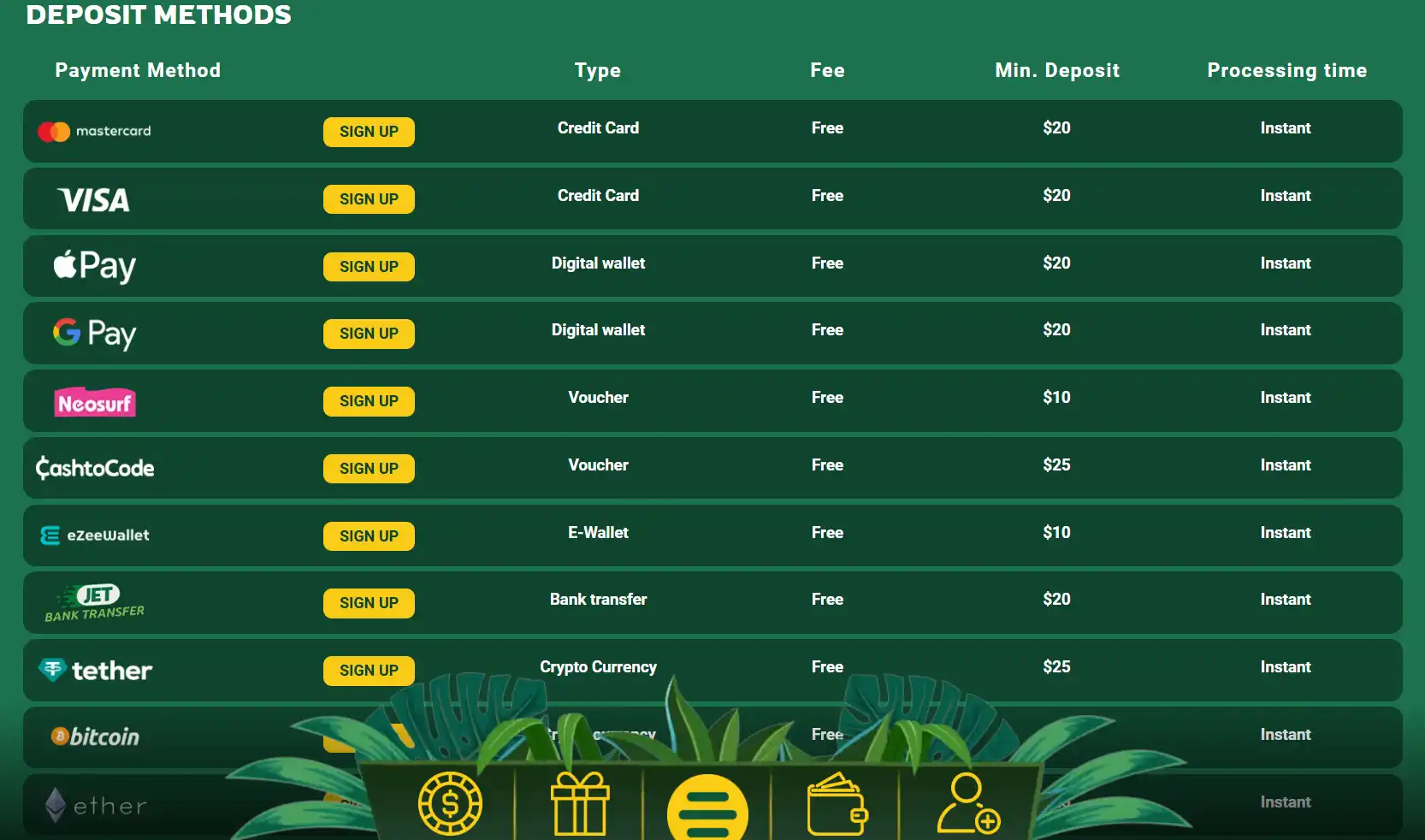
When reviewing payment options on a mobile casino site, separate the ways you can add money from the ways you can receive it. The cashier may list cards, e-wallets and cryptocurrency as deposit methods, but seeing an option for funding an account does not mean it can also be used to withdraw. Check the stated function of each method before making a payment.
Cards can be used for deposits, as can e-wallets and cryptocurrency. Which options appear depends on the casino’s cashier; do not assume that a method available elsewhere will be offered on the site you are viewing. If you are using a phone, take time to read the payment details on screen before confirming. A small-screen layout does not change what a payment method is able to do, and a successful deposit does not establish that the same route is available for a payout.
Neosurf vouchers have a specific limitation: they are for deposits only and cannot be used to withdraw funds. If you choose a voucher, you will need to consider separately how any eligible withdrawal could be received. Treating a voucher as a two-way payment method can leave you unprepared when you want to cash out.
Wazdan Casinos in Australia: Games and Terms
A practical look at game availability, demo access, bonus conditions and payments, focusing on what…
Before paying, check the cashier’s terms and the payment method’s role. Make sure the amount and destination are correct, and keep a record of the transaction. Do not rely on a method’s name alone to infer its limits or assume that a deposit option guarantees a matching withdrawal route.
For Aussie punters considering online pokies on a phone, the practical point is simple: compare payment functionality, not just the list of logos shown in the cashier. Cards, e-wallets and cryptocurrency can be used to deposit, while Neosurf is deposit-only. Confirm the available options and their stated purpose before you commit money.
Live Dealer Games and Bonus Contribution
Live dealer games can make bonus progress look very different from a session on online pokies. A live table may feel like continuous play, but the amount wagered does not necessarily count equally toward a bonus requirement. The operator’s terms determine how much eligible play contributes.
Live dealer games often count for only 0–10% of wagering requirements. That means a wager may add little to the progress meter, even when the full amount is placed. If you are playing with a bonus, check the game contribution rules before joining a live table. Do not assume that every game offered in a real-money live casino advances the bonus at the same rate.
The practical effect is that a live session can leave much of the wagering condition unfinished. You might see your balance change while the bonus progress moves slowly, or not at all if a particular game is excluded. The exact treatment depends on the offer’s terms, so look for the named game category and its stated contribution rather than relying on a general description of the promotion.
This matters before you start live online casino play with an active bonus. If you expect the session to clear the wagering requirement, a low contribution rate can leave you with more conditions to meet. An active promotion may also affect whether a withdrawal request is accepted; wagering conditions must be cleared first. Check the terms and conditions in full, including any game exclusions and maximum-bet rule, and keep your bets within the stated limit.
If the terms are unclear about a particular live dealer game, pause before wagering bonus funds and ask the operator to clarify how that game counts. A live game’s presence in the lobby does not establish that it qualifies toward bonus progress. Make your decision based on the written conditions, not the assumption that real-money play automatically counts in full.
Assessing a Newly Launched Casino
A recent launch is not evidence that an online casino is trustworthy. If you are assessing a new real-money casino, begin by establishing whether it holds an active licence and which authority issued it. A licence claim on a site is not, by itself, confirmation of its current status.
Booongo Online Casinos in Australia: What to Check
A practical guide to checking game listings, provider details and slot information before relying on…
Treat an offshore licence as distinct from permission to provide casino services in Australia. The Interactive Gambling Act 2001 prohibits companies from providing real-money interactive casino games to people in Australia. A foreign licence does not make that service domestically authorised, and protections offered by Australian regulators do not extend to offshore platforms.
A specialist review reported that the four casinos it assessed held active licences from recognised offshore authorities. That is a finding about those reviewed operators at the time of the assessment, not a general measure of new casinos or a lasting guarantee. Licensing status can change, so do not assume a newly launched site is licensed because other operators have been reported as holding licences.
When checking a particular operator, look for the named licensing authority and confirm the status through that authority’s own records where available. Be wary of a claim that gives no authority to check, or that presents an offshore licence as equivalent to Australian approval. The useful question is not simply whether a site describes itself as licensed, but whether the stated licence is active and what it does—and does not—mean for someone in Australia.
Betsoft Casinos in Australia: What Players Should Know
Compare mobile access, bonus wagering rules, promotions, demo play and payment terms, while separating verified…
This check cannot establish that every aspect of an operator is reliable, nor does a new launch make an operator safer or riskier on its own. Keep the distinction clear: offshore licensing is a fact to verify, not a substitute for Australian authorisation or domestic player protections.
Before You Start Playing for Real Money
Before you accept a promotion, open its full terms and read them before you place a bet. A headline may make an offer sound straightforward, but the conditions can affect which games count, how much you may bet and when bonus-related funds can be withdrawn.
A specialist review of casino offers notes that promotions can carry wagering requirements, game-weighting rules and a maximum bet. Treat these as practical restrictions, not fine print to check later. Look for the wagering conditions, which games are excluded or contribute less, and the maximum stake allowed while the promotion is active. Make sure you understand how each rule applies to your intended play.
If the terms are unclear, do not assume that every game or bet will count in the same way. Playing an excluded game or exceeding the stated maximum bet can void bonus winnings. An active promotion may also prevent a withdrawal until its wagering requirement is complete; trying to withdraw earlier may lead to the request being declined or the bonus and related winnings being forfeited.
Check the promotion details in the account’s promotions area and read the full terms and conditions before opting in or playing. Keep your bets within the stated maximum, and track whether the required wagering has been completed. If you do not want to follow the conditions, declining the offer can be simpler than trying to work around them after play has started.
A careful pre-play check helps you decide whether the offer suits you. The important point is not the advertised benefit alone, but the rules attached to it and whether you are comfortable following them.

 Fair Go Casino Bonus Australia: Welcome Offer and Terms GuideFair Go Casino Bonuses and Welcome Offer for Australia The headline value is ...
 Is Fair Go Casino Legit? Trust, Reputation and Licence ChecksIs Fair Go Casino Legit? Trust, Reputation and Licence Checks A trust assessm...