What Australian Law Means for Real-Money Online Pokies
The legal position is important to understand before you consider real-money online pokies in Australia. The Interactive Gambling Act 2001 makes it illegal for a company to provide these games to people in Australia without a domestic licence. No domestic licences for online casinos have been issued, so there is no Australian-licensed online casino offering real-money pokies.
That rule is directed at operators. It does not make an individual player criminally liable simply for playing on an offshore site that accepts Australian customers. This distinction can be easy to miss: a person may be able to access an offshore service, but that does not mean the service is authorised to offer online pokies to people in Australia or that the player receives the protections associated with a locally licensed casino.
The operator’s position and yours are different
The Act governs the provision of prohibited online gambling services to people in Australia. A company cannot make its offer lawful simply by being based overseas or by holding a licence from another country. For Australian residents, the relevant point is that there is no domestic online-casino licence that an operator can hold.
For you as a player, the position is different. The law does not impose criminal liability on an individual merely for using an offshore site that accepts them. That distinction should not be mistaken for approval, endorsement or a guarantee that a particular site is safe. It describes who the law targets; it does not create a local regulator, make an offshore operator accountable under an Australian casino licence, or provide a way to enforce a payout.
This matters when a site presents itself as available to Australians. A page written for Australian visitors, or a service that allows an Australian customer to register, does not alter the legal status of the operator. Nor does the phrase “real-money pokies in Australia” mean there is a domestic online casino market in which operators have been licensed to provide them. The Australian-licensed option does not exist.
Regional Pokies: Casinos and Pokies by Location
What happens if winnings are withheld
The practical risk is clearest when something goes wrong with a withdrawal. If an offshore casino refuses to pay winnings, Australian players have no legal recourse in Australia. You cannot rely on a local online-casino licence as the basis for a complaint or for requiring the operator to release the money: no such licence has been issued.
That leaves a significant difference between being able to use a site and having an effective remedy against it. An offshore operator may accept a customer, but acceptance does not itself give that customer an Australian legal route to recover winnings if the operator withholds them. A dispute can therefore have a different practical consequence from a dispute with a service operating under a domestic online-casino licence—which Australia does not have.
It is worth keeping this distinction in mind before depositing money, rather than only after a problem arises. A site’s statements about serving Australian customers cannot remove the risk created by the absence of Australian legal recourse. If you decide to use an offshore service, you are not choosing an Australian-licensed online casino, because none exists; you are dealing with a provider outside that domestic licensing framework.
Reading “best” claims in context
The phrase “best online pokies real money Australia 2026” can sound as if it points to a set of locally licensed choices. It does not change the underlying position. There are no Australian-licensed online casinos to rank, and a recommendation or comparison cannot turn an offshore operator into a domestic licensee.
This does not mean that every legal question is about the player’s conduct. The key distinction is between the operator’s unlawful provision of real-money online pokies to people in Australia without a domestic licence and the absence of criminal liability for a player who uses an offshore site that accepts them. Both points matter, but neither should be used to imply the other: the player’s lack of criminal liability does not make the operator locally licensed, and an operator’s lack of a domestic licence does not mean the player has Australian legal recourse if winnings are refused.
The safest way to read claims about online pokies for Australian customers is to separate access from protection. A site may be accessible, and it may describe itself as serving Australians, while still having no Australian online-casino licence behind its offer. If a payout dispute follows, the stated position remains stark: Australian players have no legal recourse in Australia against an offshore casino that refuses to pay winnings.
PayID Deposits: What the Payment Method Does—and Does Not—Tell You
PayID is a way to address a bank transfer, not a separate account or a guarantee about the business receiving the money. It uses an alias—such as an email address, mobile number or Australian Business Number (ABN)—in place of the recipient’s bank account details. The payment itself moves through Australia’s New Payments Platform (NPP), which is supported by all major banks and uses end-to-end encryption.
To use PayID, you first need to link an eligible alias to a bank account. If a site offering real-money pokies to Australians lists PayID as a deposit option, the steps will depend on that site’s payment instructions and your bank’s processes. You may be asked to select PayID, enter the requested details and make the transfer through your banking service. Check the recipient information against the instructions before confirming: the alias identifies where the transfer is directed, but it does not tell you whether the recipient is trustworthy.
That distinction matters when you are considering online pokies that pay real money. PayID is a payment rail; it is not a licence, an independent review, or a test of how a game works. A site’s ability to accept a PayID transfer does not show that it is authorised to offer online gambling in Australia. Nor does it establish that its games are fair or disclose the return-to-player (RTP) setting in use. Payment access and the qualities of a gambling site are separate questions.
Best pokies in Melbourne: venue checks and locations
Search results can use broad landmark labels, so venue addresses and routes need checking before…
PayID also does not make a transfer immune to a bank’s own controls. Some Australian banks, including banks among the Big Four, have at times blocked PayID transfers to gambling merchants they identify. A specialist gambling review has reported such blocks, but that should not be read as a fixed rule applying to every customer or every transfer. Bank controls can differ, and a payment that went through before may not necessarily be accepted later. If a transfer is declined, do not assume that repeatedly changing details or trying other routes will solve the issue; check with your bank through its normal support channels.
A block is not evidence that the PayID system has failed. The NPP can provide the underlying payment infrastructure while a bank separately decides whether to process a particular transaction. Likewise, the fact that your bank supports PayID does not mean it will approve every payment made using it. Your bank’s decision concerns the transaction and its own controls, rather than the game’s outcome or the site’s claims.
Before making a transfer, read the payment instructions carefully and make sure the details match what your bank displays. If the recipient name or other information does not correspond with the instructions, pause and seek clarification through a channel you can verify independently. Do not treat a successful transfer as proof that a site will handle later account matters properly; the payment only shows that funds were sent.
Descriptions of PayID as being treated like other qualifying deposit methods also need context. A specialist review has described that approach for the particular sites it assessed. It is not a universal promise about every operator or every payment. The conditions and processing arrangements presented by a site may differ, and a bank can still decline a transaction even when PayID appears as an available option.
For someone looking to play real-money pokies online, it is easy to focus on whether a deposit button is available. That answers only a narrow practical question: whether the site presents PayID as a way to send funds. It does not answer whether the site is licensed, whether its games use a particular RTP, or whether a payment will be accepted by your bank. Those matters should not be collapsed into one judgement simply because the same payment method appears on the screen.
If you decide to make a transfer, keep the amount within limits you have set for yourself and do not send money you cannot afford to lose. PayID can make a bank transfer addressable through familiar details, but it does not reduce the financial risk of gambling or provide a way to reverse a decision because a session went badly. A payment method can be convenient to recognise without being a reason to trust the destination.
Free Play and Real-Money Play Are Not the Same
Free play and real-money play can look similar on screen: the same reels may spin, symbols may line up, and a balance may appear beside the game. But the resemblance does not make the two modes equivalent. In free play, you are not staking your own money on a spin. In real-money play, each stake comes from funds you have deposited or otherwise hold in the account. Treating one mode as a preview of the other can lead to expectations the game cannot support.
A free-play mode can be useful for learning how a pokie works. You can see how its controls respond, what its symbols do and how its features are presented, without risking a real stake. That is a limited purpose. It does not show that the game will produce a particular result when you later play for money, or that you have found a reliable way to win.
The reason is the way spins are determined. A Random Number Generator (RNG) selects the result of each spin as a separate random event. A result from a practice session does not set up, predict or improve the result of a later real-money spin. A run of wins in free play is not evidence that a win is due when you switch modes; a run without wins does not mean a better result is waiting either.
Pokies in Sydney: checking venues and locations
Sydney search results can cover very different locations, so confirm the address, route and venue…
This matters when you are comparing free pokies with pokies for real money. A familiar game may carry the same name and visual design in both modes, but familiarity is not a forecast. Knowing where a button is or recognising a feature can help you understand the interface. It cannot tell you what the next spin will show. The same is true if you have spent a long time practising: time spent in free mode does not build a record that predicts later outcomes.
It can help to separate two questions. First, do you understand how the game is presented and how its controls work? Free play may help with that. Second, what will happen if you stake money? A practice session cannot answer that. The RNG governs each spin separately, so a free result is not a promise, a test run or a signal about a future cash result.
The word “free” can also make a session feel consequence-free in a broader sense. It may have no direct cost to play, but it can still shape how you think about a game. A stretch of favourable results may make the game seem more predictable than it is. An unfavourable stretch may tempt you to keep trying until it changes. Neither reaction alters how the next spin is determined. If you notice yourself treating a practice outcome as a reason to stake money, pause and reset that expectation.
If you choose to move from free play to real-money play, make that a separate decision rather than the automatic next step in a session. Decide beforehand whether spending is something you can afford, and set a boundary you can keep. Do not treat free credits, practice wins or time spent learning a game as money you have earned or as a reason to recover a result. A free mode can show you the mechanics; it cannot remove the uncertainty attached to staking money.
Geelong Pokies: Hours, Access and What Listings Show
A practical look at listing limits, venue access, gaming safeguards and the legal position on…
Some wording around free online pokies can blur the distinction, especially when “free” and “real money” appear together. Read the meaning carefully: free access to a game is not the same as a cash stake, and a free-play result is not itself a cash win. If an offer or mode has separate terms, those terms determine what participation means. Do not assume that a balance shown in a free session can be withdrawn or transferred into a real-money balance.
The practical point is simple: free play can help you become familiar with a pokie, but it cannot demonstrate what will happen in another session. Whether you are considering trying a game at no cost or playing online pokies for real money, keep those purposes distinct. The appearance of continuity between modes does not create continuity between outcomes. Each spin starts with its own random result.
Winning Claims, Bonus Turnover and Withdrawal Limits
A claim that you can win real money on online pokies says nothing about how much you may keep or how easily you can withdraw it. Before treating a bonus or a displayed win as available cash, read the terms that govern playthrough, cash-out caps and withdrawals. These conditions can change what a balance means in practice.
Calculate the turnover first
A wagering requirement, also called a turnover multiplier, tells you how much you must bet before bonus-related funds or winnings become eligible for withdrawal. Check what amount the multiplier applies to: the bonus alone, or your deposit plus the bonus. That distinction can change the required turnover substantially.
For instance, a specialist affiliate review describes a $500 bonus with a 40x requirement: the calculation is $500 multiplied by 40, or $20,000 in bets before withdrawal. If the requirement applies to a $500 deposit and a $500 bonus together, a 35x multiplier means $1,000 multiplied by 35, or $35,000 in bets. These are calculations, not predictions that you will win or retain money while meeting the requirement.
The same specialist affiliate review recommends looking for requirements of 35x or lower and characterises anything above 40x as punishing. Treat that as the review’s assessment, not a universal rule. The important detail is the operator’s written terms: confirm the multiplier, the balance it applies to, which games count, and whether any maximum bet or time condition applies. Do not assume a large balance can be withdrawn simply because it appears on screen.
Calculating Turnover
1
Identify the multiplier
Determine the wagering requirement (e.g., 40x) and the balance it applies to (the bonus alone or deposit plus bonus).
2
Perform the multiplication
Multiply the applicable balance by the requirement (e.g., $500 bonus × 40 = $20,000 in bets).
3
Verify the result
Confirm the total amount of bets required before winnings become eligible for withdrawal.
Check caps and payout ceilings
Free spins can have a separate cash-out cap. If winnings from the spins are capped, any amount above that ceiling may not be withdrawable, even if the game’s balance shows a larger figure. Look for the cap and the rules for converting free-spin winnings into withdrawable funds before accepting the offer.
Withdrawal limits are another condition to check. A specialist affiliate review reports that some casinos set weekly or monthly ceilings of $5,000–$10,000. Under a ceiling of that kind, a $50,000 jackpot could be paid in instalments over a multi-year period rather than in one transfer. The figures describe the review’s reported examples, not a standard that applies everywhere. Read the current cash-out terms for the specific account, including any distinction between a single withdrawal and a total paid within a period.
Prepare for verification
A specialist affiliate review says identity checks before a first withdrawal are common. You may be asked for a photo of identification and proof of your address; some operators may also request a selfie holding your identification. Check the required document types and submission instructions in advance, and make sure the details on your account match your documents.
Verification does not remove the other withdrawal conditions. A request may still be affected by unfinished wagering, a free-spin cap or a payout ceiling. Keep a copy of the terms that applied when you accepted an offer and check the balance breakdown before requesting a cash-out. That makes it easier to see whether the amount shown is subject to a condition—and to decide whether those conditions are acceptable before you continue.
Pokies in Brisbane: Venue Checks and Online Rules
A practical guide to checking Brisbane pokies venues, opening details, payment claims and what online…
No-Deposit Offers, PayID and the Cost of Funding an Account
A no-deposit promotion and a PayID payment option are separate things. The first sets conditions for promotional credit or spins; the second is a way to transfer money from a linked bank account. Seeing PayID mentioned does not establish that a real-money offer is available to you, or make its terms more favourable. Treat promotional language as something to inspect, not as a reason to fund an account.
A “no-deposit” label also does not mean that any resulting balance can be withdrawn without conditions. Read the offer rules for wagering requirements, eligible games, expiry terms and any restrictions on cashing out. If the offer requires a deposit to unlock or use a bonus, it is not cost-free simply because the promotion is described as no-deposit. Do not assume promotional winnings are cash until the terms say what you must do to withdraw them.
For a deposit-plus-bonus offer, the wagering base may include both amounts. A specialist gambling review gives this illustration: a $500 deposit matched with a $500 bonus under a 35x requirement would mean $35,000 in bets before withdrawal. That is turnover, not a charge, but it can require repeated wagering and does not guarantee that funds will remain. Check whether the multiplier applies to the bonus alone or to the combined deposit and bonus; the difference can be substantial.
Do
Set clear limits on what you can afford to lose
Check the specific multiplier and terms for each offer
Verify identity document requirements in advance
Don't
Borrow money or use credit to fund gambling
Assume "no-deposit" means winnings are withdrawable without conditions
Treat a successful transfer as proof of site reliability
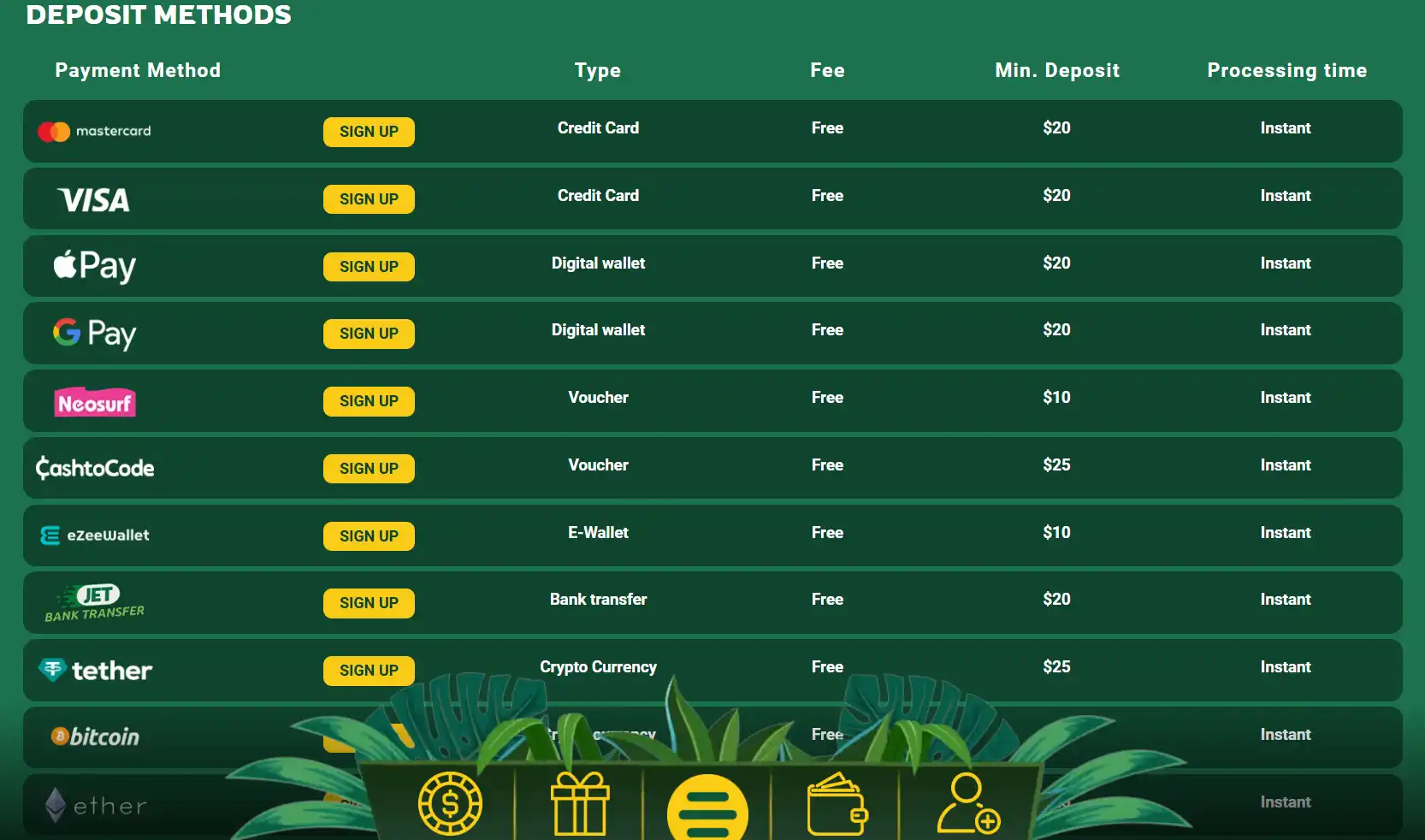
Funding thresholds are another separate cost. Specialist reviews of gambling payment options report minimum deposits of AU$10 to AU$20 at many operators, with some setting a AU$5 minimum. These are reported terms, not a promise that a particular payment method or promotion will use the same threshold. Check the amount displayed for the selected method before authorising a transfer.
Paying by card can also cost more than the amount deposited. Specialist payment reviews warn that a bank or card issuer may process a gambling deposit as a cash advance. That can mean a fee of 3–5% and interest starting immediately, rather than after the usual purchase billing cycle. Check your card terms before proceeding. The same type of reviews report that Australian banks and card companies are stepping up blocks on payments to identified gambling merchants, so a declined transaction may reflect a bank restriction rather than a problem with your balance.
If a transfer is blocked, do not keep attempting it or switch methods without considering the cost and your own limits. A payment that goes through quickly does not make a bonus easier to clear, and a promotion does not reduce the money at risk. Decide what you can afford to lose before making any deposit, and avoid borrowing or using credit to fund gambling.
Why “Australian” Does Not Mean Australian-Licensed
A website may use Australian wording, refer to local players or present its pokies as suited to an Australian audience. Those details describe how the service is presented; they do not show that it holds an Australian licence. The same distinction applies when a site offers payment options familiar to people in Australia. A local-facing feature is not evidence of domestic authorisation.
Best Pokies in Adelaide: What Players Can Verify
A practical guide to interpreting RTP and checking Adelaide venues, online options and payment-related searches…
That matters because there is no Australian-licensed online casino. The Interactive Gambling Act 2001 prohibits companies from supplying real-money online pokies to people in Australia unless they have a domestic licence, and no such licences have been issued. So a label such as “Australian casino” cannot, by itself, mean that the operator is licensed here.
When you see “Australian” beside real-money pokies, read it as a description of the intended audience or presentation, not as a regulatory status. Australian spelling, references to local customers, or a page framed around Australian real-money play do not change the legal position. Nor does a site become Australian-licensed simply because it appears designed for people in Australia.
This is a useful distinction when comparing claims. “Available to Australians” and “licensed in Australia” are not interchangeable statements. The first describes who a service may be trying to reach; the second would require a domestic licence. Since none have been issued for online casinos, an Australian label should not be taken as proof of that status.
The phrase “best Australian online pokies for real money” can also blur these meanings. “Australian” may point to the audience, rather than to where an operator is licensed or regulated. If a site uses the word prominently, look at what the claim actually says instead of treating the label as a guarantee.
For you, the practical point is simple: judge the wording as marketing language unless it clearly establishes a real regulatory status—and there is no Australian online casino licence to establish. That does not require assuming that every Australian-facing page makes the same claims. It means keeping the label separate from the legal position, rather than letting familiar language stand in for a licence.
Brisbane Casino Hotels: What to Check Before Booking
Casino-linked stays can differ in access, room terms and included services, so confirm the property’s…
Pokies Apps and the Limits of Offshore Protections
A pokies app can make an offshore gambling service easier to access, but it does not change the service’s legal status or give you the protections attached to an Australian-licensed operator. The app is simply a way to reach an online service; its presence in an app store, or its ability to open on your phone, is not evidence that the operator holds a domestic licence.
The Interactive Gambling Act 2001 prohibits companies from offering real-money online pokies to people in Australia without a domestic licence. No such licences have been issued. The Australian Communications and Media Authority (ACMA) enforces the Act and blocks access to illegal offshore gambling sites. Internet service providers must comply with ACMA’s blocklist, so a site or app that becomes inaccessible may have been affected by that enforcement. A change of device or route into the service does not remove the underlying restrictions.
This matters when you consider what help is available if something goes wrong. BetStop is Australia’s self-exclusion register for services licensed domestically, but it does not bind offshore gambling sites. Registering there should not be treated as a way to block access to every offshore app or account. If you are trying to stop gambling, do not assume that an offshore service will recognise a domestic exclusion.
Nor does an app’s polished design establish that its operator will resolve a complaint fairly. An offshore app can accept account details and deposits while sitting outside the protections that apply to Australian-licensed gambling services. If an offshore casino refuses to pay winnings, you have no legal recourse in Australia. That is a practical risk to understand before sharing personal information or putting money into an account.
If you are weighing up an app for real-money pokies, separate ease of access from consumer protection. A download link, local payment option or Australian-themed presentation cannot supply a licence that does not exist. ACMA’s blocking role and BetStop’s limits are different: one concerns access to illegal offshore gambling sites, while the other applies only to Australian-licensed operators. Neither turns an offshore app into a domestically regulated service.
Best pokies in Tasmania: venue hours and game returns
Venue opening hours and gaming-area access can differ; listings, return figures and online claims each…
Mobile Play: Browser Access Does Not Change the Risks
A phone browser can provide a way to reach online play, but it does not turn pokies into a different kind of game or make the experience safer. A larger screen, quick access or a saved page does not alter the underlying odds or give you extra protection. Mobile pokies for real money carry the same need for clear limits and careful decisions as play on a computer.
The outcome of a spin is not shaped by the device you use or by what happened in your previous session. A Random Number Generator selects the result, and every spin is a separate event. A run of wins or losses on a phone cannot tell you what the next spin will do. Nor does switching browsers or taking a break reset the game in a way that improves your chances.
Before opening a session, consider whether you can set deposit limits, loss limits and time limits. These tools can help keep spending and play within boundaries you choose in advance. Self-exclusion is another responsible-gambling measure; if you use it, do not assume it will prevent access to every offshore service.
BetStop applies to Australian-licensed operators only. It does not bind offshore sites, so registering with BetStop does not block you from using them. This matters when considering mobile play: a control that applies in one part of the market may not follow you across every site you can reach in a browser.
Keep your phone’s convenience separate from a decision to deposit. If you find yourself extending a session, raising your spending limit or trying to recover losses, stop rather than treating the next spin as a way to change the outcome. Mobile access makes it possible to open a game in more places; it does not make the result more predictable or remove the need for limits.
New Sites and PayID: Verify Before You Deposit
A new site accepting Australian players may look straightforward to use, but a familiar payment option is not proof that the operator is licensed or that its games are fair. PayID is a way to transfer funds, not a quality check. Australia has no licensed online casino, and an offshore operator’s willingness to accept PayID does not change that.
Before depositing, read the site’s account and withdrawal conditions. Check whether it explains what identity documents are required, how to submit them and when verification takes place. If those details are unclear, treat that uncertainty as a reason to pause rather than assume you can sort it out after a win.
A specialist review describes identity checks before a first withdrawal as a common requirement at online casinos. The process may involve a photo of your ID and proof of your address; some operators may also ask for a selfie holding your ID. Have the relevant documents ready and make sure the details on them match your account. This can help avoid a preventable delay, but it cannot guarantee that a withdrawal will be approved or paid.
PayID support should not be used to infer anything about licensing, game fairness or return-to-player information. Those are separate questions, and a payment option cannot answer them. The same caution applies when a site presents itself as new or Australian-facing: appearance and payment access do not provide Australian legal protection. If an offshore casino refuses to pay winnings, you have no legal recourse in Australia.
A careful check before funding an account cannot remove every risk. It can help you understand what the site expects from you before you decide whether to proceed.
PNG Online Pokies: What Can Be Verified for Australian Readers
Список казино
Choosing real-money pokies in Australia means checking the available details before you play. Use this list as a starting point and consider which stated features matter most to you.
1
JeetCity Casino
License
Curacao eGaming (Dama N.V.)
JeetCity Casino is listed with a Curacao eGaming licence held by Dama N.V.
2
LuckyVibe
License
Curacao Gaming Control Board OGL/2023/176/0095 (Hollycorn N.V.)
LuckyVibe is listed with a Curacao Gaming Control Board licence, OGL/2023/176/0095, held by Hollycorn N.V.
3
Kingmaker
Payout speed
crypto ~90 minutes, fiat 1-5 days
Min. deposit
A$30
Kingmaker lists a minimum deposit of A$30. Its stated payout speed is around 90 minutes for crypto and 1–5 days for fiat.
4
Roby Casino
License
Curacao eGaming (Roby Games Ltd)
Roby Casino is listed with a Curacao eGaming licence held by Roby Games Ltd.
5
Playfina Casino
License
Curacao eGaming (Hollycorn N.V., since 2017)
Min. deposit
A$20-30 (depends on the offer)
Playfina Casino is listed with a Curacao eGaming licence held by Hollycorn N.V. since 2017. Its minimum deposit is A$20–30, depending on the offer.
6
Vegaz Casino
License
Curacao OGL/2024/1335/0780
Min. deposit
EUR 20
Vegaz Casino is listed with Curacao licence OGL/2024/1335/0780 and a minimum deposit of EUR 20.
7
JustCasino
License
Curacao Gaming Control Board
JustCasino is listed with a Curacao Gaming Control Board licence.
8
House of Pokies
License
international iGaming licence – jurisdiction not named in the source
Payout speed
PayID 1-24 hours
Min. deposit
A$30 (PayID from A$10)
House of Pokies is listed with an international iGaming licence, though the jurisdiction is not named in the source. Its stated PayID payout speed is 1–24 hours, with a minimum deposit of A$30, or A$10 via PayID.
9
Ricky Casino
Payout speed
crypto under 1 hour, PayID 1-3 business days
Min. deposit
A$20 (A$30 to qualify for the bonus)
Ricky Casino lists a minimum deposit of A$20, with A$30 required to qualify for the bonus. Its stated payout speed is under an hour for crypto and 1–3 business days for PayID.
10
Lucky Dreams
License
Curacao
Min. deposit
A$20 (POLi)
Lucky Dreams is listed with a Curacao licence and a minimum POLi deposit of A$20.
A reference to PNG in a pokies listing or site description does not, by itself, establish where an operator is based, what licence it holds, or whether the service has been checked. The label alone cannot confirm that a particular casino is authorised to serve people in Australia. No specific PNG site, licence or product can be verified from that wording.
For Australian readers, the relevant point is where you are playing from. Under the Interactive Gambling Act 2001, companies cannot legally offer real-money online pokies to people in Australia without a domestic licence. No domestic licences for online casinos have been issued. A foreign location or licence does not change that Australian position.
That distinction matters if you are considering a site described as offering PNG online pokies for real money. A name, country label or claim about licensing is not the same as Australian authorisation. It also does not give you a reliable basis for assuming that a dispute will be resolved in your favour.
The practical risk is clearest when winnings are refused. If an offshore casino withholds a payout, Australian players have no legal recourse in Australia to compel payment. That leaves you without the domestic legal protection you might expect from an Australian-licensed service—which does not exist for online casinos.
Before treating a PNG label as meaningful, separate what it actually tells you from what it does not. It may be part of a site’s description, but it cannot establish that the operator is authorised in Australia or guarantee that winnings will be paid. The Australian legal position and the lack of local recourse remain the key considerations.

 Fair Go Casino Bonus Australia: Welcome Offer and Terms GuideFair Go Casino Bonuses and Welcome Offer for Australia The headline value is ...
 Is Fair Go Casino Legit? Trust, Reputation and Licence ChecksIs Fair Go Casino Legit? Trust, Reputation and Licence Checks A trust assessm...