What Australian Law Means for Offshore Casino Payments
When you look into whether an offshore website takes Osko, the payment question sits within a legal boundary that matters more than the transfer method. Under the Interactive Gambling Act 2001, operators cannot provide real-money online casino games to people in Australia. That restriction applies to the operator offering the service; it does not explicitly make an Australian player’s use of an offshore site a criminal offence.
The Australian Communications and Media Authority, usually called ACMA, oversees enforcement of the Act. Its role is directed at the provision of prohibited interactive gambling services. An offshore operator’s location or payment process does not, by itself, change the rule that applies when real-money casino games are offered to people physically in Australia.
For you, the practical distinction is between the operator’s legal position and your own. The law targets the provision of the service, rather than explicitly criminalising the player for using an offshore casino. That should not be mistaken for a recommendation to use one, or for a guarantee that a particular site is lawful, dependable or accessible. It simply describes how the Act treats the operator and the player.
Список казино
When looking for casino sites that accept Osko in Australia, check the payment details carefully: the available information here does not confirm Osko support for every site. Use this list as a starting point and verify the deposit options before signing up.
1
JeetCity Casino
License
Curacao eGaming (Dama N.V.)
JeetCity Casino is listed with a Curacao eGaming licence held by Dama N.V. Check directly whether Osko is available for your deposit.
2
LuckyVibe
License
Curacao Gaming Control Board OGL/2023/176/0095 (Hollycorn N.V.)
LuckyVibe is listed with a Curacao Gaming Control Board licence, OGL/2023/176/0095, held by Hollycorn N.V. Confirm Osko availability with the casino before depositing.
3
Kingmaker
Payout speed
crypto ~90 minutes, fiat 1-5 days
Min. deposit
A$30
Kingmaker lists a minimum deposit of A$30, with crypto payouts taking around 90 minutes and fiat payouts 1–5 days. The available details do not confirm Osko support, so check its payment options.
4
Roby Casino
License
Curacao eGaming (Roby Games Ltd)
Roby Casino is listed with a Curacao eGaming licence held by Roby Games Ltd. Check whether Osko is offered as a deposit method.
5
Playfina Casino
License
Curacao eGaming (Hollycorn N.V., since 2017)
Min. deposit
A$20-30 (depends on the offer)
Playfina Casino is listed with a Curacao eGaming licence held by Hollycorn N.V. since 2017, and its minimum deposit is A$20–30 depending on the offer. Verify Osko availability before you deposit.
6
Vegaz Casino
License
Curacao OGL/2024/1335/0780
Min. deposit
EUR 20
Vegaz Casino is listed with Curacao licence OGL/2024/1335/0780 and a minimum deposit of EUR 20. The provided details do not specify whether you can deposit using Osko.
7
JustCasino
License
Curacao Gaming Control Board
JustCasino is listed with a Curacao Gaming Control Board licence. Check its current payment options directly to see whether Osko is available.
8
House of Pokies
License
international iGaming licence – jurisdiction not named in the source
Payout speed
PayID 1-24 hours
Min. deposit
A$30 (PayID from A$10)
House of Pokies lists PayID payouts of 1–24 hours and a minimum deposit of A$30, or A$10 when using PayID. Its source names an international iGaming licence but not the jurisdiction; Osko support is not specified.
9
Ricky Casino
Payout speed
crypto under 1 hour, PayID 1-3 business days
Min. deposit
A$20 (A$30 to qualify for the bonus)
Ricky Casino lists crypto payouts under 1 hour and PayID payouts in 1–3 business days. The minimum deposit is A$20, or A$30 to qualify for the bonus; check directly whether Osko is supported.
10
Lucky Dreams
License
Curacao
Min. deposit
A$20 (POLi)
Lucky Dreams lists a Curacao licence and a minimum deposit of A$20 when using POLi. The available details do not confirm Osko support, so check the payment options before depositing.
Australian consumer law does not protect players who use offshore casinos. If a dispute arises over an account, a payment or funds held by an offshore operator, you should not assume that Australian consumer protections will provide a remedy. A website that uses Australian currency, addresses Australian customers or displays a locally familiar payment option does not thereby become an Australian-regulated casino or bring its customers within the ordinary protections they might expect from a local service.
This is important when assessing claims about Osko. A payment label is not evidence that an operator is authorised to provide real-money casino games in Australia, nor does it establish what recourse you would have if a transaction or account dispute occurred. The legal status of the gambling service and the mechanics of a payment are separate questions. A bank-linked transfer method cannot change the operator’s obligations under the Act.
So, if you are weighing an offshore casino’s payment wording, keep the legal position in view before considering convenience. The key issue is not whether a transfer might be described as instant or familiar, but that the underlying real-money casino service is prohibited when offered to people in Australia. The absence of explicit criminalisation of the player does not remove the limits on the operator or create Australian consumer-law protection for you.
That distinction can help you avoid reading too much into a payment claim. A site may present itself as available to Australians, but an Australian-facing description alone does not settle the legal question or ensure that you can resolve a problem under Australian consumer law. Treat payment information as a separate claim to assess, not as proof of legal approval or consumer protection.
Payments & Crypto at Australian Casinos
How Common Australian Payment Habits Relate to Osko Claims
Australians are familiar with several ways of paying in everyday life. Contactless credit and debit cards are accepted almost everywhere in Australia, and mobile wallets such as Google Pay and Apple Pay are similarly widespread. Many people also move between cards, mobile wallets and services linked to bank accounts, including PayPal. That familiarity can make a payment method mentioned on a casino page sound straightforward. It does not, by itself, tell you whether a particular operator accepts Osko.
The distinction matters because a payment habit in shops or with ordinary online retailers is not evidence of a payment route being available for gambling. A person may tap a card for everyday purchases, use a phone wallet for another transaction and rely on a bank-linked service elsewhere. None of those experiences confirms that an online casino’s cashier offers Osko, or that a payment described with that name would be processed in the way you expect.
A page might use broad wording about Australian payments, bank transfers or instant transactions. Those descriptions can sound relevant, but they are not interchangeable with a clear statement of Osko acceptance. Nor does the presence of a bank-linked service such as PayPal establish that Osko is supported. Each method has its own arrangements and conditions, and one method’s availability cannot be used to infer another’s.
The same caution applies to references to mobile access. Using a phone to visit a site does not make the payment a mobile-wallet transaction, and a mobile-friendly cashier does not establish support for Osko. A phone can be used to access many kinds of payment services; the device itself says nothing about which methods an operator can accept. Treat the payment method and the device used to access it as separate details.
It is also worth separating what is familiar across Australia from what a particular business can process. The near-universal presence of contactless payments in everyday settings describes consumer experience, not the payment options of an offshore gambling operator. A casino site may display methods that are unavailable to a particular customer, or use wording that leaves the actual route unclear. General familiarity should not be treated as confirmation.
If you see an Osko reference alongside cards, wallets or bank-linked services, read the wording narrowly. Does it name Osko as an available option, or merely mention Australian banking and fast payments in general? Is the term attached to a specific transaction route, or included in a broad list of payment-related phrases? These distinctions help you avoid taking a familiar payment landscape as proof of a specific service.
Even a direct-looking claim should not be treated as a guarantee that a payment will work for you. A displayed method may not be available in every circumstance, and wording alone does not establish how a transaction is handled. Before relying on a claim, look for information that identifies the method clearly and explains its actual role. Do not assume that the wide use of contactless cards or phone wallets carries over to online gambling.
Casino sites accepting Paysafecard in Australia: key checks
The Interactive Gambling Act restricts operators from offering real-money casino games to people in Australia,…
The word “Australian” can also be used loosely in descriptions of gambling sites. An Australian-facing page, local currency reference or mention of familiar payment habits does not make an offshore operator a locally protected service. Australian consumer law does not protect players who use offshore casinos. That is separate from the question of whether a particular payment method is named, but it is important context when deciding how much confidence to place in a payment claim.
In short, everyday comfort with cards, mobile wallets and bank-linked services explains why these methods feel familiar to Australian consumers. It does not establish that an Australian-facing casino accepts Osko, whether for a deposit or any other transaction. Keep the general payment culture in one category and the operator’s specific, clearly stated options in another. When the wording does not make the distinction clear, familiarity is not a substitute for confirmation.
Before You Try a Small Osko Deposit
A small proposed deposit can feel like a cautious way to test a payment route. But a figure such as $10 is only an amount you might consider; it does not establish that a casino will accept that amount through Osko. Nor does a payment method appearing in a search or promotional wording show that it is available to you in the cashier.
Do
Check the operator's actual payment conditions in the cashier
Verify if the minimum deposit applies specifically to Osko
Review identity and KYC requirements before transacting
Don't
Assume a small amount like $10 guarantees Osko acceptance
Rely on forum posts or old screenshots for current payment terms
Assume a bank transfer is equivalent to Osko
Before making any decision, look for the operator’s actual payment conditions and check what the cashier displays for your account. If Osko is not clearly presented as an available option, do not assume that a bank transfer or another bank-linked service is equivalent. Similar-sounding payment descriptions can refer to different processes, and a small amount does not remove the need to verify the route.
Check whether the stated minimum applies to the payment method you intend to use, rather than to deposits generally. Also read any conditions shown alongside the amount, including whether the cashier requires a particular currency or account setup. Do not rely on an amount mentioned in a forum post, review or old screenshot as proof of what will be accepted now. Payment information can become outdated, and an operator’s current terms and cashier are the relevant places to check.
A low amount is not a substitute for checking the consequences of a transaction. Review the conditions before authorising anything, and make sure you understand what the payment screen is asking you to do. If the instructions do not clearly identify Osko and the destination or recipient, stop rather than trying a transfer based on an assumption. Keep your own bank’s payment controls and statements in view; a transfer should not be treated as reversible simply because the amount is small.
Verification can also come before any financial transaction. Online casinos commonly ask customers to complete identity checks before allowing money-related activity. Be prepared for a Know Your Customer assessment, which may involve confirming your identity and account details. Do not assume that a small first deposit will avoid these checks or that a payment will be processed before the operator has reviewed the required information.
Skrill Casino Sites for Australia: What to Verify
Skrill availability, withdrawal timing and Australian legal rules are separate issues that require verification before…
Read the operator’s explanation of its verification process before submitting personal documents. Make sure you understand which details are requested, how they are to be provided and how the operator says it handles them. If an identity check is incomplete, the payment process may not proceed as you expect. Avoid sending documents through an unverified contact channel or giving sensitive information in response to an unsolicited message.
It is also important to separate the payment question from the legal and consumer-protection question. Under the Interactive Gambling Act 2001, providing real-money online casino games to people in Australia is prohibited. Australian consumer law does not protect players who use offshore casinos. A small deposit does not change either point, and an Australian-facing payment description does not create local protection.
For that reason, do not treat a successful-looking cashier screen as assurance that a service is lawful or that you have recourse if a payment or account issue arises. Consider the possibility of losing the money before you proceed, and do not send funds you need for essentials or obligations. If a condition is unclear, the safer choice is to pause rather than guess.
The practical question is not simply whether you can enter a small number. It is whether the payment option, amount and account requirements are clearly stated for your circumstances, and whether you understand the risks before authorising a transfer. A modest figure can limit the amount at stake, but it cannot confirm that Osko is accepted, bypass identity checks or provide Australian consumer protection.
What to Check Before Relying on an Instant Osko Withdrawal
“Instant” can sound like a clear promise, but it is not a complete description of when money would reach you. A withdrawal involves a request to release funds, and the meaning of any speed claim depends on what the operator counts as the start and finish. Does the wording refer to a request being submitted, a payment being sent, or money appearing in your account? Those are different points in a process. Unless the terms define the claim, it should not be treated as a promise of immediate access to funds.
A deposit and a withdrawal are separate transactions. A payment method that appears at the deposit stage does not, by itself, establish that the same route can be used to pay money out. Nor does a quick deposit show that a withdrawal will be processed at the same pace. If you see a claim about an instant Osko withdrawal, read it as a claim about outgoing payments specifically—not as a conclusion that can be drawn from a deposit option.
The word “instant” also leaves important conditions unstated unless the operator explains them. The timing could be described differently depending on whether a request is awaiting review, has been approved, or has been sent. Do not assume that a statement about speed covers every stage. Look for the operator’s own written terms and check whether they define when the clock starts, what event counts as completion, and whether the stated timing is conditional. If those points are unclear, the wording does not give you a dependable basis for planning around the money.
Identity checks matter to that expectation. Online casinos may require you to complete a Know Your Customer assessment before they process financial transactions. That assessment can involve confirming who you are and reviewing account information. If verification has not been completed, a claim about fast payment should not be read as meaning that a withdrawal request will bypass checks. A completed check also does not, on its own, establish that an Osko payout route is available or that funds will arrive immediately.
Casino Sites That Accept Amex in Australia
Amex acceptance can vary by operator and transaction, affecting deposits, withdrawals, fees and the payment…
Keep the payment route distinct from the operator’s handling of a request. A reference to Osko, where one appears, does not tell you which part of a transaction it describes. It may be used to suggest a transfer method, but that wording alone does not explain the withdrawal procedure, the conditions attached to it, or the point at which funds would be available to you. Do not infer an outgoing payment option from a general payment-method label.
It is also sensible not to plan essential spending around a promised payout speed. If funds are needed for bills or other commitments, an unverified “instant” claim is not a safe basis for relying on their arrival. Keep your own record of the wording and terms you saw, and avoid making a financial decision on a headline alone. If an operator cannot explain its withdrawal conditions clearly, treating the stated speed as uncertain is more prudent than assuming the best-case interpretation.
Casinos That Accept Visa in Australia: What to Check
Visa acceptance signals a claimed payment option, not legal authorisation, withdrawal support or protection under…
There is a wider limit to what a payment promise can protect you from. Under the Interactive Gambling Act 2001, providing real-money online casino games to people physically in Australia is unlawful for operators. The law does not explicitly make an individual player’s use of an offshore site a crime, but Australian consumer law does not protect you when you use an offshore casino. ACMA enforces the Act, and offshore services may be blocked. A fast-payment phrase does not change that legal position or provide the safeguards of Australian consumer protection.
For that reason, do not let an advertised speed turn into an assumption that a payout is assured, immediate, or protected. A withdrawal claim is meaningful only to the extent that its terms clearly explain the route and conditions—and even clear wording cannot remove the legal and consumer-protection risks of using an offshore casino from Australia.
Assessing Claims About an Osko Casino
“Best” is a judgement, not proof that a payment method is available. A site may describe itself as an Osko casino, or appear in a list of recommended options, but that wording alone does not establish that Osko can be used by someone in Australia. Treat a ranking as a claim to assess, not as confirmation.
BPAY Casino Sites in Australia: What to Verify
Familiarity with bank-linked payments does not confirm that a casino offers BPAY or supports it…
Start by looking for precise, consistent information about what the operator means by “Osko”. A clear statement should identify the payment route and explain any conditions that affect Australian customers. If one page mentions Osko but the cashier, payment terms and customer support describe something different—or say nothing specific—the claim remains uncertain. A logo or a generic “instant banking” label is not enough to show that the service is Osko.
Check whether the information is current and comes from the operator, rather than relying solely on an affiliate list or promotional page. Operator wording is not independent proof, but it gives you something specific to compare with the published terms and the options shown to Australian visitors. If the details conflict, or a condition is left unclear, do not assume the more favourable interpretation. Ask for an answer in writing before making a decision; a vague reply does not resolve the discrepancy.
Be cautious with claims that combine a payment method with a bonus or other incentive. A casino bonus does not verify that Osko is supported, and promotional language can distract from the conditions that matter. Read any terms separately and do not let a headline stand in for clear payment information. No claim of being the best Osko site should be treated as a reliable comparison unless the underlying details can be checked.
Neosurf casinos in Australia: legal and payment checks
Neosurf compatibility is separate from legality, deposit conditions, game availability and withdrawal routes. The legal…
There is also a more important boundary than any ranking. Under Australia’s Interactive Gambling Act 2001, operators may not provide real-money online casino services to people in Australia. The Australian Communications and Media Authority enforces the Act, and access to offshore services may be blocked. Australian consumer law does not protect you when you use an offshore casino. That means a polished website, an Australian-facing description or a confident payment claim should not be mistaken for local consumer safeguards.
For that reason, a “best Osko casino” label cannot settle the questions that matter: whether the payment claim is specific and consistent, whether it applies to you, and what protections you would have if something went wrong. If those points cannot be established from clear information, the sensible conclusion is not that the site is the best option, but that the claim has not earned your trust.
Casino Games and Payment Methods Are Separate Questions
A reference to Osko in connection with a casino payment does not tell you what the service offers. Payment information concerns how money might be sent or received; a game catalogue concerns a separate part of the service. One claim cannot verify the other.
EcoPayz Casino Sites in Australia: What Is Verified
Australian law restricts operators from offering real-money online casino games, while this page separates confirmed…
That distinction matters when wording links Osko with particular games. A page may use language that makes the payment method and a game offering seem connected, but the wording alone does not establish that the game is available, that Osko can be used for it, or that a transaction would be processed as described. Do not treat a general payment statement as evidence about a specific game.
The same caution applies in reverse. A description of games does not show that Osko is among the payment options. Nor does a payment label establish that a service is accessible to you in Australia or that it carries Australian consumer protections. Those are separate questions, and a single promotional phrase cannot settle them.
If you encounter a claim connecting Osko with a game, look for clear terms that identify what the claim actually covers. Does it refer to a deposit, a withdrawal, or merely a general payment facility? Does it specify which service and conditions apply? Vague wording that does not answer those points should not be read as confirmation. Avoid making a financial decision on the assumption that a game and a payment route are linked simply because they appear together in a description.
For Australian residents, there is also an important boundary: the Interactive Gambling Act 2001 prohibits operators from providing real-money online casino games to people physically in Australia. A payment method cannot change that legal position. Australian consumer law does not protect players who use offshore casinos, so a payment reference should not be taken as reassurance about recourse if a dispute arises.
Keep the claims distinct: payment wording is not proof of a game offering, and a game description is not proof of Osko support. Treat each statement according to what it specifically establishes, rather than assuming one confirms the other.
What “Australian Casino” Does—and Does Not—Confirm
An “Australian casino” label can describe a site’s intended audience, currency or presentation. It does not, by itself, show that the operator is based in Australia, holds an Australian casino licence or provides a payment method such as Osko. The wording is not proof of where the business is established or which rules apply to it.
That distinction matters because the legal position is not the same as the marketing language. Under the Interactive Gambling Act 2001, operators must not provide real-money online casino games to people physically located in Australia. The Australian Communications and Media Authority is responsible for enforcing that law. A site’s Australian-facing description does not change the restriction or make its service locally authorised.
If you use an offshore casino, Australian consumer law does not protect you in the way it would for a service covered by Australian protections. If a dispute arises, the operator may be outside the practical reach of Australian complaint and recovery processes. That can leave you with fewer options if access to your account or funds becomes a problem. The label “Australian” should not be treated as a promise of local recourse.
It also cannot establish that the site accepts Osko. A reference to Australian players, Australian dollars or localised content does not confirm that Osko is available, or that a particular payment route will work. Those are separate claims and need clear, current terms from the operator; a broad country label is not enough to verify them.
Before relying on any Australian-facing description, separate what it actually tells you from what you might infer. It may indicate whom the site is trying to reach, but it does not establish local authorisation, Australian consumer protection or Osko acceptance. Do not treat the wording as a substitute for checking the legal position and the operator’s stated terms.
Trustly Casino Sites in Australia: What to Verify
Trustly access may depend on the operator, the country selected at registration and the payment…
Checking an Osko Withdrawal Claim Before You Deposit
A claim that a casino offers Osko withdrawals is not enough to establish that you can receive money that way. Before depositing, look for clear, current terms that identify Osko specifically as a withdrawal method—not merely a payment brand mentioned somewhere on the site.
Check whether the wording explains the full route: whether withdrawals go to an account or payment detail you control, whether the method must first be used for a deposit, and whether any account, identity or payment checks apply. A deposit option does not by itself confirm a matching withdrawal route. Nor does a general statement about “fast payments” establish that Osko will be used.
Read the withdrawal terms alongside the cashier information. Look for conditions that could change the method offered to you, such as account verification, payment-source rules, processing steps or fees. If the terms are unclear, ask the operator to confirm in writing that Osko withdrawals are available to Australian customers and what conditions apply. Keep the response and the relevant terms; vague assurances are difficult to rely on if the cashier later shows something different.
Do not treat a successful deposit as proof that a withdrawal will follow the same path. Online casinos typically require Know Your Customer checks before financial transactions, and an unresolved assessment can affect access to transactions. Make sure you understand what documents or details may be requested before placing funds at risk.
Be cautious if the only support for an Osko withdrawal is promotional wording, an old review or a customer comment. Such material may not reflect the current cashier or the terms attached to your account. A claimed route should be specific enough for you to verify before depositing, not something you discover only when requesting a payout.
Verify Osko Withdrawals
Locate Osko specifically in the withdrawal terms
Confirm if a matching Osko deposit is required first
Check for specific identity or account verification requirements
Obtain written confirmation from the operator regarding Osko availability for Australians
Australian consumer law does not protect players using offshore casinos. That makes it especially important not to rely on an unconfirmed withdrawal promise or assume that a dispute will have a local remedy. If the available terms do not clearly confirm the route and its conditions, you cannot safely count on an Osko withdrawal.
What a Casino’s “Pay with Osko” Wording Needs to Establish
A label such as “pay with Osko” is a claim, not a complete description of a payment method. It does not, by itself, tell you what happens after you select it or establish that Osko is actually used to move money to the operator.
Clear information would explain the payment route in plain terms: whether the transaction is made through an Osko-enabled bank service, what details you would be asked to provide, and who receives the payment. It should also state any applicable conditions or charges before you commit. If the wording only appears beside a logo or in a general list of payment methods, you cannot tell from that alone how the transaction would work.
Be careful with phrases such as “Osko available” or “instant bank payment” when they are not accompanied by usable terms. Those phrases may describe different services, and speed language does not verify that a payment is processed through Osko. Do not assume that a mention on an information page matches the options shown in the cashier or the conditions that apply to your account.
The same distinction applies to claims about paying by Osko at a casino: naming the service is not proof of acceptance. A specific method and its terms would need to be clearly identified by the operator before you could assess the claim.
There is also a more basic concern than payment wording. Under the Interactive Gambling Act 2001, operators must not provide real-money online casino games to people in Australia. Australian consumer law does not protect players who use offshore casinos. A payment label cannot change those legal and consumer-protection limits.
Casinos That Accept POLi in Australia: What to Check
A POLi label does not establish operator eligibility or confirm deposits, withdrawals, or bonus terms.…
Treat “pay with Osko” as unverified unless the operator clearly explains the actual route and conditions—and do not take that wording as a reason to send money.
Osko and Online Slots: What the Available Information Can Confirm
A reference to Osko alongside online slot games does not establish that Osko is an accepted payment route, or that any particular game is available to Australian residents. The wording may simply place a payment name and a game category together. It is not enough to show how a transaction would be handled or what an operator offers.
Keep those claims separate. A payment service does not make a game available, and a game listing does not confirm that Osko can be used to fund an account. Nor does a cashier label, on its own, explain the payment conditions that would apply. Treat claims about an Osko-supported slot offering as unconfirmed unless clear, current operator information sets out what the payment wording means.
There is a more important boundary for anyone in Australia: the Interactive Gambling Act 2001 prohibits operators from providing real-money online casino games, including slots, to people physically located in the country. The law is directed at operators; it does not make an Australian player criminally liable simply for using an offshore site. That distinction does not make an offshore service lawful or safe for you, and Australian consumer law does not protect players using offshore casinos.
Do not let a payment label distract from those limits. A claim connecting Osko with slots cannot establish that a service may lawfully be offered in Australia, that a transaction will go through, or that you would have local consumer protection if something went wrong. If the wording leaves those points unclear, do not treat it as confirmation.
How do you check if casino sites accept Amex deposits?
Check the casino cashier for American Express as a deposit option. General references to Australian bank transfers or fast payments do not confirm that Amex is accepted.
Which online casinos accept American Express for deposits?
Jackpot City Casino, Spin Palace, Ruby Fortune, Ignition Casino, Joe Fortune and PlayAmo are listed as accepting Amex deposits for Australian players.
Why does my Amex deposit get declined at some casinos but not others?
A casino may not accept Amex, or Amex or your Australian bank may block gambling payments to that particular site. Acceptance can therefore differ between casinos.
What are the fees involved with American Express payments?
Amex deposits are typically free, but a casino may add a 1.5% surcharge, and a 3% currency-conversion fee may apply. Withdrawal fees can also apply, depending on the casino.
Are there any limits on how much I can deposit or withdraw using American Express?
Yes. Each casino sets its own Amex deposit and withdrawal limits, which can vary; Amex limits are usually higher than those for Visa or Mastercard.
Can I withdraw winnings directly to my American Express card?
Some casinos do not allow withdrawals to Amex, and you generally need to have deposited with Amex first. Where available, an Amex withdrawal can take up to five days to clear and may incur a fee.

 Fair Go Casino Bonus Australia: Welcome Offer and Terms GuideFair Go Casino Bonuses and Welcome Offer for Australia The headline value is ...
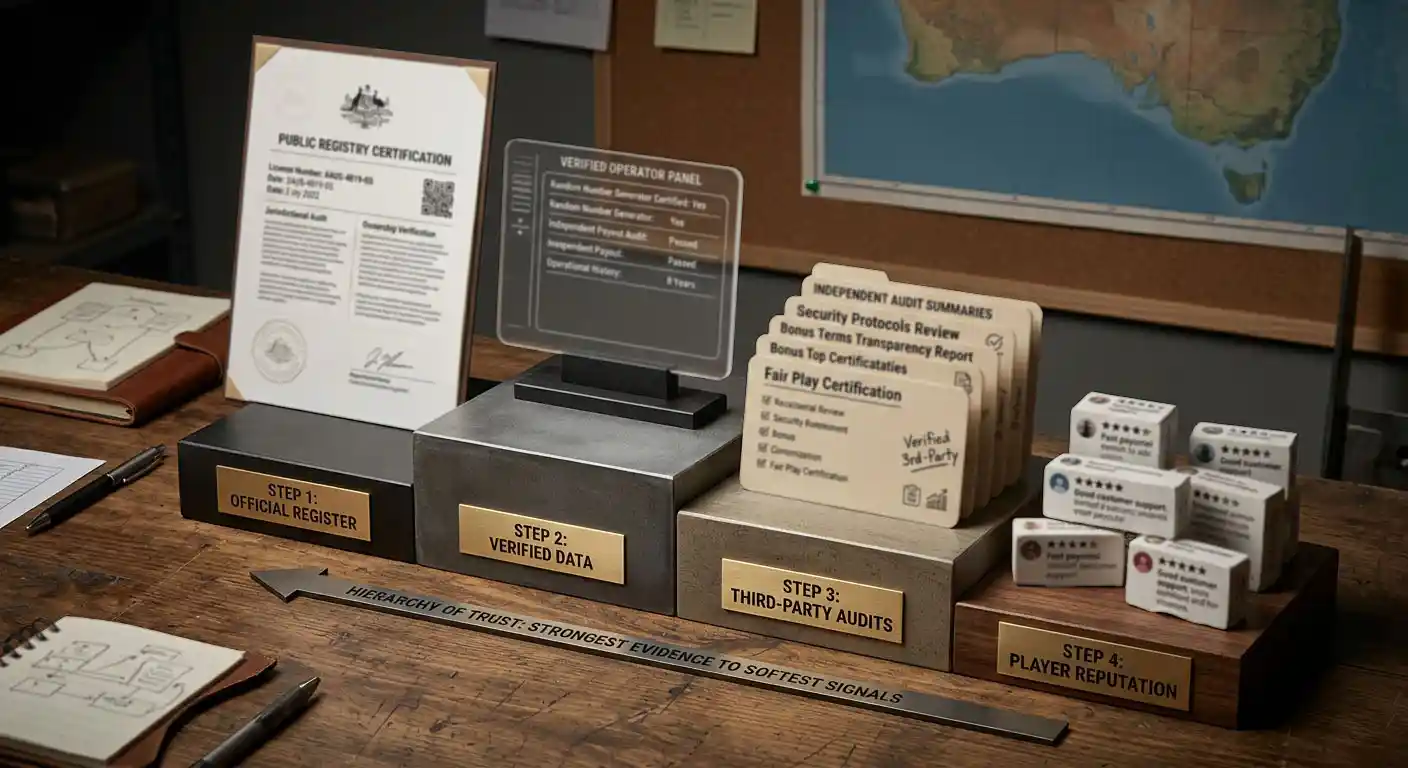 Is Fair Go Casino Legit? Trust, Reputation and Licence ChecksIs Fair Go Casino Legit? Trust, Reputation and Licence Checks A trust assessm...