How Offshore Casino Play Reaches Australian Mobile Users
For Australians who encounter an offshore casino website, mobile access generally follows one of two routes: opening the site in a browser or adding a Progressive Web App (PWA) shortcut to the device’s home screen. These are ways of reaching a website; they do not change who operates it or whether it can be accessed from your location.
Most mobile casino access happens in a browser. You open the casino’s web address on your phone, then sign in or create an account through the site. The account is generally the same one used on desktop, so mobile access does not require a separate profile. If you already have login details, you would use them on the mobile site rather than registering again solely because you changed devices.
A browser route also means that the casino’s pages are loaded from its website rather than installed as a conventional mobile application. You can return to the site by entering its address or using a saved browser bookmark. The browser remains the point of access, and the website handles the sign-in and page display. Casinos that accept Australian users commonly make browser play available, with PWAs as another possible route.
Список казино
Choosing an offshore casino means checking the details that matter to you, including licensing, deposit requirements and payout information where these are available. Use these listings as a starting point and verify the terms that apply to Australian players before you sign up.
1
JeetCity Casino
License
Curacao eGaming (Dama N.V.)
JeetCity Casino is listed with a Curacao eGaming licence held by Dama N.V.
2
LuckyVibe
License
Curacao Gaming Control Board OGL/2023/176/0095 (Hollycorn N.V.)
LuckyVibe is listed with a Curacao Gaming Control Board OGL, reference OGL/2023/176/0095, held by Hollycorn N.V.
3
Kingmaker
Payout speed
crypto ~90 minutes, fiat 1-5 days
Min. deposit
A$30
Kingmaker lists a minimum deposit of A$30. Its stated payout speed is around 90 minutes for crypto and 1–5 days for fiat.
4
Roby Casino
License
Curacao eGaming (Roby Games Ltd)
Roby Casino is listed with a Curacao eGaming licence held by Roby Games Ltd.
5
Playfina Casino
License
Curacao eGaming (Hollycorn N.V., since 2017)
Min. deposit
A$20-30 (depends on the offer)
Playfina Casino is listed with a Curacao eGaming licence held by Hollycorn N.V. since 2017. Its minimum deposit is A$20–30, depending on the offer.
6
Vegaz Casino
License
Curacao OGL/2024/1335/0780
Min. deposit
EUR 20
Vegaz Casino is listed with Curacao OGL/2024/1335/0780. Its minimum deposit is EUR 20.
7
JustCasino
License
Curacao Gaming Control Board
JustCasino is listed with a Curacao Gaming Control Board licence.
8
House of Pokies
License
international iGaming licence – jurisdiction not named in the source
Payout speed
PayID 1-24 hours
Min. deposit
A$30 (PayID from A$10)
House of Pokies lists an international iGaming licence, but the jurisdiction is not named in the available information. PayID payouts are stated as taking 1–24 hours; the minimum deposit is A$30, or A$10 with PayID.
9
Ricky Casino
Payout speed
crypto under 1 hour, PayID 1-3 business days
Min. deposit
A$20 (A$30 to qualify for the bonus)
Ricky Casino lists crypto payouts in under an hour and PayID payouts in 1–3 business days. The minimum deposit is A$20, rising to A$30 to qualify for the bonus.
10
Lucky Dreams
License
Curacao
Min. deposit
A$20 (POLi)
Lucky Dreams is listed with a Curacao licence and a minimum POLi deposit of A$20.
A PWA is a shortcut to a casino website that behaves more like an app on a mobile device. It is still connected to the website: adding the shortcut does not create a different account or turn the operator into a mobile app provider. The practical distinction is that you can launch the site from an icon on your home screen rather than first looking it up in the browser.
Adding a PWA shortcut
If a casino website offers a PWA, its installation prompt may appear while you are visiting the site. The usual process described for this format is to tap the site’s install or add-to-home-screen prompt and then confirm that you want to add it. The precise wording and appearance of the prompt can vary by device and browser, and a prompt may not be offered on every visit.
After confirmation, the shortcut appears on the device’s home screen. Tapping it opens the casino website in a way designed to feel closer to launching an app. The shortcut is not proof that the site has been reviewed by an app store, and it does not establish that the site is suitable for you. It is simply another route to the website.
If no installation prompt appears, you can still access a website through the browser. Do not assume that you need to install an app to use the mobile site. Nor should you download an installation file from an unfamiliar source just because a web page describes it as an app. Sideloaded casino apps carry security risks, and their safety depends on the operator. A PWA shortcut installed through the site’s own prompt is distinct from downloading and installing an app file.
RTG Casinos in Australia: Games, Terms and Legal Context
RTG games come from a software provider, while each casino operator sets its own account,…
What happens when access fails
A browser page may not load, or a home-screen shortcut may fail to open the site. A problem like that does not, by itself, tell you why access failed. Avoid treating a workaround as a fix. In particular, using a VPN to reach a blocked casino may breach the operator’s rules; it can lead to winnings being voided and an account being closed. Do not rely on a VPN to make access safe or permitted.
Before entering account details, check that you are on the website address you intended to visit. A home-screen icon can make a site quicker to reopen, but it is still important to recognise where it leads. If the site is unavailable, repeatedly trying alternate links or unofficial downloads can create additional security risks rather than resolve the underlying issue.
These routes describe access mechanics, not an endorsement of any offshore online casino. A site being reachable in a browser, or offering a PWA prompt, does not make it an Australian service. Offshore crypto-friendly casinos remain offshore services, and technical access should not be mistaken for approval or protection. There is also no Australian government body to complain to if an offshore casino refuses to pay winnings.
Do
Use a browser to access the site
Add a PWA shortcut via the site's prompt
Confirm the operator accepts your location
Don't
Use a VPN to bypass access blocks
Download app files from unfamiliar sources
Assume a PWA is an app store-approved app
For a cautious approach, keep the distinction clear: browser access opens the website; a PWA places a shortcut to that website on your home screen. Neither route changes the operator or guarantees continued access. If you choose to explore an offshore site, confirm that it accepts your location before depositing, and do not use a VPN to get around an access block.
Browser Play, PWAs and Casino Apps: What to Expect
On a phone, an offshore casino website can be opened in a browser, saved to the home screen as a Progressive Web App (PWA), or accessed through a native app if the operator provides one. These options can look similar once you are using them, but they are not the same kind of software. Knowing the difference helps you understand what is installed on your device and where the service is coming from.
Browser access
A browser is the standard way to reach a casino website on a mobile device. The site runs in the browser rather than as a separately downloaded casino program. For many services, you use the same account on your phone that you use on a desktop computer.
This arrangement avoids the need to find an app in a store or install a standalone program. It also means the experience remains tied to the website: you open the browser, visit the operator’s page and use the mobile version there. A browser bookmark can make the page easier to return to, but it does not turn the website into a native app.
Browser access should not be confused with a guarantee that a site is suitable for you. The format tells you how the service is delivered, not whether the operator is reliable or whether you can use it from your location. Before depositing, confirm that the site accepts your location. If access is blocked, using a VPN to get around that block may breach the operator’s rules; winnings may be voided and the account could be closed.
What a PWA changes
A PWA is still a website, but it can be saved on a mobile device and behave more like an app when opened. Its presence on your home screen does not mean you downloaded a native casino app from Google Play or the Apple App Store. The distinction is useful if you are checking what kind of software you have installed or trying to understand why a casino page appears alongside your other apps.
A PWA’s app-like appearance does not itself establish that an operator is trustworthy. You are still relying on the operator behind the website, and the shortcut does not provide a separate assurance about the service. Treat it as another way of opening the site, not as evidence that the casino has been approved by an app store.
Why native casino apps are uncommon
Real-money casino apps are rarely available through Google Play or the Apple App Store in Australia. As a result, browsing to a site is the default route for mobile use, rather than finding a casino app in either store. This can be confusing when a search for an operator leads to a page offering an app download elsewhere.
An app file offered outside the official stores is sideloaded. That carries security risks, and its safety depends on the operator supplying it. A download prompt alone is not proof that the file is safe or that the service is appropriate for you. If you do not understand who provides the file or what permissions it requests, do not install it simply to make the casino easier to open.
The difference is practical: a browser site runs through your browser, a PWA is a website presented through a home-screen shortcut, and a native app is a separate program installed on the device. A familiar icon or app-like layout does not erase those differences.
Casino Features for Australian Players
Social and free-play apps
Social and free-play casino apps are a separate category. They use virtual credits rather than real-money casino play and are available through Google Play and the Apple App Store in Australia. Their presence in a store should not be taken to mean that a real-money casino app is also available there; the two types of app offer different services.
If you choose a free-play app, check that it is actually based on virtual credits and understand what the credits do. The store listing and the app’s own description can help clarify whether you are looking at social play or a real-money service. Do not infer that an app is a real-money casino simply because it uses casino imagery or familiar game-style language.
For a punter comparing formats, the main distinction is not which icon looks most polished. Browser access and PWAs are ways to use a website, while native apps are separate software and social apps use virtual credits. Whichever format you encounter, it does not change the need to confirm location eligibility before depositing, and no format removes the risks associated with dealing with an offshore operator. Any offshore crypto-friendly casino remains an offshore service; an app-like presentation should not be mistaken for local approval.
Why US Offshore Casino Results May Not Suit Australian Players
A casino website that appears in material aimed at people in the United States is not necessarily available to someone in Australia. A site may set different access rules for different countries, and its US-facing pages do not establish that Australians can register, deposit or use its services. Treat a result written for another market as information about that market—not as confirmation that the same operator accepts Australian punters.
The distinction matters because “offshore” does not mean that every site serves every country. An operator may accept customers in one place while excluding them elsewhere. Its welcome page or advertising may be written for a particular audience, and the terms may define where registration is permitted. Even if you can open a page from Australia, that alone does not show that the operator allows Australian residents to use it. Technical access and permission to register are separate questions.
A US-facing page is not an Australian eligibility check
A site can be visible online from Australia without being intended for Australian customers. Search results, promotional pages and reviews focused on US users may describe payment options, account rules or services that apply only to that audience. Those details should not be assumed to carry over to an Australian account.
Before considering any deposit, confirm directly in the operator’s current terms whether it accepts customers who are physically in Australia. Look for country restrictions in the registration conditions and account rules, rather than relying on a page that mentions the United States or uses broad language such as “international.” If the wording is unclear or different pages conflict, do not treat silence as approval. Ask the operator for a clear answer before providing money or personal documents.
This is not a technicality to leave until later. An operator that does not accept your location may refuse registration, restrict an account or prevent access after you have signed up. A successful page load, an account form or a payment option displayed on screen does not settle the question of eligibility. The important point is whether the operator’s rules permit your location—not merely whether its website can be reached.
The Australian legal position is not the same as the operator’s
The Interactive Gambling Act 2001 prohibits operators from offering online casino-style gambling to people in Australia. That rule concerns the service provider’s conduct. It should not be confused with the position of an individual Australian who plays at an offshore mobile casino: playing is not itself illegal for the player under that Act.
That distinction does not turn an overseas site into an authorised Australian service, and it does not require an operator to accept Australian customers. The fact that a player is not committing an offence by playing does not remove the operator’s obligations under Australian law. Nor does it make a US-focused site suitable for someone in Australia. Each question needs to be kept separate: the player’s legal position, the operator’s ability to offer the service here, and the operator’s own rules about which locations it accepts.
This is one reason broad statements on overseas pages can be misleading. A site may describe its service as lawful or available in a jurisdiction without making the same statement about Australia. A claim aimed at US readers is not a legal assessment of Australian availability. Do not read it as one.
Access may be interrupted
Australian authorities also take steps that can prevent people from reaching illegal gambling websites. The Australian Communications and Media Authority (ACMA) can order access restrictions, and it blocks sites that provide illegal gambling services. As a result, an offshore casino page that once opened may later become inaccessible from Australia. A block is not evidence that a site has changed its eligibility rules, nor does an earlier visit establish that access will continue.
Trying to get around a block with a VPN carries its own account risk. If an operator’s terms prohibit VPN use or concealment of location, using one to enter a restricted service may lead to account closure and could put winnings at risk. A VPN does not change where you are physically located or make an Australian customer eligible under the operator’s rules. Do not use one to bypass an access restriction.
The same caution applies if a site appears to work while you are travelling or through a different connection. Access can depend on location and may be interrupted; it is not a dependable test of whether the operator accepts Australian residents. Keep the relevant questions distinct: whether the site is aimed at US customers, whether its terms allow Australian registration, and whether access from Australia is currently blocked. A positive answer to one does not settle the others.
When you encounter a US-oriented casino page, pause before treating it as an option for Australia. Check the operator’s stated location rules and do not deposit while your eligibility remains uncertain. The absence of an obvious block, or the presence of a registration button, is not confirmation that an Australian user is accepted.
What “Offshore Casino” Means in Practice
“Offshore” describes a casino operator whose base or licensing jurisdiction is outside Australia. It is a geographic and regulatory label, not a rating of a site. It does not, by itself, tell you whether a particular operator is trustworthy, whether its terms are fair, or whether you can use its service from your location.
Secure online casinos in Australia: security and law
A practical framework for weighing account and transaction claims against the legal limits on online…
The phrase can also be used loosely. A site may describe itself as an offshore casino because its operator is based overseas, because it holds a licence issued elsewhere, or because both are true. Those details are not interchangeable: the operator’s location and the jurisdiction named on a licence may refer to different things. Read the wording carefully rather than treating “offshore” as a complete description of who runs the site.
Curaçao, the Malta Gaming Authority (MGA) and Gibraltar are among the licensing jurisdictions associated with casinos that accept Australian players. Their names may appear in a site’s footer, terms or licensing information. Seeing one of them does not amount to an endorsement, and the jurisdiction name alone cannot establish that the particular operator is reliable. It tells you where a licensing claim points; it does not settle other questions about the business.
This distinction matters when a site uses reassuring language. A reference to a foreign licence is not the same as an Australian licence, and “licensed offshore” does not mean that an Australian regulator has approved the service. The term can sound more definite than it is: it identifies an overseas connection, but says little on its own about the company behind the site, the scope of its licence or what protections would apply to you.
Nor does “offshore” describe one consistent type of casino. Operators may have different ownership, terms, payment arrangements and approaches to handling accounts. Two sites using the same jurisdiction’s name are not thereby the same business or guaranteed to provide the same experience. Treat the label as a starting point for understanding how a service presents itself, not as proof that it meets a standard.
Curaçao
One of the licensing jurisdictions associated with casinos that accept Australian players.
Malta Gaming Authority (MGA)
A jurisdiction often named in the licensing information of offshore casinos.
Gibraltar
Another common licensing jurisdiction for operators serving the international market.
When you encounter a claim about an offshore casino, separate the pieces of information. Ask what is being described: the company’s base, the licence issuer, or simply the market the site says it serves. If the wording does not make that clear, the label alone cannot fill in the gap. A recognisable jurisdiction name may help identify the claim being made, but it should not be read as a recommendation.
The same care applies to phrases such as “international” or “global”. They can refer to an operator serving users in several places, but they do not tell you whether your location is accepted or what rules apply to your account. A site’s broad description is not a substitute for clear, specific information about its operator and licence.
In short, “offshore” means that the operator or its licensing connection is outside Australia. Curaçao, the MGA and Gibraltar are examples of jurisdictions named in this context, not seals of approval. Keep the term in proportion: it describes an overseas connection, while the details behind that connection must be understood separately.
Australian Law, Player Risk and Limited Recourse
Australian law draws an important distinction between the conduct of an operator and that of an individual. Under the Interactive Gambling Act 2001, an operator must not provide online casino-style games to people located in Australia. This covers services such as online poker and casino table games, as well as pokies. The prohibition is directed at the business supplying the service; it does not make an Australian player’s act of playing at an offshore mobile casino an offence under that Act.
Highest Payout Online Casinos in Australia: What to Know
Payout figures describe potential returns, but they do not show whether a casino is authorised…
That distinction can be easy to misunderstand. Saying that an individual player is not criminally liable under this law does not mean an offshore casino is authorised to serve Australian customers, or that using one carries no practical risk. An offshore gambling casino may operate from outside Australia, but its location does not remove the restriction on providing prohibited services to people here. Nor does the absence of player liability turn the arrangement into a locally regulated service.
The term “offshore casino legal” can therefore lead to a misleadingly simple answer. The legal position depends on whose conduct is being considered: the Act prohibits operators from offering online casino-style gambling to people in Australia, while it does not criminalise an individual for playing. Keep those two points separate when assessing claims about legality. A foreign licence, if a site claims to hold one, does not override Australian law or amount to Australian approval.
ACMA, the Australian Communications and Media Authority, works to restrict access to illegal gambling services by ordering or arranging blocks on offending websites. A page that stops loading may therefore be inaccessible because of an enforcement measure, rather than a temporary fault with your phone or connection. Blocks can also make access unreliable. Trying to get around one with a VPN does not resolve the underlying legal or service risks: a casino may treat VPN use as a breach of its rules, close the account or void winnings.
The consequences can be practical as well as legal. If an offshore operator disputes a withdrawal, closes your account or does not pay, you do not have an Australian government gambling body to take that complaint to for help recovering the money. The operator is outside the local framework, and the protections and complaint routes available for Australian-regulated services may not apply. A promise on a website is not the same as an enforceable local remedy.
Before making any decision, distinguish the player’s position under the Act from the operator’s prohibition and from the limits of your recourse. Not being liable for the act of playing is not a guarantee that a site will accept you, honour a balance or resolve a dispute fairly. Access can be blocked, and a payment disagreement may leave you with few practical options. This is a measured risk to understand, not a reason to assume that every offshore service is safe or lawful for the operator to provide to Australians.
Checks to Make Before Considering an Offshore Site
A page describing an offshore, crypto-friendly casino does not establish that the operator will accept customers in Australia. Confirm your location is eligible directly in the site’s terms or with its support team before registering or depositing. If the site’s answer is unclear, do not assume that a payment going through means your account is eligible.
Avoid using a VPN to get around an access block. It may breach the operator’s terms, put winnings at risk and lead to your account being closed. Keep in mind, too, that offshore gambling offers little local recourse: there is no Australian government body to complain to if an offshore casino refuses to pay winnings.
Read the withdrawal rules before you send money. The first withdrawal commonly triggers identity checks, which may require a selfie or identity document and proof of address. Check what documents are accepted, when they must be supplied and whether the account details need to match your documents. If you wait until a payout request to find out, verification can become an unexpected obstacle.
Look for both per-transaction and ongoing withdrawal limits, and establish whether they differ by payment method or account status. A specialist review has reported weekly limits in the $4,000–$10,000 range at some casinos; treat that as a reported example, not a general standard. The operator’s own current terms are the relevant place to confirm its rules. Ask how a limit applies if a balance is larger than the amount that can be withdrawn in the stated period, and whether any pending checks can delay processing.
These checks do not make an offshore service safe or remove the risks of using one. They can help you identify eligibility, verification and payout conditions before money is involved. If answers are vague or the terms are difficult to locate, pause rather than relying on promotional claims.
Before Depositing
Confirm location eligibility in terms or with support
Review identity verification (KYC) requirements
Check per-transaction and ongoing withdrawal limits
Read full bonus wagering and expiry conditions
How to Judge Claims About “Top” Offshore Casinos
A polished ranking or a confident safety claim is marketing, not proof. A site calling itself one of the top offshore casinos does not establish that it is suitable for you, that a claim has been independently checked, or that you will be able to withdraw money without difficulty. Treat superlatives as a reason to look for verifiable details, not as evidence in themselves.
Responsible-gambling tools are one practical point to examine. A specialist review describes controls such as deposit and loss limits, wager limits, session time limits and self-exclusion. Their presence may show what options are offered, but it does not guarantee that an operator will handle a dispute fairly or that the service is safe for you. Check whether the controls are clearly explained and accessible, and whether the site tells you how to activate them.
Do not let reassuring language distract from the risks of using an offshore crypto-friendly casino. The operator is outside Australia, and protections available through Australian channels may not apply. If you choose to explore a site, confirm that it accepts your location before depositing. Avoid using a VPN to get around an access block: doing so may lead to account closure and forfeited winnings under the operator’s rules.
A promotional badge, a long list of claimed features or an assurance of “trusted” service cannot replace clear terms and accountable information. Be cautious when claims cannot be traced to specific evidence, or when important conditions are hard to find. No ranking can remove the uncertainty attached to an offshore operator; the decision to proceed carries risks that promotional copy cannot settle.
Casinos Outside BetStop in Australia: Risks and Checks
BetStop covers services from operators within the Australian licensing framework, while offshore sites may offer…
What a Useful Offshore Casino Directory Should Verify
A directory is only as useful as the details a reader can check. A long list of names, badges or confident descriptions does not show who runs a site or where its stated licence comes from. Treat inclusion as information to investigate, not proof that an operator is safe or suitable.
For each entry, a transparent directory should identify the operator and state the licensing jurisdiction clearly. Curaçao, the Malta Gaming Authority (MGA) and Gibraltar are among the jurisdictions associated with casinos that accept Australian players. Naming one is not an endorsement: the directory should distinguish a reported licence from a verified one and explain what evidence supports the claim. If it cannot establish the detail, it should say so rather than present an assurance as fact.
The page should also make clear that entries are offshore and, where applicable, crypto-friendly, without implying that either label guarantees a reliable service. Before depositing, you must confirm directly with the operator that it accepts your location. A directory entry cannot settle that question, and access may be blocked. Do not use a VPN to get around a block; doing so may put winnings at risk and lead to account closure.
Transparency includes what a directory does not know. It should disclose when operator details or licence information have not been independently confirmed, and avoid turning promotional wording into a safety verdict. Be cautious if the page offers no way to distinguish sourced information from advertising.
Even careful checking cannot remove the limits of offshore recourse. If an offshore casino refuses to pay winnings, there is no Australian government body you can complain to for help. That is a material limitation, not a footnote. Use a directory to check what it can substantiate, not as a guarantee or a recommendation to gamble.
Read the Bonus Terms Before Claiming an Offer
A bonus can look generous while leaving you with conditions that make it difficult to use or withdraw any resulting winnings. Before accepting one, read the full terms, not just the banner or headline. This applies to an offer described as a no-deposit bonus too: check what you must do to qualify and what restrictions apply before treating it as usable value.
Pay particular attention to the wagering requirement: it sets how much qualifying play is required before bonus funds or related winnings can be withdrawn. A specialist casino review describes welcome-bonus requirements in the range of 30x to 50x the bonus amount, and regards requirements above 40x as steep. Those figures are not a guarantee of what any particular offer requires; the operator’s own terms are what matter. Check what amount the multiplier applies to, since the terms determine the calculation.
The minimum deposit can also change the practical value of an offer. Confirm whether a deposit is required, how much you must deposit to qualify, and whether the bonus is added automatically or must be claimed. Do not deposit simply to unlock an offer until you understand the conditions attached to it.
Check the expiry deadline and how much time you have to meet the wagering requirement. If the deadline passes, the bonus may be forfeited. Look for game restrictions as well: some games may not count towards wagering, or may count differently. A bonus that appears straightforward can take longer to clear if your preferred games are excluded.
Curaçao-Licensed Casinos for Australian Players
Australian rules, licence claims and practical checks are considered separately to clarify what a Curaçao…
Finally, check for a cashout cap, which may limit the amount you can withdraw from bonus-related play. Read these conditions together; a low cap, short deadline or restrictive game list can outweigh the headline value. If any term is unclear, pause before claiming.
Crypto Payments: Timing and Withdrawal Conditions
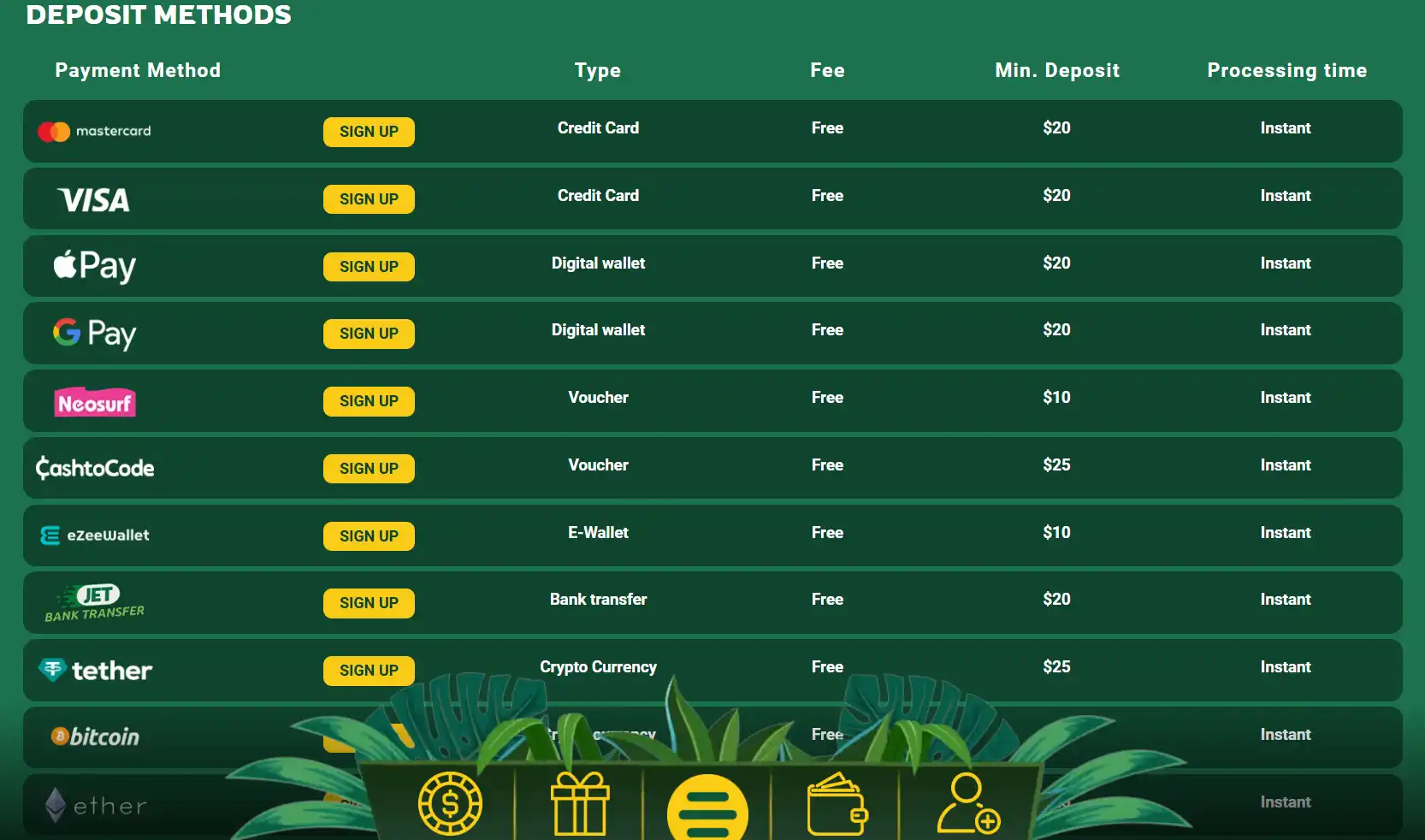
Cryptocurrency may be offered for deposits by offshore crypto-friendly casinos, but availability and processing arrangements are set by each operator. A specialist review describes crypto alongside other mobile deposit methods, while noting that processing times vary. Treat that as an indication of what a particular site may support, not a guarantee that a coin or payment route will be available when you register.
Withdrawal timing needs the same care. A specialist review reports that crypto withdrawals may be processed in under 24 hours. That is not a promise of funds arriving in your wallet within that period: the casino’s own review and approval process can affect when it sends a payment, and the receiving service may have its own requirements. Check the withdrawal page and terms for the stated process before depositing, including any verification needed to release funds.
Payment rules can also restrict your options. Some casinos require a withdrawal to use the same method as the deposit, while other methods may be deposit-only. Confirm that the site supports withdrawals to the wallet or account you intend to use; do not assume that a crypto deposit means every crypto withdrawal route is available. Keep a record of the selected method and the terms shown when you deposit.
Before sending funds, confirm that the casino accepts customers at your location. If access is blocked, using a VPN may breach the operator’s rules, void winnings or lead to account closure. Remember, too, that there is no Australian government body to complain to if an offshore casino refuses to pay. A payment method alone does not establish that a site is safe or that a withdrawal will be honoured.
Can I play for free at Australian mobile casinos?
Yes, social casino apps with virtual credits are available in Australia through the Google Play Store and Apple App Store. They are different from offshore casinos where you gamble with money.
How do wagering requirements actually work in practice?
A wagering requirement sets how much you must bet before a bonus can be cleared. Welcome bonuses commonly require wagering 30x to 50x the bonus amount, often within 7–10 days; missing the deadline means losing the bonus.
Can I use the same account on my phone and computer?
Yes, you can generally use the same casino account on your phone and computer; mobile play usually does not require a separate profile.
How fast are mobile casino withdrawals?
Crypto and e-wallet withdrawals are typically processed in under 24 hours, with e-wallet funds usually arriving within 24 hours after the casino’s pending period. Bank transfers can take up to five business days, and first withdrawals usually require identity verification.
Do mobile casinos offer bonuses?
Yes, welcome bonuses are common, but check the wagering requirement, minimum deposit and deadline before accepting one. Requirements are commonly 30x to 50x the bonus, and many offers must be cleared within 7–10 days.
Is it safe to play at mobile casinos in Australia?
A browser or PWA does not guarantee that an offshore casino is safe or suitable, and there is no Australian government body to complain to if one refuses to pay winnings. Avoid unofficial app downloads and do not use a VPN to get around an access block.

 Fair Go Casino Bonus Australia: Welcome Offer and Terms GuideFair Go Casino Bonuses and Welcome Offer for Australia The headline value is ...
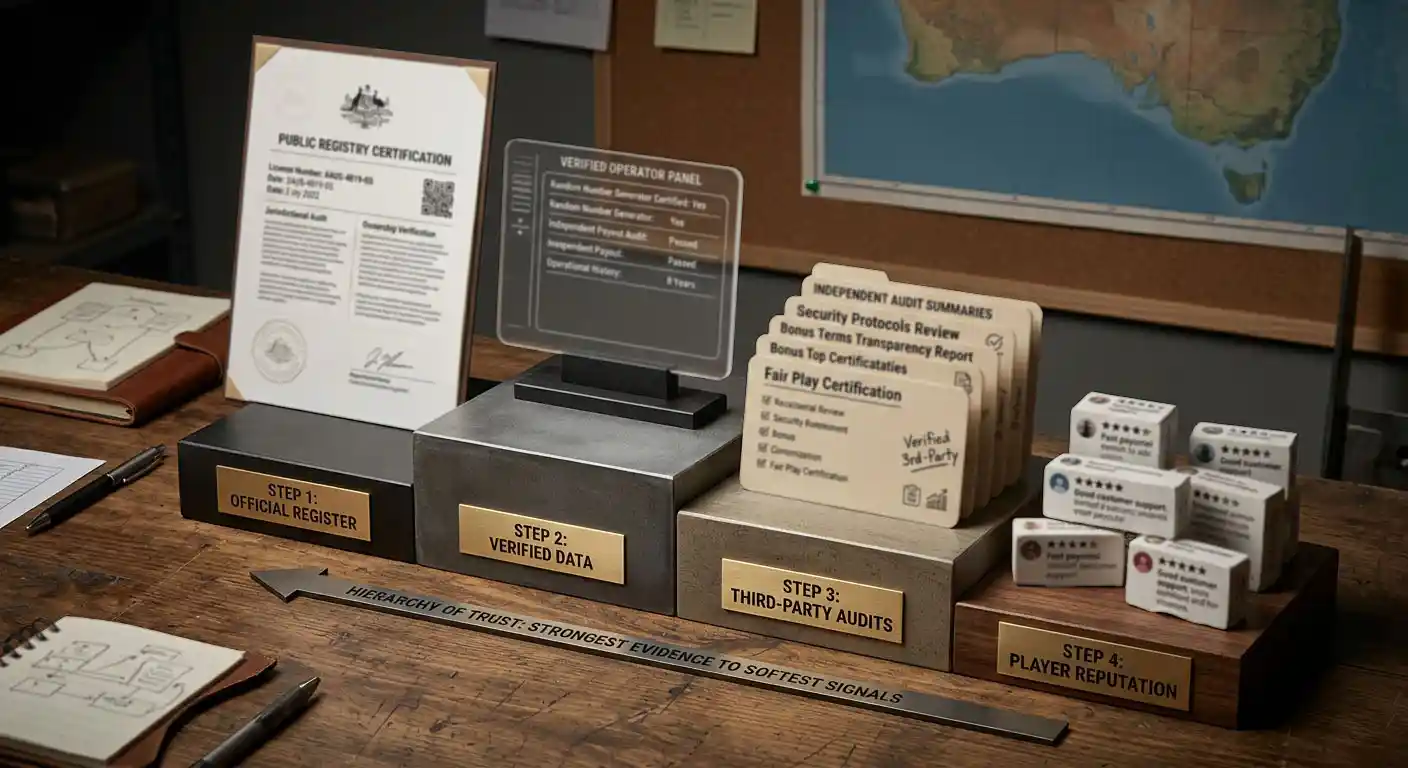 Is Fair Go Casino Legit? Trust, Reputation and Licence ChecksIs Fair Go Casino Legit? Trust, Reputation and Licence Checks A trust assessm...