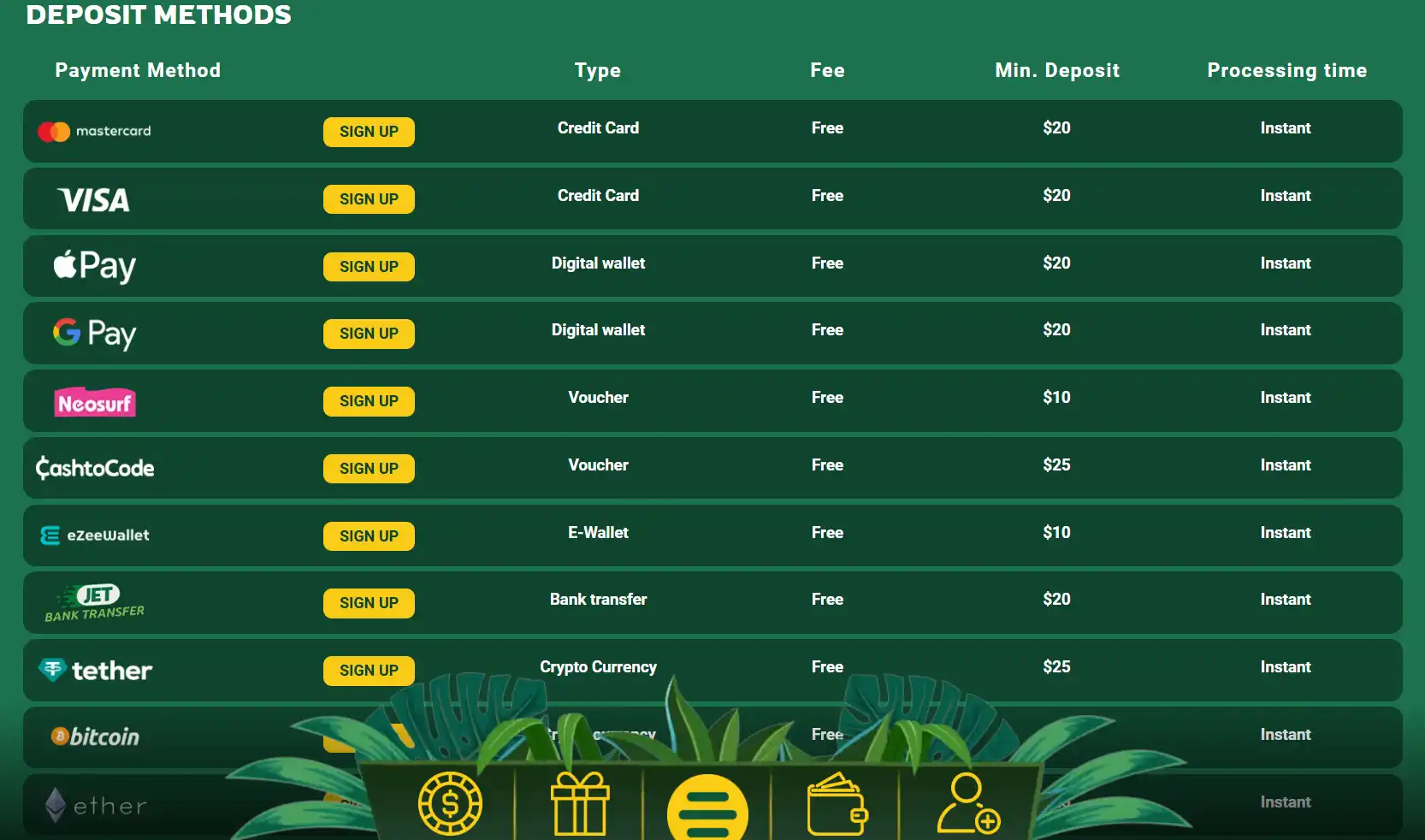
A payment logo or broad online-payments claim is not proof that an Australian-facing casino accepts CashToCode or supports payouts.

CashToCode and Australian Online Casino Payments
CashToCode may appear in discussions of online payments, but its mention does not show that it can be used at an Australian-facing casino. If you are considering it in connection with casino payments, keep those claims separate: a payment service’s existence is not proof that a particular operator accepts it, and a casino accepting other methods says nothing about CashToCode.
That distinction matters because familiar payment options in Australia are not interchangeable. Contactless card payments and mobile wallets such as Google Pay and Apple Pay are widely accepted in everyday life, and consumers are comfortable switching between cards, bank-linked services such as PayPal, and other methods. That broader comfort with digital payments does not establish which methods a casino accepts. A familiar name, an attractive payment logo, or a general claim that a site supports online payments is not enough to establish CashToCode acceptance.
The same caution applies to wording that refers broadly to Australian pokies or casino payments. A page may mention CashToCode without making clear whether it is describing a real cashier option, a general payment service, or information meant for another market. The location named in an article is not, by itself, evidence that the payment arrangement applies to people in Australia. Nor does a claim about an Australian mobile casino establish that CashToCode works through a phone; the device and the payment method are separate questions.
Список казино
If you want to pay with CashtoCode, check the casino’s cashier before registering: the details here do not confirm whether CashtoCode is currently supported. Use the notes below to review the limited operator information available.
- 1
JeetCity Casino
- License
- Curacao eGaming (Dama N.V.)
JeetCity Casino is listed with a Curaçao eGaming licence held by Dama N.V. The available details do not confirm CashtoCode availability, so check the cashier before you deposit.
- 2
LuckyVibe
- License
- Curacao Gaming Control Board OGL/2023/176/0095 (Hollycorn N.V.)
LuckyVibe is listed with Curaçao Gaming Control Board licence OGL/2023/176/0095, held by Hollycorn N.V. Check the cashier to see whether CashtoCode is available to you.
- 3
Kingmaker
- Payout speed
- crypto ~90 minutes, fiat 1-5 days
- Min. deposit
- A$30
Kingmaker lists a minimum deposit of A$30, with crypto payouts taking about 90 minutes and fiat payouts 1–5 days. These details do not specify whether you can deposit with CashtoCode.
- 4
Roby Casino
- License
- Curacao eGaming (Roby Games Ltd)
Roby Casino is listed with a Curaçao eGaming licence held by Roby Games Ltd. Check its cashier directly for current CashtoCode support.
- 5
Playfina Casino
- License
- Curacao eGaming (Hollycorn N.V., since 2017)
- Min. deposit
- A$20-30 (depends on the offer)
Playfina Casino is listed with a Curaçao eGaming licence held by Hollycorn N.V. since 2017, and its minimum deposit is A$20–30 depending on the offer; check the cashier for CashtoCode availability.
- 6
Vegaz Casino
- License
- Curacao OGL/2024/1335/0780
- Min. deposit
- EUR 20
Vegaz Casino is listed with Curaçao licence OGL/2024/1335/0780 and a minimum deposit of EUR 20. The available information does not establish whether CashtoCode is supported.
- 7
JustCasino
- License
- Curacao Gaming Control Board
JustCasino is listed with a Curaçao Gaming Control Board licence. For CashtoCode, you’ll need to confirm availability in the casino’s cashier.
- 8
House of Pokies
- License
- international iGaming licence – jurisdiction not named in the source
- Payout speed
- PayID 1-24 hours
- Min. deposit
- A$30 (PayID from A$10)
House of Pokies lists an international iGaming licence, but the jurisdiction is not named in the source. PayID payouts are listed at 1–24 hours, with a A$30 minimum deposit (A$10 for PayID); CashtoCode support is not specified.
- 9
Ricky Casino
- Payout speed
- crypto under 1 hour, PayID 1-3 business days
- Min. deposit
- A$20 (A$30 to qualify for the bonus)
Ricky Casino lists crypto payouts under an hour and PayID payouts in 1–3 business days. Its minimum deposit is A$20, or A$30 to qualify for the bonus; check the cashier to confirm CashtoCode support.
- 10
Lucky Dreams
- License
- Curacao
- Min. deposit
- A$20 (POLi)
Lucky Dreams is listed with a Curaçao licence and a A$20 minimum deposit for POLi. The available details do not confirm whether CashtoCode is an option.
For a reader, the practical point is modest but important: do not treat a search result or a payment-method label as confirmation that CashToCode is available for a casino transaction. The relevant question is whether the specific service is actually offered in the cashier for the account and location concerned. Until that is clear, it is safer not to plan around a CashToCode payment or assume that a general reference amounts to acceptance.
There is also a wider context that should not be lost when comparing payment claims. Under the Interactive Gambling Act 2001, operators are prohibited from providing real-money online casino games to people located in Australia, and the Australian Communications and Media Authority enforces the Act. Australian consumer law does not protect people who use offshore casinos. This does not turn a payment-method claim into a legal endorsement or make an offshore service a recommended option. It means that payment information should not distract from the risks and limits that apply to the service itself.
A payment option can be real in one setting and unavailable in another. Even where people commonly use cards, mobile wallets, or bank-linked payment services, acceptance is determined by the particular service and transaction, not by the general popularity of digital payments. CashToCode should be understood in the same restrained way: its name alone cannot tell you whether an Australian-facing cashier offers it, whether a payment would be accepted, or whether the service is relevant to your circumstances.
Casinos That Accept Neteller in Australia: What to Know
Neteller acceptance is only a payment-method claim; it does not confirm access, withdrawals, safety or…
Be wary of wording that blurs those distinctions. “Supports online payments” is broader than “accepts CashToCode,” while “available in Australia” can refer to a payment product without confirming its use for casino transactions. A statement about a casino in another country, or a page that does not identify where its payment information applies, should not be read as confirmation for an Australian account. Clear, specific information matters more than a broad label.
If you encounter a claim that links CashToCode with Australian casinos, read it as a claim that needs clear, current, location-specific support—not as proof that the payment route is available.
What You Need to Verify Before a CashToCode Deposit
A deposit amount shown in a search result or discussed elsewhere should not be treated as a CashToCode requirement for a particular casino. That includes a proposed $10 deposit: the figure alone does not tell you whether a payment would be accepted, what the cashier would require, or whether the amount is available to Australian users. Transaction terms belong to the individual service, so an amount mentioned without clear, current conditions is not a sound basis for a payment decision.
Payments & Crypto at Australian Casinos
Before relying on any deposit information, establish what the cashier actually says about CashToCode for your location and account. Check whether it identifies the method by name, whether the option is available to customers in Australia, and whether the displayed terms apply to the transaction you intend to make. A payment logo, general page about payment methods, or statement that a service supports online payments does not by itself settle those points.
Check the amount and currency
If the cashier displays a minimum deposit, confirm that it applies to CashToCode rather than to another payment method or to deposits generally. The same applies to any maximum, permitted increments, or amount restrictions shown during the payment process. Do not assume that a figure described in a review or forum post is still valid for a particular cashier.
Pay attention to the currency shown before you authorise anything. A page may describe an amount without making clear whether it is in Australian dollars or another currency. If the currency is not explicit, do not estimate the conversion or assume the displayed figure will be the final amount charged. You would need to know what amount is being requested and what currency the transaction uses before deciding whether to proceed.
The total cost also needs to be clear. Look for any stated payment or handling charge and check whether the amount you enter is the amount that will be credited. Do not infer that a deposit is fee-free just because no charge is mentioned in a general description. If the cashier does not explain the cost, the amount due, and the amount credited in a way you can understand, pause rather than guess.
Understand when the payment would be processed
A deposit label does not establish how quickly a transaction is handled. Before submitting payment details, look for the stated processing conditions: whether the payment is authorised immediately, whether it can remain pending, and what happens if the cashier does not show the expected result. Do not treat a description of another method’s timing as evidence about CashToCode.
Ethereum Casinos in Australia: What ETH Acceptance Means
Ethereum’s general payment capabilities do not establish a casino’s acceptance, transaction terms, or suitability in…
If the payment is delayed, the relevant terms should explain how to check its status and what information may be needed to resolve it. Keep any confirmation shown during a transaction, but do not make a second payment simply because the first one has not appeared in an account balance. First establish whether the original transaction is pending, rejected, or completed. A displayed status and a credited balance are not necessarily the same thing.
Before submitting, also check whether the cashier states any conditions that could prevent a transaction from being completed. These may concern account status, location, verification, or payment details. Do not assume that a payment method’s availability in one context means your particular account can use it. The terms need to match the circumstances shown in the cashier.
Make sure account checks are understood
Online casinos commonly ask customers to complete identity checks before handling financial transactions. That makes it important to understand what account verification is required and whether it must be completed before a deposit can be made. Read the operator’s instructions rather than assuming that a payment attempt will also complete any account checks.
Use only information that matches your own account and payment details. If the cashier or account page gives conflicting instructions, or asks for information you cannot verify, do not submit a payment to see what happens. A deposit decision should not depend on guessing how identity checks, payment authorisation, or account restrictions will be handled.
These checks are practical safeguards, not confirmation that a transaction is appropriate or available. In Australia, real-money online casino games are prohibited services for operators to provide to people in the country. Avoid treating deposit instructions as an invitation to use an offshore casino. If you are reviewing a payment page, focus on whether its terms are clear and whether they actually apply to you; do not rely on an unqualified amount, timing claim, or payment description.
Assessing Casino Sites Without an Unsupported Shortlist
A ranked list can look decisive while saying little about whether a particular payment method is actually available to you. A page may describe a casino as accepting CashToCode, but a ranking, recommendation or prominent label is not itself confirmation. Without reliable, current details for individual operators, there is no sound basis for naming a “best” CashToCode casino or comparing sites as though their acceptance had been established.
Casinos That Accept PayID in Australia: What to Know
A familiar payment method does not verify an operator, casino-game access, deposits, withdrawals or bonuses.…
The distinction matters because a site comparison can combine several different claims: that an operator serves Australian visitors, that it offers CashToCode, and that the method works for a particular account or transaction. One claim does not prove the others. Nor does a general mention of CashToCode show that an operator currently supports it. A comparison that does not make clear what was checked, when it was checked and what the claim covers should not be treated as a dependable shortlist.
Be especially careful with labels such as “best,” “recommended” or “top rated.” They describe an editorial judgement, not a payment feature. A score may reflect broad impressions or other parts of a site rather than confirmed CashToCode availability. Even a detailed-looking comparison can leave the central point unclear if it does not distinguish verified information from promotional language.
A more useful way to read such material is to look for the basis of each claim rather than the strength of its wording. Does it identify a specific operator and describe what supports the CashToCode claim? Does it make clear whether the statement is current, or does it rely on wording that could remain online after a payment option changes? If those details are absent, the comparison cannot establish which sites accept the method. That is a limit of the information, not a reason to fill the gap with a guess.
Be wary, too, of pages that group “CashToCode casinos” together without explaining whether they are discussing payment acceptance, games, or general site features. Those are separate subjects. A site’s name appearing beside a payment brand does not, by itself, show that the two are connected in the way the heading implies. Likewise, a broad claim about a casino’s payment options should not be read as a guarantee about every visitor’s experience.
This does not mean that every comparison is necessarily inaccurate. It means that the format alone cannot settle the question. A list may be useful for organising claims, but it cannot substitute for evidence that relates to a named operator and the specific feature being described. If a page does not provide that basis, ranking its entries would create a degree of confidence the information does not justify.
Casinos That Accept Litecoin in Australia: What to Know
Litecoin labels do not prove payment support, and accepting the currency does not change Australian…
For Australian readers, there is an additional reason not to treat a shortlist as a recommendation. Real-money online casino games are prohibited from being offered to people physically located in Australia under the Interactive Gambling Act 2001. A commercial ranking does not change that legal position, and it should not be mistaken for assurance that a service is lawful or suitable to use.
The careful conclusion is narrow: general comparisons cannot establish a reliable list of Australian-facing sites that accept CashToCode. Avoid treating a polished ranking or repeated claim as confirmation, and do not infer that one operator is a better or safer choice from an unsupported comparison.
CashToCode Withdrawals: What Is Not Verified
An “instant withdrawal” label can sound like a clear promise, but it does not tell you whether a payout is actually sent through CashToCode, when processing begins, or when funds would become available. No CashToCode-specific payout time can be stated for Australian-facing casino services. Treat claims of instant CashToCode withdrawals as unconfirmed unless the relevant terms clearly explain the process and the operator can substantiate them.
The word “instant” is especially easy to misread. It might refer to an operator approving a request, sending a payment, or a separate stage in the transaction. Those are not necessarily the same event. A request could be submitted without being approved immediately, and approval would not by itself establish when a payment reaches you. Without a clearly defined start and end point, a speed claim gives you little basis for planning.
Do not infer a withdrawal timetable from how quickly another payment type works, or from a deposit being described as fast. Paying money in and receiving money out are separate processes. A payment method’s presence in a cashier, even if shown beside a deposit option, would not establish that winnings can be returned through it. Nor would it establish that a payout is immediate, or that there is a standard timeframe.
What a payout claim needs to clarify
Before relying on any statement about CashToCode withdrawals, look for direct answers to practical points:
- Does the operator explicitly name CashToCode as an available withdrawal route, rather than only as a way to pay in?
- What event does its stated processing time measure: submitting the request, approval, or delivery of funds?
- Are there checks or other conditions that can delay approval?
- Does the operator explain what happens if the chosen payment route cannot be used for a payout?
These are questions to use when assessing a claim, not evidence that a particular CashToCode payout service exists. If the wording is vague, contradictory, or limited to deposit instructions, it cannot support a confident expectation about receiving winnings. A promotional phrase alone is not a timetable.
Be cautious with claims that combine “instant”, “withdrawal” and “CashToCode” without setting out the conditions. A page may use those terms prominently while its detailed rules describe a different process or do not specify a CashToCode payout at all. Read the payment terms that apply to withdrawals, not just a headline or a cashier label. If the details do not answer the timing question, do not fill the gap with an assumption.
Even a stated processing period should not be treated as a guarantee unless the operator defines what it covers and the circumstances that may affect it. A time estimate can describe only one stage, while other checks or transfer steps remain outside it. The important point is not to convert a general claim into a promise that funds will arrive at a particular moment.
For an Australian reader, this distinction matters before treating any offshore casino payout claim as dependable. Real-money online casino services are prohibited from being offered to people in Australia under the Interactive Gambling Act 2001, and Australian consumer law does not protect players using offshore casinos. A statement about a fast CashToCode payout should not be mistaken for assurance that a service is lawful, available, or accountable to you.
Until an operator’s withdrawal rules explicitly establish both CashToCode support and the meaning of its timing claim, “instant CashToCode withdrawal” is not a dependable description of what you would receive. Don’t plan around a payout speed that has not been clearly defined.
Reading the 2026 CashToCode Casino Search Carefully
The year in a phrase such as “casinos accepting CashToCode in Australia in 2026” sets the reader’s timeframe; it does not prove that any casino currently accepts the method. A page can carry a recent year in its title while relying on older information, or discuss CashToCode without establishing that its claims apply to Australian visitors.
Casinos That Accept POLi in Australia: What to Check
A POLi label does not establish operator eligibility or confirm deposits, withdrawals, or bonus terms.…
That distinction matters because payment information can change. A statement that a casino once offered a particular method is not confirmation that the same option remains available now. Nor does a general description of CashToCode establish that it is supported for a particular country or account. Treat claims about present availability as time-sensitive, not as facts that remain true indefinitely.
Look at what a date actually refers to. A page may show when it was published, when it was last revised, or simply include a year in its headline. Those are not interchangeable. A recent revision date can be useful context, but it does not by itself show that the payment details were checked. A year in a search result may also reflect the wording of the page rather than a fresh assessment of its claims.
Be careful with language that sounds current but is not tied to a clear timeframe. Words such as “available” or “accepted” can describe a general claim, a past experience, or a limited situation. If the wording does not make clear which one is meant, it cannot reliably answer whether a CashToCode option applies in Australia now. The same caution applies to statements about a casino being the “best” choice: a ranking does not establish current payment support.
For a reader looking specifically for a casino that takes CashToCode in Australia, the useful question is not whether a page mentions the method and the year together. It is whether the claim is explicitly current and applies to the relevant market. A page about another country, an earlier period, or payment methods in general may not answer that question, even if its wording appears close.
Keep the year in perspective: it helps define what you want to know, but it is not evidence of the answer. Avoid treating a dated headline or an undated claim as confirmation of present CashToCode acceptance. This is a limit on what time-sensitive wording can establish, rather than a basis for assuming that a casino offers the method.
Casino Games and CashToCode: No Verified Compatibility Details
A payment method and a game catalogue are separate things. Seeing CashToCode mentioned alongside an online casino does not, by itself, tell you which games are available, whether any particular title can be played, or whether the payment method is connected to game access.
Casinos That Accept Visa in Australia: What to Check
Visa acceptance signals a claimed payment option, not legal authorisation, withdrawal support or protection under…
That distinction matters when you encounter claims about casino games using CashToCode. A cashier describes how an operator says it handles payments; a game listing describes the entertainment it offers. Neither should be treated as proof of the other. A payment option does not establish that a particular game is offered, and a game’s presence on a site does not establish that CashToCode can be used in connection with it.
The same caution applies to searches for CashToCode casino games or casino payment options. Broad wording can make it sound as though the method applies across a catalogue, or that some games require it. Those are different claims. A reference to CashToCode as a casino payment method would not, without separate evidence, confirm game-specific compatibility.
You may also see language connecting CashToCode with a named title or category. Read the wording narrowly: it might refer only to a general payment claim, rather than a verified relationship with the game itself. Do not infer that using one payment route changes what is available, how a game works, or whether you can access it.
This is not a technicality. If you are comparing claims, look for clear, independent support for each one: what payment method is meant, what game is being discussed, and what the claimed connection actually is. A page that combines these topics without explaining the relationship leaves you to fill in the gaps. That is not a sound basis for a decision involving money.
For Australians, there is a further reason to keep the distinction clear. The Interactive Gambling Act 2001 prohibits operators from providing real-money online casino games to people in Australia. A discussion of CashToCode does not change that legal position or make an online casino service suitable to use. Do not treat a payment reference as an endorsement or as assurance that a game is lawful or available to you.
In short, CashToCode and game availability are separate questions. A payment claim cannot stand in for information about a game, and a game reference cannot establish payment compatibility. Keep those claims distinct, and do not rely on an assumed link between them.
Casinos That Accept Mastercard in Australia: Key Checks
The Interactive Gambling Act restricts operators from offering real-money online casino games to Australians, regardless…
Do Not Assume CashToCode Supports Casino Payouts
A payment method that can be used to add funds is not automatically available for receiving winnings. Deposits and withdrawals are separate functions, and an operator can apply different rules to each. That distinction matters when you see CashToCode described as a casino payment option: acceptance for one transaction type would not, by itself, show that payouts can be sent the same way.
Before treating CashToCode as a withdrawal route, look for explicit wording that it is available for withdrawals, not merely displayed among deposit methods. If the information only describes adding money, do not read that as confirmation that you can cash out to CashToCode. The same applies to broad claims about a “CashToCode casino” that do not say which transaction the method supports.
A cashier can also show different options for depositing and withdrawing. Check the withdrawal choices separately and read the relevant account terms before relying on a particular route. If you cannot find a clear statement, ask the operator to confirm whether CashToCode payouts are supported for your account. Keep the response and any applicable terms so you can refer back to what was actually promised.
Do not assume that a successful deposit would settle the question. It would only show that a payment was accepted for that transaction; it would not establish a way to receive winnings. Nor should you infer that a method is available for withdrawals because it appears in general payment information.
The important point is simple: CashToCode should not be treated as a confirmed way to receive casino funds unless withdrawal support is stated clearly and applies to your circumstances. Avoid making a financial decision on the basis of a deposit label or an unspecific payment-method claim.
Australian Context and Offshore Casino Risks
A search for an Australian casino using CashToCode does not change the legal position. Under the Interactive Gambling Act 2001, operators must not provide real-money online casino games to people in Australia. The restriction covers services such as online casino games, rather than making the payment method the deciding issue.
The law is directed at operators. It does not explicitly make a player’s use of an offshore casino a criminal offence, but that distinction should not be mistaken for consumer protection or a recommendation to use such a service. The Australian Communications and Media Authority (ACMA) oversees enforcement of the Act, including action against prohibited services.
Bitcoin Cash Casinos in Australia: Legal Checks
The guide explains how Australian law treats offshore casino services and what to check in…
There is a practical risk as well as a legal one: Australian consumer law does not protect you when you use an offshore casino. If a dispute arises over an account, payment or access to funds, you cannot assume the safeguards available in a domestic consumer transaction will apply. A site’s claims about accepting Australian customers or a particular payment method do not remove that gap.
Be cautious about treating an offshore site’s availability to Australian users as evidence that it is permitted to offer casino games here. Nor does seeing CashToCode mentioned on a site establish that the service is lawful for Australian residents. Payment information cannot settle questions about the operator’s conduct or your recourse if something goes wrong.
If you are assessing a casino-related offer, keep the legal setting in view before considering any payment details. Australian rules prohibit operators from providing real-money online casino services to people in the country, and ACMA is the authority that enforces those rules. The absence of an explicit player offence does not mean offshore services are covered by Australian consumer protections.
Checking Whether a Casino Accepts CashToCode Payments
A casino’s acceptance of CashToCode cannot be inferred from the payment method’s name appearing in a general description or on an unrelated page. The relevant question is whether the operator itself confirms CashToCode for customers in Australia. Without that confirmation, claims that you can pay by CashToCode at a casino remain unsubstantiated; no particular operator can responsibly be identified as accepting it.
If you encounter an acceptance claim, look at who makes it and what it actually covers. An operator’s own current payment information is more relevant than a third-party page that may be outdated or refer to another country. Even then, a general reference to CashToCode is not necessarily confirmation that it is available to Australian customers. The country, account conditions and wording of the claim matter.
A logo or method name can also be ambiguous. It may describe a service generally, refer to a different product, or appear in material that does not establish an actual payment option. Treating such a mention as proof could lead you to rely on a method that is not available for the intended purpose. A clear statement from the operator would need to specify CashToCode as an accepted payment method for the relevant customer location.
Casinos That Accept Bitcoin in Australia: How It Works
See how blockchain confirmations, casino deposit processes and offshore rules affect Bitcoin casino play in…
This is a question about whether the method is supported at all, not about how to make a deposit or what terms might apply. Do not confuse general familiarity with digital payments in Australia with evidence that an online casino accepts CashToCode. Acceptance of other payment services does not demonstrate acceptance of this one.
There is also an important Australian context: the Interactive Gambling Act 2001 prohibits operators from offering real-money online casino games to people in Australia, and the Australian Communications and Media Authority enforces the law. Australian consumer law does not protect players who use offshore casinos. A claim of CashToCode acceptance should not be treated as an endorsement, assurance of lawful access, or protection if a payment or account dispute arises.
CashToCode Casino Bonuses Are Not Verified
A payment method and a casino promotion are separate matters. Seeing CashToCode mentioned alongside a bonus does not, by itself, show that paying with it makes you eligible, changes the offer, or triggers a reward. Bonus terms depend on the operator’s own published conditions, and you should not treat a payment option as proof of qualification.
Be cautious with claims of a CashToCode-specific casino bonus. Unless the terms clearly connect the payment method to the promotion, a headline or banner may simply place two unrelated features together. Check the full conditions rather than relying on a short promotional description. Look for eligibility rules, any required payment method, excluded transactions, and how the offer is applied. If the terms do not explain the connection, do not assume one exists.
This distinction matters whether an offer is described as a deposit bonus, a welcome promotion, or a reward for using a particular method. A casino cash bonus associated with CashToCode should not be understood as available merely because the method appears on a page about promotions. Nor does a payment method automatically satisfy any separate offer conditions.
Promotional claims can change, so rely on the terms presented for the specific offer, not old descriptions or copied summaries. If you cannot find clear conditions stating that CashToCode qualifies, treat the connection as unconfirmed and avoid making a payment on the expectation of receiving a bonus. A promised reward is not a substitute for clear, applicable terms.
How do you check if casino sites accept Amex deposits?
Check the casino’s cashier for American Express and confirm it is available for your account in Australia. Before submitting, review the displayed amount, currency and any fees; your bank or Amex may still block the transaction.
Which online casinos accept American Express for deposits?
Jackpot City Casino, Spin Palace, Ruby Fortune, Ignition Casino, Joe Fortune and PlayAmo are listed as accepting Amex deposits for Australian players. Availability can vary, so check the cashier for your account.
Can you use an American Express gift card at an online casino?
Yes, an Amex gift card can be used for deposits at casinos that accept American Express, but not for withdrawals.
Are casino Amex payments instant?
Yes, Amex casino deposits are processed instantly. Withdrawals can take up to five days to clear.
Does American Express work for online casinos?
Yes, some Australian-facing online casinos accept Amex deposits, but not all do, and a card issuer may block a gambling transaction. Some casinos also do not allow withdrawals to Amex.
Are there fees for using Amex at online casinos?
Amex deposits typically have no fee, but a casino may charge a 1.5% surcharge, and a 3% currency conversion fee may apply. Withdrawal fees may also apply, so check the cashier’s terms.
Responsible Gambling
Written by the editors at Fair Go Casino.

 Fair Go Casino Bonus Australia: Welcome Offer and Terms GuideFair Go Casino Bonuses and Welcome Offer for Australia The headline value is ...
 Is Fair Go Casino Legit? Trust, Reputation and Licence ChecksIs Fair Go Casino Legit? Trust, Reputation and Licence Checks A trust assessm...