What “Litecoin Casino” Means for Australian Readers
“Litecoin casino” can sound like a precise description: an online casino that accepts Litecoin. But the phrase alone does not establish that a particular operator takes the cryptocurrency, how a payment would be handled, or whether the service is available to someone in Australia.
That distinction matters because a payment label is not the same as a working payment route. It would be misleading to turn that phrase into a claim that a Litecoin casino online is available to you, or to assume that a casino described as “crypto-friendly” supports this particular currency.
The word “casino” also needs context in Australia. The Interactive Gambling Act 2001 makes it unlawful for operators to provide real-money online casino games to people located in Australia. This covers online casino-style services, including games commonly described as pokies. The rule concerns the operator’s provision of the service; accepting Litecoin would not change the legal position or create an exception.
The Australian Communications and Media Authority, usually called ACMA, is responsible for enforcing the Act. Its role is relevant when you encounter claims about an online casino aimed at Australians: an offshore address, an overseas payment option or a cryptocurrency payment does not remove the Australian restriction on operators providing real-money casino services to people here.
The law does not explicitly make an Australian player’s use of an offshore site a criminal offence. That point should not be confused with approval, protection or a guarantee that a service is safe to use. In particular, Australian consumer law does not protect people using offshore casinos. If a dispute arises over an account, money or access to a service, you should not assume that the protections available for domestic consumer transactions will apply.
So, “Litecoin casino in Australia” combines two separate ideas that should not be treated as proof of availability. One is a payment claim: that an operator accepts Litecoin. The other is a question of whether an online casino may lawfully provide real-money games to a person physically in Australia. A cryptocurrency payment claim does not answer the legal question, and it does not verify the payment claim itself.
Casinos That Accept Mastercard in Australia: Key Checks
The Interactive Gambling Act restricts operators from offering real-money online casino games to Australians, regardless…
The same caution applies to descriptions such as a mobile Litecoin casino or a live Litecoin casino. A site’s appearance on a phone, or its description of its games, does not establish that Litecoin is accepted. Nor does a stated payment option alter the Australian legal framework.
For a reader trying to understand the phrase, the safest interpretation is narrow: it refers to a claim connecting an online casino with Litecoin, not to a verified service for Australian residents. The claim does not establish that a deposit will be credited, that a withdrawal route exists, or that the operator is permitted to offer casino games in Australia. Those are distinct questions, and the phrase itself settles none of them.
This is why a page labelled “Litecoin online casino Australia” should not be read as confirmation that an Australian-facing casino service is lawful or that its payment details have been demonstrated. The words may describe what a site claims about its payment options, but they cannot override the Interactive Gambling Act or supply the consumer protections that are absent when you use an offshore casino.
If you are reading about online casinos from Australia, keep the distinction clear: the Act places the legal restriction on operators offering real-money casino games to people here, ACMA enforces that law, and players using offshore casinos do not receive protection under Australian consumer law. A Litecoin label changes none of those points.
How to Assess Claims About Litecoin Casino Sites
A website’s statement that it accepts Litecoin is a claim to examine, not proof that the payment method is available to you. The wording may be broad, outdated or detached from the conditions that apply to Australian visitors. Treat a page describing a Litecoin casino, or calling one the best online casino with Litecoin, as an invitation to check the details—not as confirmation that a deposit or withdrawal will work.
Do
Look for Litecoin-specific information tied to the operator
Check for consistency across all relevant pages
Read terms for deposits and withdrawals closely
Contact support to clarify operator claims
Don't
Assume a "crypto-friendly" label means Litecoin is supported
Rely on logos, search snippets, or third-party lists
Infer local availability from currency displays
Treat a ranking as proof of payment support
Start by looking for information tied to the specific operator and to Litecoin itself. A general page about cryptocurrency payments does not establish that Litecoin is supported; it may refer to other digital currencies or describe a service that has since changed. Likewise, a logo, search snippet or third-party list is not enough to show that the cashier currently offers this option. If the site does not make the method and its terms clear, do not fill in the gaps with assumptions.
Check whether the claim appears in material controlled by the operator, and whether it is consistent across the relevant pages. A mention in a promotional article may not match the cashier’s available choices or account conditions. Even operator-controlled information can be incomplete or stale, so consistency is useful to assess but is not a guarantee. If the wording only says “crypto” or “digital currency,” it does not identify Litecoin specifically.
Casinos That Accept Neteller in Australia: What to Know
Neteller acceptance is only a payment-method claim; it does not confirm access, withdrawals, safety or…
Be alert to language that merges separate promises. A page may describe a site as the best Litecoin casino, suggest that it accepts Litecoin, and promote a welcome offer in the same breath. Those are distinct claims. A ranking does not prove payment support, and a bonus headline does not establish that a Litecoin deposit qualifies. You need evidence for the particular point you are assessing, rather than a general impression created by confident wording.
The same care applies when a site is described as an online casino accepting Litecoin for Australian players. A statement aimed at a broad audience may not explain whether the payment option is available to someone in Australia, whether account status affects access, or what conditions apply. Do not infer local availability from a site’s language, currency display or the fact that a payment method is mentioned somewhere on its pages.
Before relying on any payment claim, read the relevant terms closely and look for clear, specific language. Pay attention to whether the method is named directly, whether the information concerns deposits, withdrawals or both, and whether any conditions are stated. If those points are absent or contradictory, the claim remains uncertain. Contacting support may clarify what the operator says, but a reply is still not independent proof that a transaction will be accepted or completed as expected.
Account checks are another separate issue. Online casinos commonly ask customers to complete identity and customer checks before they carry out financial transactions. That requirement does not confirm that Litecoin is supported, nor does completing a check establish that a payment method will be available. Keep the questions distinct: account verification concerns who you are; payment information concerns what the operator says it accepts and under what conditions.
Be especially cautious with lists that present a “best” site without showing how each payment claim was established. A polished comparison, a high placement or repeated mentions across pages can make a statement look settled when the underlying detail is unclear. Avoid treating repetition as independent confirmation when the wording may have been copied from the same source. A responsible assessment stays with what can actually be checked, and does not turn uncertainty into a recommendation.
If you cannot find a clear Litecoin-specific statement for the operator and the relevant transaction, do not assume the claim is true merely because it appears in a headline or review. That is a practical standard for assessing information, not an endorsement of any casino. It also avoids confusing payment claims with questions that require separate consideration, including the legal position for people in Australia.
What “Best Litecoin Casino” Can—and Cannot—Tell You
Список казино
If you’re choosing a casino for Litecoin in Australia, confirm directly that Litecoin deposits and withdrawals are currently supported before signing up. The details below offer a limited reference point, but they don’t by themselves verify Litecoin availability.
1
JeetCity Casino
License
Curacao eGaming (Dama N.V.)
JeetCity is listed with a Curaçao eGaming licence held by Dama N.V. That information does not confirm whether you can use Litecoin.
2
LuckyVibe
License
Curacao Gaming Control Board OGL/2023/176/0095 (Hollycorn N.V.)
LuckyVibe is listed with a Curaçao Gaming Control Board licence, OGL/2023/176/0095, held by Hollycorn N.V. The licence detail alone does not establish Litecoin support.
3
Kingmaker
Payout speed
crypto ~90 minutes, fiat 1-5 days
Min. deposit
A$30
Kingmaker lists crypto payouts at approximately 90 minutes and fiat payouts at 1–5 days, with a A$30 minimum deposit. The available details don’t specify whether Litecoin is among the supported cryptocurrencies.
4
Roby Casino
License
Curacao eGaming (Roby Games Ltd)
Roby Casino is listed with a Curaçao eGaming licence held by Roby Games Ltd. You’ll need to check separately whether Litecoin is available.
5
Playfina Casino
License
Curacao eGaming (Hollycorn N.V., since 2017)
Min. deposit
A$20-30 (depends on the offer)
Playfina Casino is listed with a Curaçao eGaming licence held by Hollycorn N.V. since 2017, and its minimum deposit is A$20–30 depending on the offer. These details don’t confirm Litecoin acceptance.
6
Vegaz Casino
License
Curacao OGL/2024/1335/0780
Min. deposit
EUR 20
Vegaz Casino is listed with Curaçao licence OGL/2024/1335/0780 and a €20 minimum deposit. The available information does not say whether Litecoin is supported.
7
JustCasino
License
Curacao Gaming Control Board
JustCasino is listed with a Curaçao Gaming Control Board licence. No payment details are provided here to confirm Litecoin availability.
8
House of Pokies
License
international iGaming licence – jurisdiction not named in the source
Payout speed
PayID 1-24 hours
Min. deposit
A$30 (PayID from A$10)
House of Pokies lists an international iGaming licence, but the jurisdiction is not named; its PayID payout time is 1–24 hours, and the minimum deposit is A$30 (A$10 with PayID). These details don’t establish whether you can use Litecoin.
9
Ricky Casino
Payout speed
crypto under 1 hour, PayID 1-3 business days
Min. deposit
A$20 (A$30 to qualify for the bonus)
Ricky Casino lists crypto payouts in under an hour and PayID payouts in 1–3 business days. Its minimum deposit is A$20, or A$30 to qualify for the bonus; the details don’t identify Litecoin as a supported option.
10
Lucky Dreams
License
Curacao
Min. deposit
A$20 (POLi)
Lucky Dreams is listed with a Curaçao licence and a A$20 minimum deposit for POLi. The available details don’t confirm Litecoin support.
A “best” label can make a comparison sound settled, but it does not tell you what was measured. A ranking might reflect an editor’s chosen criteria, such as payment options or ease of use, rather than independent evidence that a particular casino accepts Litecoin. A site’s own description is also a claim, not confirmation that a Litecoin payment route works for Australian customers.
That distinction matters when you are comparing an Australian-facing service. A casino can mention cryptocurrency without specifying which coins it accepts, or display a payment symbol without explaining whether it applies to deposits, withdrawals or both. A reference to Litecoin alone does not establish the applicable terms. Treat a ranking as a starting point for scrutiny, not as proof of suitability or an endorsement.
What a “best” label leaves unanswered
The same caution applies to lists of casinos, games, bonuses or pokies associated with Litecoin. A list may place sites side by side, but the ordering does not show that their payment arrangements have been checked on the same basis. Nor does a prominent bonus headline establish that Litecoin can be used to claim it. These are separate claims, and one does not verify the other.
Casinos That Accept POLi in Australia: What to Check
A POLi label does not establish operator eligibility or confirm deposits, withdrawals, or bonus terms.…
“Latest” is not a guarantee either. Payment options and operator terms can change, so a page that once described a particular method may no longer reflect the current cashier. Even when a page looks recent, read the actual payment information and terms rather than relying on its title or ranking position. If those details do not clearly match what you intend to do, do not assume they will be resolved after you create an account or send funds.
A comparison can also blur the difference between availability and suitability. A site may present a payment method but leave unanswered whether it applies to Australian customers, whether it can be used for a particular transaction, or what conditions govern it. A “best Litecoin casino” claim cannot answer those points by itself. You need clear, casino-specific information before treating a payment option as usable.
Compare like with like
The limited card comparison sometimes made in specialist reviews is that Visa may be accepted at more Australian online casinos than American Express. That is a qualified comparison, not a fixed rule: acceptance can vary between operators and can change. It also says nothing about Litecoin. Card availability cannot be used as evidence that a cryptocurrency is supported, and a casino’s support for one payment method does not establish support for another.
When you encounter a ranking, separate its claims into distinct questions: what the operator says it accepts, what the cashier actually displays, and what the applicable terms say about using that method. If the page gives no clear answer, the ranking itself cannot fill the gap. A longer list does not make an unclear claim more reliable.
There is also a wider Australian context to keep in view. The Interactive Gambling Act 2001 prohibits operators from offering real-money online casino games to people in Australia, and the Australian Communications and Media Authority enforces the Act. Australian consumer law does not protect you when you use an offshore casino. A ranking or payment claim does not change that position or provide consumer protection.
You may be looking for a simple recommendation, but a “best” heading cannot establish that an offshore casino is lawful to offer services here, that Litecoin is accepted for your account, or that your interests are protected. Keep those questions separate. Without clear, specific payment terms, a ranked label is not a sound basis for deciding where to send money.
Bonuses and Litecoin Slots: Check the Conditions, Not the Promise
A bonus described as “Litecoin” can sound as though the payment method, the promotion and the games have all been confirmed together. They are separate claims. A welcome offer or a no-deposit offer does not, by its name alone, establish that Litecoin can be used, that the offer applies to a particular game, or that any withdrawal can be made in Litecoin.
The same distinction matters when a promotion is framed around free play. The word “free” does not explain what conditions apply or what, if anything, can be withdrawn. A headline is not a substitute for the terms governing eligibility and use. Without reliable, specific terms for the operator and offer, it would be misleading to recommend a Litecoin bonus or describe one as the best choice.
Bitcoin Cash Casinos in Australia: Legal Checks
The guide explains how Australian law treats offshore casino services and what to check in…
Payment claims need the same care. General statements about cryptocurrency do not settle what a particular site supports. Bitcoin and Ethereum are described as allowing instant deposits and withdrawals with limited or no fees. That comparison applies to those currencies; it cannot establish Litecoin processing, fees, withdrawal arrangements or promotional eligibility. Similar names or shared use of blockchain technology are not evidence that the terms are interchangeable.
If you encounter a promotion that mentions Litecoin, read the conditions as separate questions rather than treating the headline as proof. Does it clearly identify the payment method covered? Does it state which customers and transactions qualify? Does it explain whether the offer is connected to a deposit or can be claimed without one? Are withdrawal conditions and any restrictions described plainly? If those points are unclear, the offer should not be treated as a dependable basis for a decision. This is a way to assess wording, not a recommendation to use an offshore casino.
The distinction is particularly important when an offer combines a currency name with a game category. A page may use those terms together while leaving unclear whether the currency is accepted, whether the promotion covers that category, or whether its conditions differ from the general offer. One claim cannot verify the others. Nor does a promotional label confirm the legal status of the service for someone in Australia.
Australia’s Interactive Gambling Act 2001 prohibits operators from offering real-money online casino games to people located in Australia. The Australian Communications and Media Authority enforces the Act. Australian consumer law does not protect you when you use an offshore casino, so a promotion’s wording should not be mistaken for a safeguard if a payment or withdrawal becomes disputed.
This is not a reason to infer that a Litecoin-specific offer exists or to assume it will work because another cryptocurrency is mentioned. Treat each statement—currency acceptance, bonus eligibility, game coverage and withdrawal terms—as requiring its own clear support. If a promotion leaves those points unresolved, its headline cannot fill in the gaps.
Casino Games and Payment Methods Are Separate Questions
A casino’s game catalogue and its payment options are different parts of its service. Seeing a reference to Litecoin alongside a casino or a particular game does not, by itself, show that Litecoin can be used to fund play. Likewise, a payment method being listed does not tell you which games are available or whether the same conditions apply across the site.
Keep the two questions apart. First, ask what the site says it offers; separately, ask whether a payment method is actually supported for your account and location. A shared label or promotional phrase is not enough to establish that the game and the payment route work together. Avoid assuming that an option shown on one page is available at checkout, or that information about a game confirms anything about deposits.
Neosurf casinos in Australia: legal and payment checks
Neosurf compatibility is separate from legality, deposit conditions, game availability and withdrawal routes. The legal…
This distinction matters when a site describes itself as a place to play casino games with Litecoin. That wording may refer to the site’s general identity, a payment claim, or a particular game category. Those are not interchangeable. The phrase does not establish that a Litecoin transaction can be made, that any game can be funded that way, or that a withdrawal route exists. Treat claims about Litecoin payments as separate from descriptions of games rather than reading one as proof of the other.
Payment methods also differ in their practical handling. A specialist review has noted that bank transfers can involve longer waits and higher fees. That comparison is specific to bank transfers; it does not establish how a Litecoin payment would be processed, what it would cost, or whether it would be accepted. A site’s cashier and its terms would need to address those details directly before you could rely on them.
The same separation applies to references to bonuses. A bonus description does not confirm that a particular payment method qualifies, and a payment label does not establish that an offer is available to users paying that way. Conditions can attach to an offer independently of the payment method, so do not infer eligibility from a general mention of Litecoin.
For Australian readers, this distinction does not change the legal position: the Interactive Gambling Act 2001 prohibits operators from providing online casino games to people in Australia. Australian consumer law also does not protect people who use offshore casinos. Keeping payment claims and game descriptions separate can help you avoid mistaken assumptions, but it does not make an offshore service protected or lawful for operators to offer locally.
Before You Try to Play With Litecoin
Before sending Litecoin to a site that presents itself as a casino, pause and confirm what the payment option actually means. A Litecoin symbol or a promise to accept crypto does not establish that a deposit will be credited, or that a withdrawal can be made through the same route.
This matters because a cryptocurrency transfer is not like selecting a familiar card in a cashier and waiting for an ordinary payment confirmation. Before taking any action, make sure you understand what the site says about the receiving address, the asset and network required, and how it handles a mistaken or unrecognised payment. If those details are unclear, do not send funds to test the process. A support reply or a displayed logo is not, by itself, proof that your payment will be credited or returned.
Claims about “no KYC” also deserve care. Online casinos generally ask customers to verify their identity before carrying out financial transactions. A site’s suggestion that checks will not apply should not be treated as assurance that you can deposit or withdraw without providing documents. Verification may be requested when you try to access funds, and you should understand what information the site could ask for before sharing payment details.
Bitcoin and Ethereum can provide instant deposits and withdrawals with limited or no fees. That broad description does not establish Litecoin’s processing, costs, or withdrawal arrangements at any particular site. A payment method’s reputation elsewhere cannot settle how an individual operator handles it.
Casinos That Accept CashToCode in Australia
A payment logo or broad online-payments claim is not proof that an Australian-facing casino accepts…
Keep your own record of what you are told, and avoid sending more than you can afford to lose while trying to establish whether a payment route works. Do not treat a successful transfer as evidence that withdrawals will follow the same path. A deposit and a withdrawal are separate steps, and an operator’s ability or willingness to process one does not prove the other.
For Australian readers, there is a further reason not to treat these practical checks as protection. The rules governing online casino services are restrictive, and consumer law does not protect people using offshore casinos. Careful payment checks cannot remove those risks or make an unverified Litecoin arrangement reliable.
Australian Rules and Sites Claiming to Accept Litecoin
A site’s claim that it takes Litecoin does not change the rules that apply to its gambling service. Under the Interactive Gambling Act 2001, operators cannot offer real-money online casino games to people in Australia. The law addresses the provision of the service; using cryptocurrency as the payment method does not create an exception.
The Australian Communications and Media Authority (ACMA) oversees enforcement of the Act. A website may still describe itself as available to Australians or advertise a Litecoin cashier, but that wording is not evidence that its service is lawful here, nor does it establish that a payment will work as described. An app or mobile version does not alter the legal position either.
Enforcement by ACMA
The Australian Communications and Media Authority (ACMA) is responsible for enforcing the Interactive Gambling Act 2001, regardless of whether an operator uses cryptocurrency or offers a mobile version of their site.
The Act does not explicitly make a player’s use of an offshore casino a criminal offence. That distinction should not be mistaken for protection. Australian consumer law does not protect people who use offshore casinos, so you should not assume you have the local remedies or safeguards available when dealing with an Australian business. If a dispute arises over an account, funds or a transaction, the fact that the operator accepted Litecoin would not itself provide that protection.
This matters when assessing claims about a casino that accepts Litecoin in Australia. A payment option is only one part of a service; it does not establish that the operator may lawfully offer casino games to people in the country. Nor does a claim about deposits imply that withdrawals, account access or dispute handling will be available on terms you can rely on.
If you encounter a site presenting itself as a crypto casino for Australians, focus first on the legal status of the service rather than on the coin named in its cashier. Avoid treating offshore access as an endorsement or a guarantee of recourse. The relevant rule concerns operators offering online casino games to people in Australia, while Australian consumer law does not protect players who choose offshore casinos.
Deposits, Withdrawals and What Is Not Verified for Litecoin
A claim that a casino accepts Litecoin does not, by itself, tell you whether you can deposit and withdraw using the same method. It also does not establish how long either transaction takes, what fees apply, whether limits are imposed, or which withdrawal route is available. Those details need to be stated for the specific payment method and operator; without them, an advertised Litecoin option is not enough to predict how a transfer will work.
Casinos That Accept PayID in Australia: What to Know
A familiar payment method does not verify an operator, casino-game access, deposits, withdrawals or bonuses.…
This matters when you are weighing a Litecoin deposit against an expected payout. A payment might be accepted for funding an account but not offered for withdrawals, or the cashier may display conditions that differ from the claim you saw elsewhere. Do not assume that a deposit confirms a matching withdrawal method, or that a phrase such as “fast withdrawal” guarantees a particular processing time. If the transaction terms are unclear, you cannot calculate the likely cost or know when funds might arrive.
There is a general cryptocurrency comparison, but it should not be stretched to cover Litecoin. Bitcoin and Ethereum are described as allowing instant deposits and withdrawals with limited or no fees. That statement applies to those currencies; it does not establish the timing, fees, limits or withdrawal arrangements for Litecoin. A casino that accepts another cryptocurrency is not thereby shown to accept Litecoin on the same terms.
Bank transfers provide a separate point of comparison. A specialist review has noted that they may involve longer waits and higher fees. That is a possibility, not a universal rule, and it says nothing about how a Litecoin transaction would compare at a particular site.
Before you rely on any payment claim, look for clear terms covering both directions of travel: funding an account and receiving a withdrawal. Check whether the stated method is specifically Litecoin, whether charges or limits are disclosed, and whether the operator explains the route for a payout. If those details are absent or inconsistent, treat the timing and cost as unknown rather than inferring them from other currencies or payment types.
Verify Litecoin Terms
Confirm Litecoin is specifically named for both deposits and withdrawals
Check for disclosed transaction fees and limits
Verify the specific payout route for withdrawals
Ensure terms are consistent and not based on other cryptocurrencies
Live Dealers Do Not Confirm Litecoin Payment Support
A live-dealer label describes a type of game presentation; it does not tell you which payment methods a site accepts. The reverse is also true: a site mentioning Litecoin does not, by that fact alone, establish that it offers live-dealer games. Treat these as separate claims, not as evidence for one another.
That distinction matters when a page groups cryptocurrency payments and live-dealer tables under one heading. The wording may leave the impression that Litecoin can be used for those games, even when it only refers generally to digital currency or to another part of the service. Unless the payment method and the relevant game category are both clearly specified, the combination should not be assumed.
Account checks are a separate step as well. Online casinos commonly ask customers to complete identity and customer checks before carrying out financial transactions. A request for documents may therefore relate to account verification; it does not confirm that a Litecoin deposit or withdrawal is available, nor does it establish that a live-dealer service is accessible to you.
For people in Australia, a payment claim does not change the legal position. The Interactive Gambling Act 2001 prohibits operators from providing online casino games to people in Australia, and the Australian Communications and Media Authority enforces the Act. Australian consumer law does not protect you when you use an offshore casino. A payment method or game label should not be taken as assurance that using the service is lawful, protected or suitable.
Before relying on a combined claim, look for clear, separate terms for the game service and the payment method, and consider the consequences if either is unavailable. Do not infer support from a general crypto reference, a live-dealer description or an identity-check request.
Casinos That Accept MiFinity in Australia: Checks
MiFinity acceptance, withdrawal availability and the legality of an online casino are separate questions to…
Slot Searches and the Limits of Litecoin Payment Information
Interest in using Litecoin at a casino can make payment support and game availability seem like one question. They are separate. A site’s description of its games does not establish that it accepts Litecoin, and a Litecoin payment claim does not establish what games it offers. Neither claim, by itself, confirms a licence.
Bitcoin and Ethereum are described as allowing instant deposits and withdrawals with limited or no fees. That comparison applies to those currencies; it does not establish Litecoin processing times, fees or withdrawal arrangements. Nor does it confirm the availability of Litecoin-compatible games. Before treating a payment or game claim as dependable, you would need clear, current terms from the operator that address the specific service. A label such as “trusted” cannot replace that detail.
The legal position in Australia also matters. Under the Interactive Gambling Act 2001, operators cannot provide real-money online casino games, including pokies, to people in Australia. The Australian Communications and Media Authority enforces the Act. A foreign licence does not make an offshore casino lawful to offer to Australian residents, and Australian consumer law does not protect you when you use an offshore casino.
That means a claim to be a licensed Litecoin casino should not be read as evidence of an Australian authorisation to offer online casino games. Payment technology does not change the legal status of the service. Nor does the presence of Litecoin alongside a game catalogue make the arrangement safer or give you consumer-law protections.
If you are considering a site because it appears to combine Litecoin payments with casino games, pause before sending funds. Do not assume that a transaction will work as described, or that a foreign licence gives you recourse in Australia. The useful distinction is simple: information about Bitcoin and Ethereum cannot be transferred to Litecoin, and payment claims cannot establish game availability or legal protection.
How do you check if casino sites accept Amex deposits?
Check the casino’s cashier for American Express as a deposit option and review its payment terms. Some casinos do not accept Amex, and Australian banks may also block gambling transactions.
Does American Express work for online casinos?
Yes, some Australian online casinos accept Amex deposits, but acceptance is not universal. A bank may block a gambling transaction, and not every casino allows withdrawals to Amex.
What are the fees involved with American Express payments?
Amex gambling transactions are typically free, but a casino may charge a 1.5% surcharge, and currency conversion can incur a 3% fee. Withdrawal fees may also apply.
Are there fees for using Amex at online casinos?
Amex deposits typically have no fee, but a casino may add a 1.5% surcharge. Currency conversion can cost 3%, and withdrawals may incur a fee.
How safe is my money when using American Express at online casinos?
Using Amex does not guarantee that your money is protected. Australian consumer law does not protect people using offshore casinos, and Amex payments may be blocked by your bank or the card issuer.
Is it safe to use American Express for transactions at online casinos?
Amex can be used for deposits at some casinos, but that does not guarantee the safety of your money. Australian consumer law does not protect people using offshore casinos, and banks may block gambling-related payments.
Are there any fees associated with using American Express at online casinos?
Deposits are typically free, although a casino may charge a 1.5% surcharge. Currency conversion can incur a 3% fee, and withdrawal fees may apply.

 Fair Go Casino Bonus Australia: Welcome Offer and Terms GuideFair Go Casino Bonuses and Welcome Offer for Australia The headline value is ...
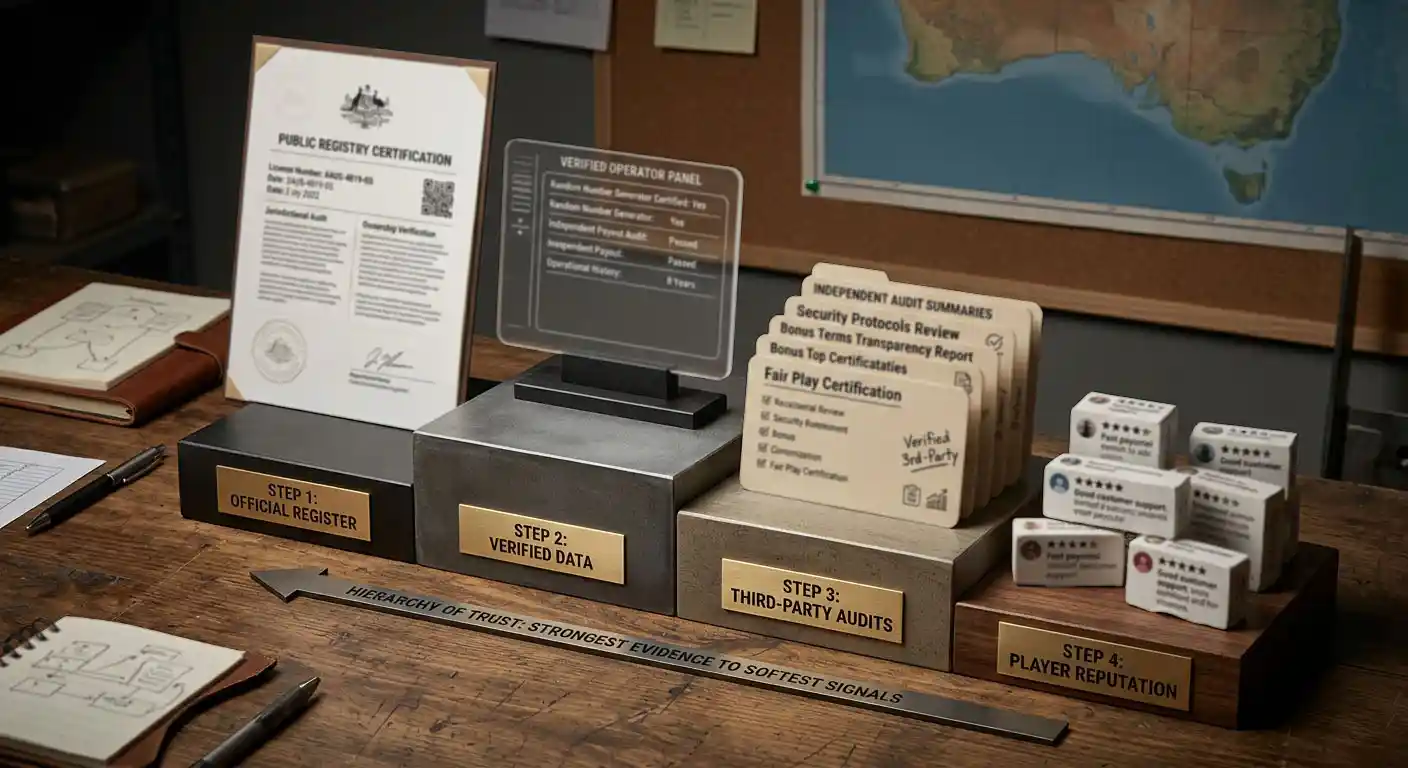 Is Fair Go Casino Legit? Trust, Reputation and Licence ChecksIs Fair Go Casino Legit? Trust, Reputation and Licence Checks A trust assessm...