A phone can act as the link between a payment instruction and a bank account, or hold a digital version of a card for authorising a transaction. Those are different arrangements: PayID identifies a bank account through a registered detail, while Apple Pay uses a digital wallet on the device. Knowing which is involved helps you understand what information a payment screen is asking for, without assuming that every service supports either option.
PayID connects a mobile number, email address or Australian Business Number (ABN) to an Australian bank account through the New Payments Platform. Instead of entering account details for each payment, you can use the PayID linked to the account. The phone number or email address is an identifier; it is not itself the bank account or a separate wallet holding funds. The money is associated with the linked account.
That distinction matters when a payment page presents PayID as a choice. You would need access to the bank account connected to the identifier and should check the details shown before confirming a transfer. A mistyped or unfamiliar recipient detail deserves attention rather than a quick tap. A payment method appearing on a screen does not, by itself, establish who operates the service or whether the transaction is appropriate.
Список казино
When you choose an online casino payment method, check the details that affect your own deposit and withdrawal plans. This list gives you a quick reference to the payment-related information available for each option.
1
JeetCity Casino
License
Curacao eGaming (Dama N.V.)
JeetCity Casino is listed with a Curacao eGaming licence held by Dama N.V.
2
LuckyVibe
License
Curacao Gaming Control Board OGL/2023/176/0095 (Hollycorn N.V.)
LuckyVibe is listed with Curacao Gaming Control Board licence OGL/2023/176/0095, held by Hollycorn N.V.
3
Kingmaker
Payout speed
crypto ~90 minutes, fiat 1-5 days
Min. deposit
A$30
Kingmaker lists a minimum deposit of A$30. Its stated payout times are around 90 minutes for crypto and 1–5 days for fiat.
4
Roby Casino
License
Curacao eGaming (Roby Games Ltd)
Roby Casino is listed with a Curacao eGaming licence held by Roby Games Ltd.
5
Playfina Casino
License
Curacao eGaming (Hollycorn N.V., since 2017)
Min. deposit
A$20-30 (depends on the offer)
Playfina Casino is listed with a Curacao eGaming licence held by Hollycorn N.V. since 2017. Its minimum deposit is A$20–30, depending on the offer.
6
Vegaz Casino
License
Curacao OGL/2024/1335/0780
Min. deposit
EUR 20
Vegaz Casino is listed with Curacao licence OGL/2024/1335/0780 and has a minimum deposit of EUR 20.
7
JustCasino
License
Curacao Gaming Control Board
JustCasino is listed with a Curacao Gaming Control Board licence.
8
House of Pokies
License
international iGaming licence – jurisdiction not named in the source
Payout speed
PayID 1-24 hours
Min. deposit
A$30 (PayID from A$10)
House of Pokies lists PayID payouts in 1–24 hours and a A$30 minimum deposit, or A$10 when using PayID. Its source describes its licence as international but does not name the jurisdiction.
9
Ricky Casino
Payout speed
crypto under 1 hour, PayID 1-3 business days
Min. deposit
A$20 (A$30 to qualify for the bonus)
Ricky Casino lists crypto payouts in under an hour and PayID payouts in 1–3 business days. The minimum deposit is A$20, or A$30 to qualify for the bonus.
10
Lucky Dreams
License
Curacao
Min. deposit
A$20 (POLi)
Lucky Dreams lists a A$20 minimum deposit for POLi and a Curacao licence.
Apple Pay works differently. It uses a phone’s digital wallet, and a payment can be authorised with biometric authentication, such as the device’s supported face or fingerprint check. A specialist review has described Apple Pay as an available way to make casino deposits, but that account is not a guarantee that a particular service offers it or that the option remains available. Check the payment screen and the operator’s own terms rather than relying on a general description.
With a wallet-based payment, the phone is used to authorise the transaction; it does not mean that the casino receives access to the phone’s stored biometric information. Still, take care with a device used for financial activity. Keep its screen lock enabled, do not approve a prompt you did not initiate, and review the recipient and amount before confirming. If the displayed details do not match what you intended, stop and check with your bank or wallet provider.
PayID and Apple Pay should not be treated as interchangeable “phone payments”. PayID points to an Australian bank account through a registered identifier. Apple Pay uses a digital wallet on the phone to authorise a payment. One depends on the relevant bank account and its PayID registration; the other depends on the wallet and whether the payment page supports it. Neither description tells you what will happen after a payment is authorised, or whether the service will accept another method for a later transaction.
Aristocrat Online Pokies in Australia: What to Know
The search phrase does not establish who made a game or where it is available,…
There is also an important legal boundary in Australia. Under the Interactive Gambling Act 2001, providing real-money online casino games, including pokies and table games, to people physically located in Australia is illegal for operators. A payment option being described online does not make the gambling service lawful or establish that it is available to you. This explanation is not an invitation to use an offshore casino or a recommendation of any payment route.
If you encounter a phone-based payment prompt, treat it as a request to move money, not as evidence that the service has been checked or approved. Read the screen carefully, use only accounts and devices you control, and do not share passcodes or approve unexpected authentication requests. Understanding the difference between a bank-linked identifier and a digital wallet can help you recognise what you are being asked to authorise; it cannot remove the legal and financial risks of a real-money casino transaction.
How Casino Deposits and Withdrawals Differ
A deposit moves money from your payment account into a gambling account. A withdrawal is the reverse in broad terms: it is a request to send a remaining balance or winnings out. These are separate transaction directions, and a method displayed for adding funds does not, by itself, tell you how money can be returned.
That distinction matters because the payment choices shown for deposits may not match the choices available for withdrawals. A specialist review has reported that the two lists can differ, but availability is specific to the operator and can change. Treat the deposit screen as information about deposits only. Before considering any payment, establish which withdrawal route is available for the account and whether it can be used for the transaction you have in mind.
The practical risk is finding out about the return route only after money has been added. A deposit might be accepted through one channel while withdrawals are restricted to another, or a method might be visible on the site but unavailable for the direction you need. The label “online casino payment method” can therefore hide two different questions: can it fund an account, and can it receive money back? Each needs its own answer.
It helps to think of a payment as a sequence rather than a single button. First, the operator presents a route for funding. Then the transaction is submitted and the account balance may change. Later, a withdrawal request has to be made through an available route. The fact that the first step worked does not prove that the last one will use the same method. Nor does a successful deposit establish that a withdrawal request has been approved or completed.
For casino payment risk management, keep the direction of each transaction clear before making a decision. Read the deposit and withdrawal information as separate terms, and look for any condition that changes which route applies. If the operator does not clearly explain how a withdrawal can be requested, do not assume that the deposit method will work in reverse. A vague promise of “multiple payment options” is not enough to establish that a suitable cashout route exists.
Casinos That Accept Tether USDT in Australia
A casino’s USDT label does not confirm its deposit process, withdrawal terms, or the legal…
There is also a legal context in Australia that a payment logo cannot change. Under the Interactive Gambling Act 2001, it is illegal for operators to provide real-money online casino games, including pokies and table games, to people physically in Australia. A payment option is not evidence that a service is authorised under Australian law, and an offshore operator’s payment arrangements should not be mistaken for local consumer protection. Do not treat access to a deposit route as an endorsement or as proof of legal compliance.
If you are reviewing payment information, check the withdrawal route before any deposit is made, rather than relying on what happens when you fund an account. Confirm that the operator states a usable method for receiving money back and that the terms describe the same account and payment direction you intend to use. If those details are unclear or inconsistent, pause. The essential distinction is simple: a way to send money in is not automatically a way to get it out.
Australian Payment Options and the Checks to Make
PayID has broad reach in Australia: every major Australian bank supports it, and it links a mobile number, email address or ABN to a bank account through the New Payments Platform. That local familiarity can make it a recognisable option when you encounter payment information for an overseas gambling site. It does not, however, establish that the site is lawful to use or that a payment will be available for every transaction.
A specialist review reports that most offshore operators now accept PayID as their primary way to take Australian-dollar deposits. Treat that as a description from that type of source, not a guarantee about any particular operator or a settled market-wide rule. Payment pages can change, and availability may depend on the operator and your account. Check the details shown directly by the service before making a decision.
The legal position matters more than the label attached to a payment option. Under Australia’s Interactive Gambling Act 2001, operators cannot legally provide real-money online casino games, including pokies, poker and table games, to people physically in Australia. A foreign licence does not make an offshore casino authorised to provide those services here. Nor does the presence of a familiar Australian payment method make the service lawful or protected by local regulation. Access to offshore services is actively blocked and enforced.
That means “casino payment methods Australia” is not simply a comparison of convenient ways to move money. The payment method is only one part of the picture, and it should not be treated as a sign of approval or consumer protection. Avoid claims that a site is Australian-licensed unless they can be verified against an appropriate Australian authorisation; real-money online casino services of this kind are prohibited for operators here.
Best New Australian Online Pokies: What to Know
It distinguishes Australian legal restrictions from offshore marketing claims and examines payment, bonus and game-credit…
If you are reviewing payment information, keep the checks separate. First, establish what licensing status the operator claims and whether that status actually authorises service to people in Australia. A licence issued overseas is not an Australian authorisation. Then confirm, before any deposit, whether the method is available for withdrawals as well as deposits. A casino payment option displayed on a deposit screen does not by itself answer that second question.
Be especially careful with broad promises about “secure” or “fast” casino payment services. A bank-linked method can identify where funds are sent, but it cannot resolve the legal status of the gambling service, guarantee that the operator will honour a transaction, or provide Australian consumer-law protection for an offshore casino balance. Do not share bank credentials or approve a transfer because a payment page looks familiar.
For Australian readers, the practical point is straightforward: PayID’s presence among major banks is a feature of the local payments system, not evidence that a particular gambling operator is lawful. The same caution applies to names such as Visa, Mastercard, Skrill, Trustly or STICPAY when they appear in payment material. A recognisable provider name is not a licence, and it does not establish that the operator can legally offer online casino games in Australia.
What Payment Processing Can Mean for Your Cashout
A cashout is affected by more than the payment option displayed on a page. The operator’s handling of a request and any fee taken from it can change both when money arrives and how much reaches you. A payment gateway may pass transaction details between parties, but it does not determine the operator’s processing schedule or remove charges set elsewhere.
Cashout processing examples
A specialist review describes some bank-transfer withdrawals as being handled manually in batches once or twice a week, meaning a request submitted on Friday could arrive by Wednesday.
A specialist casino review describes some bank-transfer withdrawals as being handled manually in batches once or twice a week. Under the example it gives, a request submitted on Friday could arrive by Wednesday. That is an illustration of one reported schedule, not a timetable you can rely on for every operator. If a withdrawal is awaiting manual processing, the time spent in that queue is separate from the transfer itself.
This distinction matters when you are trying to judge a stated cashout time. A figure may describe only part of the journey, while the request still has to be handled by the operator. Check what the stated timing covers and whether manual processing is mentioned. Do not treat an estimated arrival date as confirmed until the operator has accepted the withdrawal and explained its status.
Fees can also affect the amount received. A specialist review reports flat bank-transfer charges of $5–$15 at some casinos. If such a fee applies, the credited amount will be lower than the amount requested. Before proceeding, look for the fee in the cashier information or terms and check whether it is taken from the withdrawal or charged separately. Do not assume that a transfer is free simply because the payment option itself has no obvious charge.
The same specialist review describes crypto withdrawals as generally free of casino withdrawal fees. That does not make them risk-free or suitable for everyone: blockchain transfers are irreversible and have no chargeback option. Check the destination details carefully before confirming a transfer, and account for the possibility that a mistake cannot be reversed.
Australia’s legal position also matters. The Interactive Gambling Act 2001 makes it illegal for operators to provide real-money online casino games to people physically in Australia. Payment-processing details do not change that rule or make an offshore service lawful for Australian customers.
For any transaction, read the withdrawal terms before sending money and keep a record of the amount requested, any stated fee and the operator’s status updates. If the process or final amount differs from what was shown, those details give you a clearer basis for asking the operator to explain the discrepancy.
Payment Systems, Verification and Promotion Conditions
A payment screen is only one part of an account’s checks. A transaction can be accompanied by requests to establish who you are, where you live and whether the payment method belongs to you. A specialist review describes operators asking for government-issued identification, proof of address dated within the previous three months, and evidence of the payment method. The exact documents and timing depend on the operator, so read its stated requirements rather than assuming that a successful transaction completes verification.
These checks can matter even when the payment details appear straightforward. A name or address that differs between account records and documents may prompt further questions. If you are asked to provide evidence, use the operator’s stated secure process and submit only what it requests. Do not send sensitive documents through an unverified link or to an address you cannot confirm belongs to the service.
Treat claims about a “safe” casino payment system carefully. A payment option on a screen does not, by itself, establish that an operator is authorised to offer real-money casino services in Australia or that your account has local consumer protection. The Interactive Gambling Act 2001 prohibits operators from providing real-money casino-style services, including pokies and table games, to people in Australia. Payment and identity checks do not change that legal position.
Promotional terms also sit alongside payment rules. A no-deposit offer does not necessarily mean that winnings can be withdrawn without further requirements. It may come with wagering conditions, identity verification, and rules governing whether or how a withdrawal can be made. Read the full terms before engaging with an offer; the label alone does not tell you what you would need to satisfy.
Pay particular attention to whether a promotion requires identity checks before a withdrawal, and whether its terms restrict access to any resulting balance. If the conditions are unclear, do not treat the advertised offer as cash you can freely access. The same caution applies to messages that present an offer as automatic or guaranteed: account eligibility and verification may still affect what happens next.
Payment software can make a transaction appear simple, but it cannot remove an operator’s account requirements or make a prohibited service lawful. A payment method should not be treated as safe merely because it is familiar or because a transaction is accepted. In Australia, the legal restriction concerns the provision of real-money online casino services to people in the country, not just the way money is moved.
Real Cash Online Pokies in Australia: Bitcoin Guide
A guide to free-play credits, Bitcoin deposits and withdrawals, operator terms, verification, and the risks…
If you have already shared identity or payment evidence, keep a record of what you submitted and use account channels you can verify. Be wary of unexpected follow-up requests for additional personal or financial details. A request for documents should be assessed separately from any claim that a promotion is easy to claim or cash out.
Before You Use a Casino Payment Portal
A payment portal is a practical place to check what the operator says is available for your account. Do not rely on a general list of popular payment methods: the options shown can depend on the operator and may not match what you expect. Review the portal before entering payment details, and make sure you understand which route is available for receiving money back before making any deposit.
A specialist review reports that PayID availability for deposits depends on the operator, and that withdrawal support needs to be checked separately. Treat that as a prompt to verify the details directly, not as a guarantee about what any particular account can use. Look for PayID in the deposit options, then check the withdrawal menu or the operator’s written terms. Seeing it in one place does not establish that it is supported in the other.
The same care applies when you see names such as POLi, Boku, Neosurf or PayPal mentioned in a general guide. A method’s name appearing online does not confirm that it is offered to you, or that it can be used in both directions. PayPal has prohibited gambling transactions in Australia since 2021, so do not treat it as an Australian online casino payment option. If a portal presents a method in a way that seems inconsistent with that restriction, do not proceed on the assumption that the transaction is permitted.
Do
Verify the operator's licensing claims
Confirm the withdrawal method before depositing
Check the payment page belongs to the intended service
Don't
Rely on general lists of popular payment methods
Assume a deposit method works in reverse
Use PayPal for gambling transactions in Australia
Before entering any details, check that the payment page belongs to the service you intended to access. Read the method’s terms and confirm the currency and any account-specific requirements displayed there. If the portal is unclear about whether a method is for deposits, withdrawals or both, pause and seek clarification through the operator’s stated support channel. Avoid relying on screenshots, old reviews or another person’s account experience: payment menus and terms can change.
There is also an important legal limit behind this check. Under the Interactive Gambling Act 2001, providing real-money casino-style services—including pokies, poker and table games—to people in Australia is prohibited. An offshore licence does not make such a service locally authorised. A payment portal cannot change that legal position, and being able to see a method is not evidence that an online casino is lawful to use in Australia.
Keep the decision simple: verify the operator’s licensing claims, understand the Australian legal position, and confirm the withdrawal method before depositing. If the portal does not clearly show what happens when you request a cashout, do not assume that the deposit method will also be available for it. The point of checking first is to avoid committing money based on a payment option that may not serve the purpose you need.
Provider Fees, Currency Costs and Account Charges
The amount shown before a transaction is not always the full cost. A payment provider can have its own charges, while a casino account may add fees or convert your balance into another currency. These costs are separate from whether a payment method is available, and they can reduce the value you receive.
A specialist review reports that some casinos charge a transaction fee of 1–3% when Skrill is used for a withdrawal to a bank. Treat that figure as a reported example, not a standard Skrill charge: the operator’s own terms and the fees displayed for your account are the relevant details. Check whether a fee is taken from the withdrawal amount or charged separately, so you can understand the net amount before proceeding.
Neteller’s stated charge for credit-card funding is 1.45%. That is a provider fee, not a reason to use a credit card for gambling. Credit cards should not be used to fund online wagering. If you already hold a Neteller balance, check its applicable charges and the casino’s terms without assuming that a provider’s fee schedule settles every cost involved.
Currency conversion can be another deduction. When an account or transaction converts Australian dollars to euros, the conversion cost can be 2–4%. The displayed exchange rate may therefore matter as much as a separate fee. Before confirming a transaction, check which currency the account uses, what currency the payment will be taken in, and whether conversion is applied by the provider or by the casino. A small-looking difference can affect the amount credited or returned.
Provider Fees
Charges such as the 1.45% Neteller fee for credit-card funding or Skrill's 1–3% bank withdrawal fee.
Currency Conversion
Costs associated with converting Australian dollars to other currencies, which can range from 2–4%.
Account Charges
Fees imposed by the operator, such as a $10 monthly inactivity fee after 90 days.
Account charges can continue even when you are not making a payment. A specialist review reports that some casinos impose a $10 monthly inactivity fee after 90 days without logging in. This is an account condition rather than a payment-provider charge, and it may apply independently of any transaction. Read the account terms for the definition of inactivity and how a fee is collected; do not assume that leaving a balance untouched is cost-free.
Keep these charges distinct when comparing casino payment providers: provider funding or withdrawal fees, currency conversion, and account-level fees are not interchangeable. A low fee in one category does not establish that the overall cost is low. If terms are unclear, do not rely on a general description or an old review. Check the current fee schedule and account conditions, and avoid sending money until you understand what may be deducted. Real-money online casino services are prohibited for operators providing them to people in Australia under the Interactive Gambling Act 2001, so these cost details are not an endorsement or a recommendation to use such a service.
Instant Payments Versus Methods That Take Longer
Speed depends on the payment route, but a fast deposit is not the same as a fast or suitable way to fund gambling. In Australia, real-money online casino services are prohibited under the Interactive Gambling Act 2001.
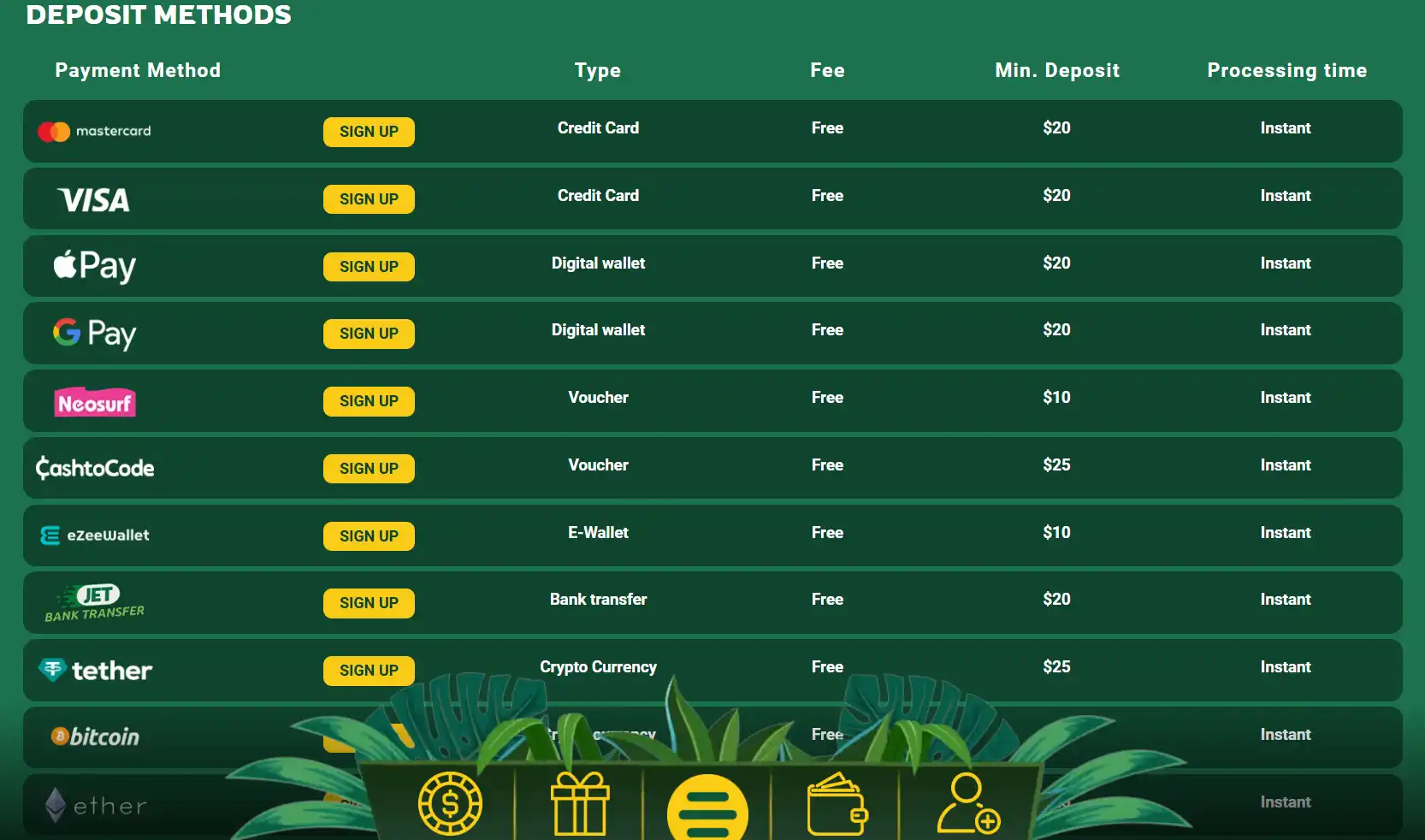
A specialist review describes Visa and Mastercard deposits as instant. That statement concerns reported processing time, not whether a transaction will be accepted. It also does not make credit cards or credit-related products appropriate for online wagering: do not use them to fund gambling. A payment can appear quick at the card stage while still being declined or unavailable, so speed alone is not a reliable guide to whether a payment route will work.
Online Pokies in Australia: Bitcoin and Payouts
The guide explains offshore service restrictions, Bitcoin game credits and transactions, and why bonuses and…
BPAY is a slower option. A specialist review gives a processing window of one to two business days, which makes it poorly suited to real-time play. The same type of review characterises BPAY as an occasional fallback when PayID is unavailable, rather than a first choice for immediate funding. Treat that as a report about payment practice, not a guarantee that BPAY will be offered or accepted in a particular situation.
The practical difference is time: the card deposits described in the review are credited instantly, while a BPAY payment may take one to two business days. If timing matters, do not assume that a payment will be ready when you want it. Check the stated processing time before taking any action, and avoid sending money if you cannot afford to wait for it or risk losing it.
A label such as “instant” describes only the deposit stage. It says nothing about whether a gambling service is lawful in Australia, or about access to funds after a transaction. Keep that distinction clear when comparing payment information. No payment method makes an unlawful online casino service lawful, and fast processing is not a reason to proceed.
E-Wallets, Vouchers and Digital-Currency Cashouts
An e-wallet can sit between a bank account and a payment destination, but its name on a cashier page does not tell you whether it supports withdrawals. Check the terms for the particular account and transaction before relying on a wallet for receiving funds. A specialist review reports that Skrill withdrawals to a bank can take one to two days; it also notes that some casinos apply a transaction fee. Treat that as a reported example, not a promise about another operator’s processing.
A prepaid voucher works differently: you can spend only the value loaded onto it. If you pay via a Paysafecard or another voucher, do not assume a later cashout can be returned to that voucher. Voucher deposits may not be withdrawable through the same route, so a separate method would be needed to receive funds. Confirm that route before paying; otherwise, you could find that the deposit method does not provide a usable way to cash out.
PayPal has prohibited gambling transactions in Australia since 2021, so do not assume it can be used for this purpose. Payment options and rules can change, and a payment label appearing in an online cashier does not establish that a service is lawful or available to you in Australia. Real-money online casino services are prohibited for operators under Australian law.
Digital currency should be considered here only as a withdrawal route, not a way to fund gambling. A specialist review describes Litecoin withdrawals as taking around ten minutes and Bitcoin withdrawals as taking as long as an hour when the network is congested. Those figures are not guaranteed: network conditions and the operator’s own handling can affect the result. Ethereum gas fees may also reduce the amount that reaches your wallet.
Payments & Crypto at Australian Casinos
Take particular care before authorising a blockchain transfer. Once sent, it cannot be reversed, and there is no chargeback process to recover funds sent to the wrong address or in error. Check the address and the currency carefully before confirming anything, and do not treat a displayed cashout option as proof that a service is permitted in Australia.
Using Payment Methods on a Mobile Device
A payment option appearing on a phone does not establish that it is available for every account or transaction. Before entering payment details, check the operator’s own cashier while signed in and read the terms for the method shown. A mobile page or app may display a payment logo without confirming that it can handle both deposits and withdrawals.
PayID is one example where the distinction matters. A specialist review reports that an operator’s support for PayID deposits does not establish that it supports PayID withdrawals. Check the cashout options separately, rather than assuming that money can return through the same route used to fund an account. If the available withdrawal method is unclear, do not deposit on the assumption that you can resolve it later.
The same care applies when you are looking for a mobile casino payment method such as MuchBetter. Its name appearing in an article, advertisement or payment list does not prove that it is available to your particular account, or that it can be used for the direction you need. Confirm the option in the account interface and check the operator’s terms before proceeding. Do not rely on a general description of mobile payments as a substitute for account-specific information.
Most importantly, a working payment screen does not make an online casino lawful in Australia. Under the Interactive Gambling Act 2001, operators cannot provide real-money online casino games to people physically located in Australia. Casino-style games such as pokies, poker and table games fall within the prohibited services. The legal position does not change because you are using a phone, a bank-linked option or a digital wallet.
A careful mobile check is therefore not an endorsement or a way around that restriction. If you encounter a payment page, avoid treating access to it as evidence that the service is authorised for Australian users. Payment availability can change, and a deposit option alone tells you nothing definite about cashout support. Protect your details and funds by not submitting payment information to a service that is offering prohibited casino gambling in Australia.
Do Australian online casinos charge fees for deposits or withdrawals?
Yes, fees can apply: some casinos charge a flat fee for bank transfers, while crypto withdrawals are usually free. Currency conversion may also add a cost.
Are there fees for using e-wallets at Australian online casinos?
Yes, some casinos charge a 1–3% fee for Skrill transactions, and Neteller charges 1.45% for credit card funding. Check the applicable payment terms before making a transaction.
Are credit cards allowed for online casino payments in Australia?
Many standard Visa and Mastercard transactions to offshore casinos are blocked by Australian financial institutions, even though card deposits may otherwise be processed instantly.
What verification documents are needed for withdrawals?
You may be asked for government-issued identification, proof of address dated within three months, and proof of your payment method.
Can I use PayPal for online pokies in Australia?
No. PayPal has banned gambling transactions in Australia since 2021.

 Fair Go Casino Bonus Australia: Welcome Offer and Terms GuideFair Go Casino Bonuses and Welcome Offer for Australia The headline value is ...
 Is Fair Go Casino Legit? Trust, Reputation and Licence ChecksIs Fair Go Casino Legit? Trust, Reputation and Licence Checks A trust assessm...