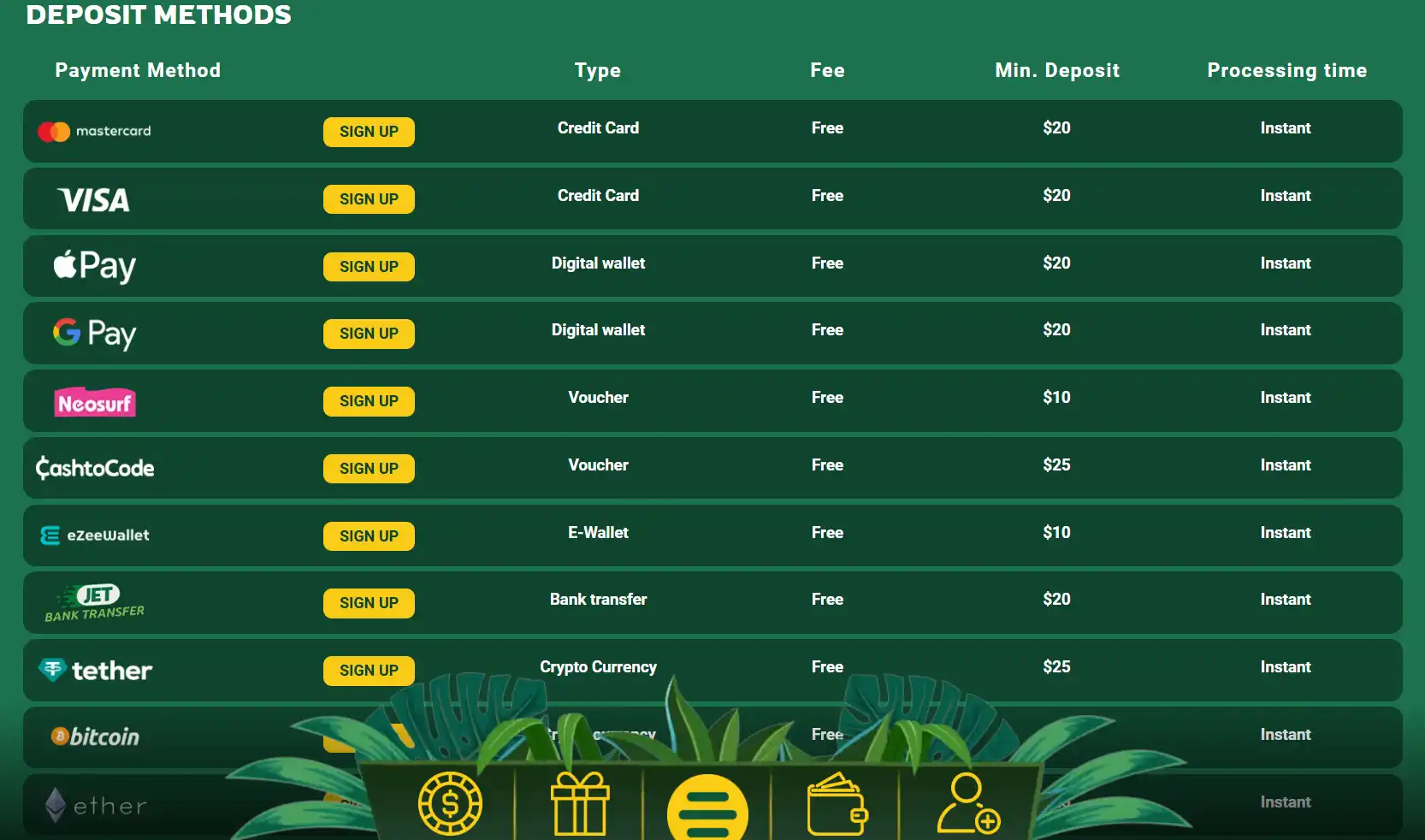
A payment method can sound straightforward in a search result and still leave important details unanswered. Tether, commonly referred to as USDT, is a cryptocurrency, but seeing its name beside an online casino does not explain how a payment would work. You would still need to know whether the cashier accepts it, what process is used to send it, and how any withdrawal would be handled. Those are separate parts of a payment arrangement, not details that can be inferred from the currency’s name.
Cryptocurrency payments are sometimes described as fast and inexpensive. Bitcoin and Ethereum, for instance, can offer instant deposits and withdrawals with limited or no fees. That general description is useful background, but it does not establish the terms for every cryptocurrency or every payment service. In particular, it should not be treated as a promise about USDT. A statement about one digital currency cannot answer questions about another currency’s casino processing.
The distinction matters because a payment involves more than choosing a currency. A cashier may show a method, but that label by itself does not tell you what steps follow, what information is required, or whether the same method is available for both deposits and withdrawals. Nor does a general description of cryptocurrency transfers confirm the fees, timing, or conditions that would apply to a particular USDT transaction. Without those details, it is not possible to describe a USDT casino payment as instant, fee-free, or available in both directions.
It is also useful to separate the currency from the service handling the payment. A casino payment page, a digital wallet and the cryptocurrency itself are not interchangeable things. The cashier is where a customer would expect to see the payment choices offered by a service, but a mention of Tether elsewhere does not demonstrate that the cashier supports it. Similarly, a reference to USDT does not establish which transfer process is used or whether a customer can later receive funds through the same route.
Casinos That Accept Visa in Australia: What to Check
Visa acceptance signals a claimed payment option, not legal authorisation, withdrawal support or protection under…
Casinos That Accept Apple Pay in Australia: What to Check
Mobile wallet popularity in Australia does not confirm casino acceptance; payment options depend on each…
That is why phrases such as “Tether casino” can leave the central practical point unresolved. They may suggest a connection between USDT and casino payments, but they do not specify whether the currency is accepted for deposits, withdrawals, or neither. They also do not tell you whether the terms are the same for a mobile user or someone using another device. A payment claim needs to describe the actual transaction, not merely place a currency name beside a casino-related term.
If you encounter a USDT payment claim, read it narrowly. Look for a clear description of the relevant payment direction and the applicable conditions rather than assuming that broad statements about cryptocurrency cover Tether. A deposit and a withdrawal are distinct actions; an explanation of one does not settle the other. Likewise, the fact that Bitcoin or Ethereum can be associated with quick transfers and low or no fees does not establish equivalent handling for USDT.
There is a separate issue for people in Australia: payment convenience does not determine whether an online casino service may lawfully be offered to them. Under the Interactive Gambling Act 2001, operators cannot provide real-money online casino games to people physically located in Australia. That legal context remains relevant regardless of whether a payment is described as cryptocurrency, a bank-linked service or another method. The currency does not change the status of the service.
For a reader trying to understand a USDT reference, the careful conclusion is limited. Cryptocurrency payments have a general context in which Bitcoin and Ethereum can provide instant deposits and withdrawals with limited or no fees. That context cannot be converted into a specific claim about Tether. A USDT label alone does not establish acceptance, processing steps, transaction speed, charges or withdrawal arrangements. Keeping those distinctions clear helps prevent a general description of digital payments from being mistaken for confirmed details about a particular casino payment.
What “Best” Can—and Cannot—Mean for a USDT Casino
Список казино
Use this list as a starting point when checking casinos for Tether (USDT) use in Australia in 2026. The details provided here do not confirm whether any individual operator accepts USDT, so verify its current payment options before depositing.
1
JeetCity Casino
License
Curacao eGaming (Dama N.V.)
JeetCity Casino is listed with a Curacao eGaming licence held by Dama N.V. The supplied details do not confirm USDT payment support.
2
LuckyVibe
License
Curacao Gaming Control Board OGL/2023/176/0095 (Hollycorn N.V.)
LuckyVibe is listed with Curacao Gaming Control Board licence OGL/2023/176/0095, held by Hollycorn N.V. The supplied details do not confirm USDT payment support.
3
Kingmaker
Payout speed
crypto ~90 minutes, fiat 1-5 days
Min. deposit
A$30
Kingmaker lists crypto payouts at around 90 minutes and fiat payouts at 1–5 days. Its minimum deposit is A$30; the details provided do not specify whether USDT is accepted.
4
Roby Casino
License
Curacao eGaming (Roby Games Ltd)
Roby Casino is listed with a Curacao eGaming licence held by Roby Games Ltd. The supplied details do not confirm USDT payment support.
5
Playfina Casino
License
Curacao eGaming (Hollycorn N.V., since 2017)
Min. deposit
A$20-30 (depends on the offer)
Playfina Casino is listed with a Curacao eGaming licence held by Hollycorn N.V. since 2017. Its minimum deposit is A$20–30, depending on the offer; USDT support is not specified in the supplied details.
6
Vegaz Casino
License
Curacao OGL/2024/1335/0780
Min. deposit
EUR 20
Vegaz Casino is listed with Curacao licence OGL/2024/1335/0780 and a minimum deposit of EUR 20. The supplied details do not confirm USDT payment support.
7
JustCasino
License
Curacao Gaming Control Board
JustCasino is listed with a Curacao Gaming Control Board licence. The supplied details do not confirm USDT payment support.
8
House of Pokies
License
international iGaming licence – jurisdiction not named in the source
Payout speed
PayID 1-24 hours
Min. deposit
A$30 (PayID from A$10)
House of Pokies lists PayID payouts of 1–24 hours and a minimum deposit of A$30, or A$10 via PayID. Its licence is described as an international iGaming licence, with the jurisdiction not named; USDT support is not specified.
9
Ricky Casino
Payout speed
crypto under 1 hour, PayID 1-3 business days
Min. deposit
A$20 (A$30 to qualify for the bonus)
Ricky Casino lists crypto payouts under one hour and PayID payouts in 1–3 business days. The minimum deposit is A$20, or A$30 to qualify for the bonus; the details provided do not specify whether USDT is accepted.
10
Lucky Dreams
License
Curacao
Min. deposit
A$20 (POLi)
Lucky Dreams is listed with a Curacao licence and a minimum deposit of A$20 via POLi. The supplied details do not confirm USDT payment support.
Calling a casino the “best” choice implies that it has been compared with alternatives against clear, relevant criteria. For a USDT casino, those criteria would need to be established before any ranking could be useful: whether the operator accepts the currency, what conditions apply to deposits and withdrawals, and how its services compare with others. Without dependable details about those matters, a “best” label would be an unsupported recommendation, not a meaningful comparison.
That distinction matters when you are weighing claims about a Tether casino in Australia. A polished site or confident promotional language does not demonstrate that USDT is accepted, or explain what happens to a payment after you submit it. Nor does a list of sites, by itself, establish that each one offers the same payment service or that any of them is suitable for Australian residents. A comparison should rest on evidence about the specific service, not on the wording used to describe it.
Do
Look for clear statements about what a site actually offers
Check if details refer to USDT specifically
Base comparisons on evidence about the specific service
Trust labels like "best" or "top" without supporting evidence
Assume a recent claim is automatically accurate
The word “best” can also refer to different things. One person might mean a straightforward cashier; another might care about the conditions attached to transactions or the operator’s rules. Those are not interchangeable measures. Even a comparison with clear criteria would need current, operator-specific information to support its conclusions. A label such as “latest” does not solve that problem: a recent claim can still be inaccurate, and payment arrangements can change.
There is also a separate legal context that should not be confused with a consumer ranking. Under the Interactive Gambling Act 2001, operators may not provide real-money online casino games to people located in Australia. A favourable rating or a claim about payment options does not alter that restriction. Nor does a review’s use of words such as “Australian” establish that an online casino service is lawful to offer here.
A careful reader can still assess the quality of a claim. Look for clear statements about what a site actually offers and whether the details refer to USDT specifically, rather than to cryptocurrency in general. Check whether the wording describes a confirmed feature or merely suggests one. Be cautious when a page uses “best,” “top,” or “recommended” without explaining the basis for those terms. Those labels tell you what the page wants you to think; they do not supply the evidence needed to support it.
Customer verification is another matter, and it should not be mistaken for proof of payment support. Online casinos commonly ask customers to complete identity and customer checks before they can carry out financial transactions. This may affect what information a customer is asked to provide, but it does not establish that a casino accepts USDT, how a transaction is handled, or whether the operator can lawfully offer online casino games to someone in Australia. A verification request and a payment claim answer different questions.
The same separation applies to a casino site’s general features. A broad description of its services cannot confirm that USDT works for a particular transaction, while an assertion about one payment method does not establish anything about other services. Treat each claim on its own terms rather than letting a general “best” rating stand in for details it does not provide.
So, when you encounter a claim about the best Tether casino, read it as a claim to be assessed, not as a conclusion already established. A meaningful comparison would need specific, reliable information about the relevant operators and their USDT arrangements, alongside a clear understanding of the Australian legal setting. Without that foundation, ranking sites would give an impression of certainty that the available details cannot justify.
Bonus and No-Deposit Claims Need Careful Reading
A bonus described as “no deposit” can sound separate from the gambling service it accompanies. It is not. An incentive attached to an online casino offer still relates to the provision of that service, and attractive wording does not change the legal position for people in Australia.
The Interactive Gambling Act 2001 makes it illegal for operators to offer online casino games to Australian residents. That prohibition applies regardless of whether an offer requires an initial payment. A no-deposit label does not create an exception, nor does it establish that an operator may lawfully provide the service to someone in Australia.
The same care applies to claims about bonuses for using Tether. A promotional promise does not, by itself, show that an online casino can legally serve Australian residents or that a particular offer is available to them. The key issue is not how generous the wording sounds, but what service is being offered and to whom.
Casinos That Accept Neteller in Australia: What to Know
Neteller acceptance is only a payment-method claim; it does not confirm access, withdrawals, safety or…
Casinos That Accept CashToCode in Australia
A payment logo or broad online-payments claim is not proof that an Australian-facing casino accepts…
Advertising real-money online casino services to Australian audiences is also prohibited. An offer presented as a welcome reward, a free-play incentive or a bonus linked to a payment method remains a promotion for an online gambling service. Treating the message as a payment offer does not remove that concern.
The law’s position on operators should not be confused with the position of players. The Act prohibits operators from providing online casino games to people in Australia; it does not explicitly criminalise a player for using an offshore site. That distinction is not an assurance that an offshore service is lawful, safe or protected. It simply describes who the prohibition addresses.
If you encounter a bonus claim, read it as advertising rather than as proof of permission or protection. Do not assume that a free entry point makes a service acceptable under Australian law, or that a promotion confirms the operator can serve local residents. A headline alone cannot establish those things.
It is also worth separating a payment method from the legal status of the activity. Mentioning Tether in an offer does not make the underlying online casino service lawful in Australia. The payment label is not a substitute for understanding the restriction on operators.
A calm reading of these claims can prevent a common misunderstanding: “no deposit” describes the terms of an advertised incentive, not a legal exemption for the service. For Australian residents, the governing issue remains the prohibition on operators offering online casino games. No bonus wording changes that boundary.
Slot-Related Searches and Australia’s Advertising Limits
A search for online pokies, a slot-style game or a bonus connected with one does not change the rules that apply in Australia. The Interactive Gambling Act 2001 makes it illegal for operators to provide real-money online casino games to people physically located in Australia. That restriction covers casino-style games, including slots, whether a page describes them as free, links them to a deposit or presents them as part of a welcome offer.
The wording used to describe an offer does not make it lawful to provide. Calling a game a trial, a bonus feature or a no-deposit promotion does not alter the underlying issue if it involves an online casino game offered to someone in Australia. Nor does adding USDT to the description establish that the game or incentive is available to Australian residents.
Advertising has its own restriction: real-money online casino services cannot be advertised to Australian audiences. This matters when you encounter promotional pages or messages that appear to invite you to play. Their presence online is not proof that the offer may lawfully be made to you, and a promotion does not override the rules governing the service itself. Avoid treating persuasive wording or an apparent incentive as assurance that an operator can provide the game in Australia.
Casinos That Accept Mastercard in Australia: Key Checks
The Interactive Gambling Act restricts operators from offering real-money online casino games to Australians, regardless…
The law is directed at operators providing the service; it does not explicitly make an individual player’s use of an offshore site a criminal offence. That distinction is not an endorsement or a guarantee of access. Offshore casino services may be subject to enforcement and blocking, and Australian consumer law does not protect players who use offshore casinos. If a dispute arises, you should not assume that local consumer protections will apply simply because a site is easy to find or appears to accept Australian visitors.
The Australian Communications and Media Authority enforces the Interactive Gambling Act. The relevant question is therefore not just how a game or promotion is described, but whether the service is being offered to people in Australia in a way the law permits. For online casino games, including slots, the prohibition on operators providing them to Australian residents is central.
Keep that legal context in view before responding to any invitation to play. Search results, promotional language and payment references cannot change the status of an online casino game under Australian law.
Casino Games and the Limits of the Available Information
A mention of Tether alongside a casino does not establish that any particular game can be played using USDT. A casino’s payment options and the payment arrangements for individual games are different matters. Without clear, current terms connecting a named game to this currency, it would be misleading to identify a title as a Tether game or say that you can play it with USDT.
The same caution applies when a page describes a casino game, a Tether payment method and an incentive together. Those details do not, by themselves, confirm that the game is available to Australian residents or that the currency can be used for activity within it. Read each claim for what it actually says rather than treating nearby mentions as proof of a connection.
This distinction matters because online casino games are not simply a question of which payment method a site displays. Under the Interactive Gambling Act 2001, operators are prohibited from offering online casino games to people in Australia. The restriction covers casino-style games provided to customers in the country; a site’s description of a game or its payment options does not change that legal position.
The Act does not explicitly make an individual player’s use of an offshore site a criminal offence. That is not the same as saying an offshore casino is authorised to provide online casino games to Australians. The legal restriction is directed at operators, and a payment label cannot make a prohibited service lawful.
If a page claims that you can play casino games with Tether, keep the claim separate from the question of whether the service may be offered in Australia. Do not assume that an advertised game, a bonus reference or a currency logo establishes either point. A claim about a game needs clear information about what is offered; a claim about Australian legality is governed by the law, not by the wording of the promotion.
Trustly Casino Sites in Australia: What to Verify
Trustly access may depend on the operator, the country selected at registration and the payment…
Treat descriptions of anonymous play with the same care. A privacy claim does not establish how an operator handles identity checks, what information it may request, or whether a service is legally available to you. Nor does it turn a game into an approved option.
For Australian readers, the practical distinction is straightforward: a USDT reference is not proof that a game accepts the currency, and a game listing is not evidence that an operator may provide it to people in Australia. Avoid relying on promotional wording to resolve either question.
TRC20 and USDT: What Cannot Be Confirmed for Australia
TRC20 refers to a network associated with transferring Tether (USDT). A casino mentioning USDT does not, by that alone, establish that it accepts deposits through TRC20. The currency and the network are separate parts of a payment route, and you would need clear, current cashier terms to know which one is supported.
That distinction matters if you are assessing a claim about a Tether casino in Australia. A reference to USDT does not confirm support for a particular network, how a transfer is handled, or whether the payment method is available to Australian residents. Nor does the label “real-money” settle whether an operator may lawfully offer online casino gambling to people in Australia.
Cryptocurrency payments are not all described in the same way. Bitcoin and Ethereum, for instance, are associated with instant deposits and withdrawals and limited or no fees. Those general characteristics cannot be carried over to USDT or TRC20. They do not establish a transfer time, a fee, or a withdrawal route for either.
TRC20 vs USDT
TRC20 is a specific network used for transferring Tether (USDT). A casino mentioning USDT does not automatically mean it supports the TRC20 network; the sender and receiver networks must match to avoid loss of funds.
For a USDT transfer, the network selected by the sender and the network accepted by the receiving service need to match. A mismatch can cause funds to be delayed or lost, so it is not safe to treat “USDT accepted” as enough detail to act on. The cashier and payment instructions would need to identify the supported network and explain the relevant conditions before you considered moving funds. Do not infer those details from a currency symbol, a wallet address, or a broad claim about crypto payments.
There is also a separate legal issue. Under the Interactive Gambling Act 2001, operators must not provide real-money online casino games to people physically located in Australia. That applies regardless of whether a payment is proposed in Australian dollars, USDT, or another cryptocurrency. The Australian Communications and Media Authority enforces the Act.
So a claim about a TRC20 casino or Tether deposits cannot, on its own, show that a service is available lawfully to you in Australia. Payment terminology describes a proposed transaction; it does not change the rules applying to online casino services. Check what a claim actually says, avoid sending funds based on an assumption about network support, and keep the legal context in view.
Checking Claims About Casino Acceptance
A claim that a casino accepts Tether (USDT) can sound like a straightforward payment detail. For someone in Australia, however, payment support is not the only issue: an operator’s willingness to take a cryptocurrency does not make its online casino service lawful to provide to people in Australia.
Neosurf casinos in Australia: legal and payment checks
Neosurf compatibility is separate from legality, deposit conditions, game availability and withdrawal routes. The legal…
The Interactive Gambling Act 2001 prohibits operators from offering online casino games to Australian residents. That restriction concerns the service, not the currency used to fund it. So wording such as “USDT accepted” or “pay with Tether” cannot establish that a casino is permitted to offer real-money play to people physically located in Australia. Nor does it confirm that the stated payment arrangement applies to Australian customers.
When assessing an acceptance claim, keep the question narrow. Does the statement refer specifically to USDT, or to cryptocurrency in general? Does it describe deposits, withdrawals, or both? Is it current and directed at Australian customers? These distinctions matter because broad references to crypto do not prove that Tether is supported, and a deposit claim does not automatically mean withdrawals use the same method. A mobile-friendly page or a reference to a crypto casino does not resolve those points either.
The legal position should remain separate from the payment wording. The Act addresses operators providing online casino games to people in Australia; it does not explicitly make players criminally liable simply for using an offshore site. That distinction is not an endorsement of offshore gambling or evidence that a particular service is available. It explains why a payment claim should not be mistaken for a statement about Australian legality.
The Australian Communications and Media Authority, commonly known as ACMA, oversees enforcement of the Act. Its role is to enforce the legal restrictions on operators, rather than to certify a casino’s USDT claims as an assurance for players. A statement about Tether acceptance should therefore not be read as approval from the regulator.
For Australian readers, the key point is that “accepts USDT” and “may lawfully offer online casino games here” are different claims. Treating them as interchangeable can leave you with a misleading impression of what a payment label actually tells you.
Playing with USDT: Keep the Legal Context in View
Wanting to use Tether for online casino play does not change the rules that apply in Australia. The Interactive Gambling Act 2001 places the legal responsibility on operators: offering online casino games to people in Australia is prohibited. That applies whether a service presents itself as a place to play with USDT or uses another payment method.
The Act does not explicitly make an individual player’s use of an offshore casino a criminal offence. That distinction is important, but it is not an assurance that playing is safe or that an offshore service is lawful to provide. Australian authorities actively enforce the restrictions, and access to offshore casino services may be blocked. A cryptocurrency transfer does not change the legal status of the service receiving it.
There is also a practical consumer-protection concern. Australian consumer law does not protect players who use offshore casinos. If a dispute arises over an account, a balance or a transaction, you should not assume that the protections available for ordinary Australian consumer dealings will apply. The fact that a site accepts a payment in USDT would not itself give you a local avenue for resolving a problem.
Casinos That Accept Litecoin in Australia: What to Know
Litecoin labels do not prove payment support, and accepting the currency does not change Australian…
You may see claims about playing casino games with Tether, including claims that an account can be opened without identity checks. Treat those as claims about a particular service, not as evidence that the service is permitted to offer casino gambling to Australians or that you would have meaningful recourse if something went wrong. The payment currency does not remove the legal context or create consumer protections.
No particular operator or game can be recommended here for playing with USDT. That is not a suggestion to find a different route into online casino play; it is a boundary on what can responsibly be identified. Terms such as “Tether casino” may describe how a service markets itself, but they do not establish that it is authorised to provide games to people in Australia.
Before sending funds, pause to consider what protection you would have if access were interrupted or a payment became disputed. Do not treat a cryptocurrency option, an offshore address or a promise of easy play as a substitute for Australian consumer safeguards. The relevant legal distinction remains: operators are prohibited from offering these games to people in Australia, while the Act does not explicitly criminalise players for using offshore sites. That difference does not make offshore play protected.
Live Dealer Searches Do Not Confirm USDT Support
A live-dealer format and a cryptocurrency payment method are separate features. Seeing them mentioned together does not establish that a particular service offers live play, accepts Tether, or allows the two to be used together. More importantly, a payment label does not change the legal position for people located in Australia.
Under the Interactive Gambling Act 2001, it is unlawful for an operator to provide real-money online casino games to people physically in Australia. That restriction covers online casino play regardless of whether it is presented as live dealer entertainment or funded with cryptocurrency. The format of the game and the currency used do not create an exception.
The Act is directed at the operator providing the service. It does not expressly make a player’s use of an offshore site a criminal offence. That distinction is not an endorsement or assurance that using such a site is safe. It simply means the law’s treatment of providers and players is not identical. Before acting on claims about live play, keep the operator’s legal position in view rather than treating a payment option as evidence that the service is permitted for Australians.
Descriptions such as a live-dealer casino accepting Tether, or a crypto casino offering live tables, can sound like a clear combination of features. They should not be read as proof that those features are available to Australian residents. Nor does a reference to USDT or a particular transfer network alter the law governing online casino games in Australia.
If you encounter an offer framed around live dealing and digital currency, separate the claims: what format is being described, what payment method is mentioned, and whether the service may lawfully be provided to someone in Australia. A polished description can make those questions seem like one issue, but they are not. For Australian residents, the central point is that operators cannot lawfully provide real-money online casino games to people in the country, whatever the presentation or payment language used.
Casinos That Accept PayID in Australia: What to Know
A familiar payment method does not verify an operator, casino-game access, deposits, withdrawals or bonuses.…
Deposits, Withdrawals and What the Evidence Actually Supports
Payment claims need to be read currency by currency. General information about cryptocurrency transfers is not a guarantee about every token or every payment route. Bitcoin and Ethereum, for instance, are described as allowing instant deposits and withdrawals with limited or no fees. That does not establish the same timing or cost for Tether (USDT).
A page describing a casino as accepting Tether may leave important details unclear: whether the stated currency is supported for both deposits and withdrawals, and what conditions apply to either transaction. “Instant withdrawal” is not a useful assurance unless the payment method, processing stage and any applicable terms are clear. A transfer can involve more than one step, so do not treat a broad speed claim as a confirmed arrival time or a promise of a particular fee.
Before any financial transaction, online casinos typically require customers to complete a Know Your Customer (KYC) assessment. This identity-check process is separate from the payment method. It may affect when transactions can proceed, so payment descriptions alone do not tell you whether an account is ready to transact. Read the applicable terms carefully and avoid sending funds if the transaction conditions are unclear.
There is also an important Australian legal context. The Interactive Gambling Act 2001 makes it illegal for operators to provide real-money online casino games to people physically located in Australia. A payment claim does not change that position or establish that a service is lawful to provide here.
For you, the practical distinction is simple: general statements about crypto do not confirm the handling of USDT, and a claimed deposit route does not by itself tell you how withdrawals work. Treat advertised speed and fee language cautiously, and do not assume one cryptocurrency’s transfer characteristics apply to another.
What are the deposit and withdrawal limits at the best Amex casinos?
Each casino sets its own American Express deposit and withdrawal limits, so check the cashier for the limits that apply to your account. Amex limits are usually higher than those for Visa or Mastercard.
Which online casinos accept American Express for deposits?
Australian sites listed as accepting Amex include Jackpot City Casino, Spin Palace, Ruby Fortune, Ignition Casino, Joe Fortune and PlayAmo. Availability can vary, so check the casino’s cashier.
Are casino Amex payments instant?
Amex deposits are processed instantly. Withdrawals can take up to five days to clear.
Does American Express work for online casinos?
Yes, some Australian online casinos accept Amex deposits. Select American Express in the cashier, enter your card details and deposit amount in AUD, then submit the payment; some casinos do not accept Amex, and an issuer may block a gambling transaction.
Are there fees for using Amex at online casinos?
Amex transactions are generally free, but a casino may add a 1.5% surcharge, and a 3% currency conversion fee may apply. Some casinos may also charge a fee for withdrawals.

 Fair Go Casino Bonus Australia: Welcome Offer and Terms GuideFair Go Casino Bonuses and Welcome Offer for Australia The headline value is ...
 Is Fair Go Casino Legit? Trust, Reputation and Licence ChecksIs Fair Go Casino Legit? Trust, Reputation and Licence Checks A trust assessm...